


If you're a YouTube creator, you know that keeping up with monetization policy changes can feel like a full-time job. Just when you get comfortable, YouTube rolls out new features, tweaks the requirements, or completely changes how you earn money. For those of us running faceless or automated channels, staying on top of this stuff isn't just a good idea—it's critical for survival.
What You Need to Know About Recent Monetization Updates
Think of YouTube’s policies as the rules of the game. When those rules change, your playbook has to change with them if you want to keep winning. The latest updates show a major shift in YouTube's thinking. They're clearly trying to bring more creators into the fold and build a more stable and diverse creator economy.
This isn't surprising when you look at the numbers. YouTube pulled in a jaw-dropping $10.2 billion in ad revenue in Q3 2025 alone. That money is fueled by a massive global audience of over 2.7 billion monthly users. To get a piece of that pie, the classic benchmark has always been the YouTube Partner Program (YPP) requirement: 1,000 subscribers and 4,000 watch hours. If you want a deeper dive into YouTube’s dominance, check out Meltwater’s latest report.
The big takeaway from the recent YouTube monetization news is one word: diversification. YouTube is practically shouting from the rooftops that creators shouldn't put all their eggs in the ad-revenue basket. This move is a direct response to what creators have been asking for and what the market demands—a healthy channel needs multiple ways to make money.
To help you get a handle on what's changed, here’s a quick summary table breaking down the most important updates.
Key Monetization Changes at a Glance
| Policy Change or News | What It Means for Creators | Your Next Step |
|---|---|---|
| Lower YPP Entry Tiers | You can now access fan funding (Super Thanks, etc.) with fewer subscribers and watch hours. | Focus on building a strong community early to unlock these features sooner. |
| Expanded Shorts Monetization | Shorts are becoming a much more reliable income source, not just a way to get views. | Double down on your Shorts strategy and track your revenue from the Shorts feed. |
| Enhanced Brand Partnerships | YouTube is making it easier to find and manage brand deals directly in YouTube Studio. | Explore the new partnership tools and start looking for potential brand collaborations. |
| Smarter Shopping Integrations | AI is making it simpler to tag products and earn from affiliate sales or merch. | Start tagging relevant products in your videos to open up a new revenue stream. |
This table gives you the high-level view, but let's dig into why these specific changes are so important for your channel.
Why These Changes Matter to You
Here’s a closer look at the key areas seeing big updates:
-
Lowered YPP Entry Tiers: This is a big deal. YouTube has introduced a new, easier-to-reach tier for the YPP. It lets creators who haven't hit the traditional 1,000 subscriber / 4,000 watch hour mark start earning from fan funding tools like Super Thanks, Super Chat, and Channel Memberships.
-
Expanded Shorts Monetization: The ad revenue sharing for Shorts keeps getting better, turning short-form content from a discovery tool into a legitimate moneymaker. For channels built on quick, viral clips, this is a game-changer.
-
Enhanced Brand Partnerships: YouTube is rolling out new tools to connect creators with brands right from the YouTube Studio dashboard. Think of it as a built-in matchmaker for sponsorships, even including features to automatically insert brand mentions into your videos.
-
Smarter Shopping Integrations: New AI-powered features are streamlining how you tag and sell products in your videos. This means earning more from affiliate marketing or your own merch with a lot less manual work.
The message from YouTube couldn't be clearer: they want more creators to start earning money sooner, and in more ways than ever.
This is especially good news for niche and faceless channels. You can now focus on building a loyal, tight-knit community and start generating income well before you're pulling in massive view counts.
Getting a firm grasp on these changes is your first step toward building a more stable and profitable YouTube business. Every new feature is a new opportunity. For faceless creators and automation pros, this opens up exciting new paths to revenue that don't rely on every single video going viral.
Navigating the New YouTube Partner Program Rules
The YouTube Partner Program (or YPP) is your ticket to making money on the platform. Think of it as your official license to monetize—once you're in, you can turn on ads and access a whole bunch of other earning tools. For a long time, getting into the program felt like a serious uphill battle, but YouTube has recently opened up a couple of new ways to get there.
Getting a handle on these requirements is the first real step in building a smart content strategy. The classic milestones have always been about proving one thing to YouTube: that you can consistently make content that people will actually stick around to watch. This is precisely why so many creators, especially those in the faceless automation game, are always on the lookout for a faster way to get monetized.
The Classic Path to Full Monetization
The traditional way into the YPP is still the gold standard if you want to unlock the full suite of ad revenue options. This is the route most creators know, and it’s all about showing YouTube you can build and hold an audience over the long haul.
To qualify the old-fashioned way, you need to hit two main goals:
- 1,000 Subscribers: This proves you’ve built a core community that cares about what you're making.
- 4,000 Valid Public Watch Hours: This is tallied up over the last 12 months and shows that people are actively watching your longer videos, not just clicking away.
It's a simple formula: hit 1,000 subscribers and 4,000 watch hours in a year, and you can join the Partner Program. This policy has already allowed around 3 million creators to start earning. That number is even more impressive when you realize that 500 hours of new video get uploaded every single minute. You can dig into more of these wild YouTube statistics on wyzowl.com.
But here’s the catch: not all watch time is created equal. YouTube is pretty picky about what counts.
What “Valid Public Watch Hours” Really Means
That phrase, "valid public watch hours," is incredibly important. It means watch time only counts toward your 4,000-hour goal if the video is set to public.
Here’s what doesn't count:
- Private videos
- Unlisted videos
- Deleted videos
- Ad campaigns (like running Google Ads to your video)
- Views from the Shorts feed
That last point is a big one. Shorts are amazing for getting subscribers fast, but the views they rack up in the Shorts feed won't help you reach your 4,000-hour target. You can find a deeper dive in our guide on what the YouTube Partner Program is and how it all works.
The 4,000-hour requirement is specifically designed to measure how well your long-form content performs. It’s YouTube’s way of making sure you can create videos that people will sit through—which is exactly where the most valuable ads are shown.
Frankly, this is the biggest hurdle for most new creators. Getting subscribers is one thing, but stacking up 240,000 minutes of watch time is a massive undertaking that can easily take months, if not years, of grinding.
The Newer, Faster Path for Shorts Creators
Seeing the absolute explosion of short-form video, YouTube wisely introduced a second path into the YPP. This one is built specifically for creators who are killing it with viral, attention-grabbing Shorts.
The requirements for this route are a little different:
- 1,000 Subscribers (this part stays the same)
- 10 Million Valid Public Shorts Views within the last 90 days
This is a huge piece of youtube monetization news because it finally gives Shorts-focused channels a real shot at making money. Hitting 10 million views in three months is no small feat, but for creators who know how to jump on trends and make stuff people can't help but share, it's totally achievable.
Once you hit that target, you get access to the YPP. That means you can start earning a cut of the ad revenue from your Shorts views and unlock fan funding features. This two-track system is YouTube's way of acknowledging that success on the platform now comes in all shapes and sizes.
How Monetization Changes Affect Your Bottom Line
It's one thing to read about policy updates and YouTube monetization news, but let's get down to what really matters: what does this all mean for your bank account? Every tweak YouTube makes sends ripples through your channel's earnings, directly hitting key metrics like your CPM (cost per mille) and RPM (revenue per mille). To build a truly profitable channel, you have to understand how these ripples affect your bottom line.
Think of your channel's niche as its own little economy. An advertiser selling a $2,000 trading course is going to pay a whole lot more to get in front of a finance audience than a company will pay to advertise a $5 mobile game on a gaming channel. This is the simple truth of YouTube: not all views are created equal. Your audience, your topic, and even where your viewers are watching from can drastically change the value of every single impression.
Understanding Your True Earning Potential
Your RPM, or revenue per 1,000 views, is the ultimate health report for your channel. It’s the number that tells the whole story by bundling all your income—ads, Super Thanks, memberships, you name it—into one clean metric. The latest policy shifts are clearly aimed at helping you push this number higher by giving you more ways to earn directly from your community.
For instance, lowering the barrier to entry for fan funding is huge. It means you can start building a steady, non-ad-based income stream much sooner in your journey. This is an absolute game-changer for channels in niches with notoriously low ad rates, like comedy or lifestyle, giving them a real shot at building a sustainable business from the get-go.
This dashboard shows the exact milestones creators need to hit to get into the YouTube Partner Program.
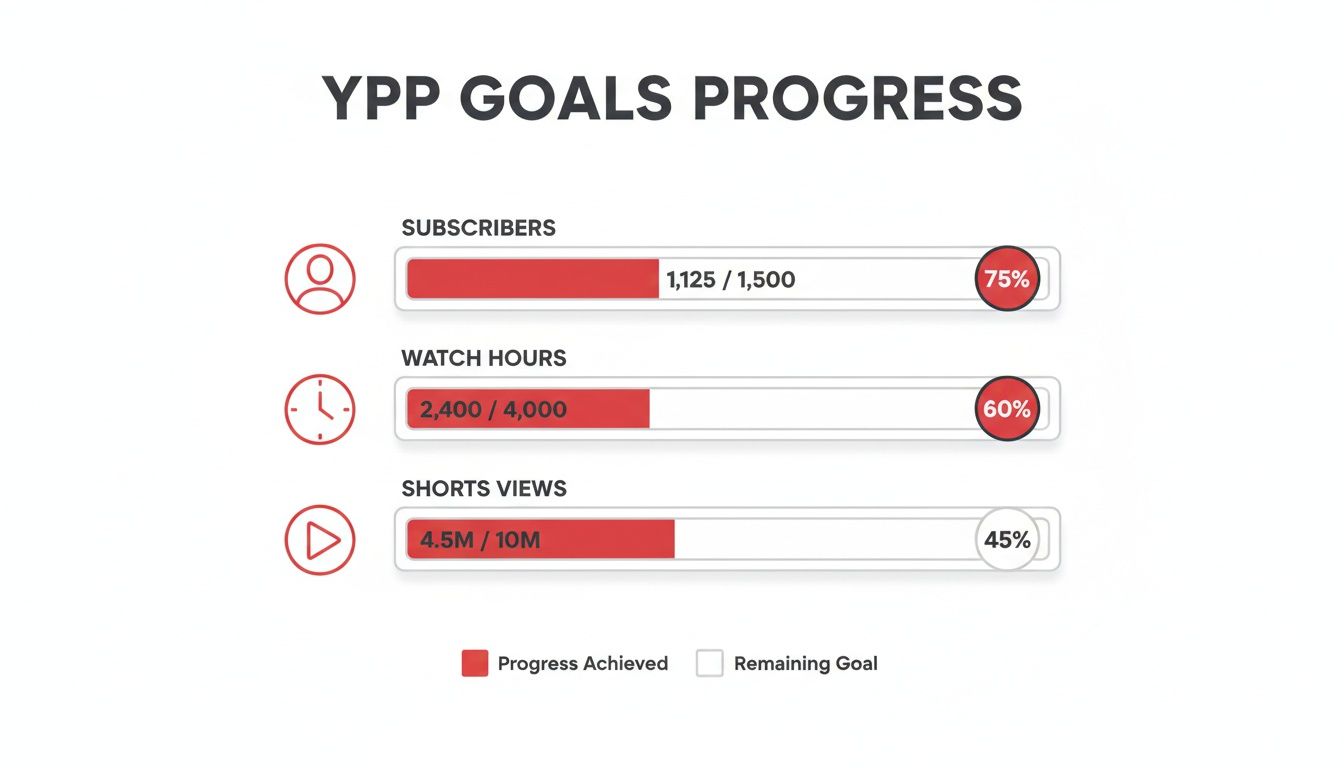
As you can see, you have two main paths to monetization, and both require an intense grind—either through long-form watch hours or by capturing lightning in a bottle with viral Shorts.
How Content Niches and Geography Dictate Your Income
The difference in earning potential between niches isn't just small—it can be massive. Let's break down a few real-world examples to see how this plays out.
- Finance & Business Channels: These are the heavy hitters. They often pull in the highest CPMs, sometimes topping $20 or even $30. Why? Because advertisers targeting high-net-worth individuals or business owners are willing to pay a premium.
- Tech & Gadget Reviews: This niche also packs a punch, with CPMs typically landing in the $8-$15 range. Viewers here are in "buy mode," actively researching purchases, which makes them incredibly valuable to advertisers.
- Gaming & Entertainment: On the other end of the spectrum, these channels usually see much lower CPMs, often hovering between $1-$5. The audience is massive and broad, but not as specifically targeted for high-ticket items.
Geography is the other big piece of the puzzle. A single view from someone in the United States or the United Kingdom can be worth 5-10 times more than a view from other regions. It all comes down to the local economy and how much advertisers are able to spend there.
Your channel's profitability isn't just about getting more views; it's about getting the right views. A strategic shift in content or targeting can multiply your earnings without needing a single extra subscriber.
This is the kind of financial insight that separates the hobbyists from the pros. It empowers you to make calculated decisions about what videos to create, ensuring every piece of content you produce is actively working to grow your income.
The Elite Echelon of YouTube Earnings
The ceiling for what you can earn on YouTube is practically non-existent, and looking at the top gives us a powerful model for what's possible. Just look at MrBeast, who pulled in a staggering $82 million in 2025. His success proves the elite potential of monetization, especially when YouTube itself is generating over $10.2 billion in quarterly ad revenue. There’s a massive pie here for everyone.
For automation professionals and faceless creators, his journey offers a scalable blueprint. A channel with 1 million subscribers can realistically expect to earn around $10,000 per month from ad revenue alone. To put that in perspective, at a modest $2 CPM, you'd need about 500,000 views just to make your first $1,000. If you want to see how other top earners are doing it, you can discover more insights about their strategies on targetinternet.com.
Ultimately, staying on top of YouTube monetization news is all about translating policy into profit. When you understand how these changes move the needle on your CPM and RPM, you can adapt your strategy, zero in on high-value audiences, and build a channel that's not just popular, but also incredibly profitable.
Adapting Your Strategy for Faceless and Automated Channels
The latest YouTube monetization news throws a bit of a curveball for faceless and automated channels, but it also opens up some real opportunities. You might not be building a personal brand with your face on camera, but the core principles of value and originality are now more critical than ever.
Your strategy needs to be laser-focused on creating high-quality, compliant content at scale—all without tripping YouTube's algorithmic alarms.
Think of your channel as a content factory. The goal is to build a production line that’s incredibly efficient but still churns out a premium product every single time. Every policy update from YouTube is like a new factory regulation. You have to adjust your process to stay compliant and keep the lights on.
Avoiding the Repetitive Content Trap
The single biggest threat to any automated channel is getting flagged for repetitive content. YouTube is coming down hard on channels that just slap together templatized videos, robotic voices, and low-effort visuals without adding any real substance. Simply reading a blog post over a slideshow of stock photos is a one-way ticket to demonetization.
To stay in the clear, your content system has to be built on originality. This means every video needs to offer something distinct—a unique perspective, a compelling story, or a clear educational takeaway.
- Vary Your Scripts: Even if you're tackling similar topics, write every script from scratch with a fresh angle. AI is great for brainstorming, but the final product needs a human touch to feel genuine.
- Diversify Visuals: Don't get stuck using the same handful of stock clips over and over. Pull from a wide variety of sources for your B-roll, graphics, and animations to keep each video looking and feeling new.
- Use High-Quality Voiceovers: A monotone, robotic voice is a dead giveaway of low-effort content. Invest in a premium AI voice that sounds natural, or better yet, hire a real person to do your voiceovers.
YouTube doesn't penalize automation; it penalizes low-value, programmatic content. Your job is to use automation as a tool to produce high-value content more efficiently, not to replace creativity.
This approach definitely takes more work upfront, but it's how you build a channel that can survive whatever policy changes come next. For a deeper dive into this model, check out our complete guide on running a faceless YouTube automation channel.
Building a Compliant Content Production System
A successful faceless channel runs like a well-oiled machine. With YouTube's latest focus, that machine needs to be rock-solid from a compliance standpoint, especially if you're using AI and third-party assets.
Here’s what a compliant workflow looks like:
- Topic Ideation: Go after evergreen topics that provide lasting value. This takes the pressure off chasing trends and helps you build a library of content with a seriously long shelf life.
- AI-Assisted Scripting: Use AI tools for research and outlining, but always have a human editor step in to refine the narrative, add unique insights, and make sure it sounds like a real person wrote it.
- Visual Sourcing: Make sure you're using licensed stock footage from reputable sites like Storyblocks or Envato Elements. Keep proof of your licenses handy, because YouTube might ask for it during a channel review. Never just grab random clips from Google.
- Voiceover and Editing: Pair your high-quality voiceover with dynamic editing. Use text overlays, smooth transitions, and sound effects to create an experience that grabs viewers and doesn't let go.
This structured process does more than just keep you compliant. It creates a predictable and scalable way to produce content that actually meets YouTube's quality bar.
Focusing on Evergreen Niches
For automated channels, evergreen niches are your best friends. These are the topics people are always searching for, year after year. We're talking about things like personal finance, history, health and wellness, or DIY tutorials.
Building your channel around these timeless topics gives you a few major advantages:
- Long-Term Traffic: Your videos can keep racking up views—and revenue—for months or even years after you hit publish.
- Higher Ad Rates: Many evergreen niches, especially in finance and education, attract advertisers who are willing to pay top dollar. This can give your CPM a serious boost.
- Predictable Content: It’s so much easier to plan a content calendar when your topics aren't changing with every news cycle.
By combining a compliant production system with a smart focus on evergreen content, faceless channels can do more than just survive these policy shifts. You can actually thrive and build a reliable, profitable asset that lasts.
Building Revenue Streams Beyond AdSense
Relying just on AdSense is like building your entire house on a single pillar. It might stand for a while, but the first tremor could bring it all down. The savviest creators, especially those running automated channels, know that a mix of income sources is the real secret to stability and growth. All the latest YouTube monetization news is practically screaming this from the rooftops.
The good news is that YouTube gives you a powerful set of tools to start building these extra revenue streams right away. These features are baked directly into the platform, designed to help you turn casual viewers into paying supporters and forge a direct financial connection with your community.
Tapping Into YouTube's Fan Funding Features
Before you even think about off-platform strategies, you need to make the most of what YouTube already gives you. These tools are seamlessly integrated, making them dead simple for your audience to use and for you to manage.
-
Channel Memberships: This is your classic subscription model. You can offer exclusive perks—like custom emojis, badges, or members-only videos—to fans who pay a small monthly fee. It’s a fantastic way to generate a predictable, recurring income stream.
-
Super Chat & Super Stickers: Got a livestream planned? Viewers can pay to have their comments pop with color or send eye-catching animated stickers. It's an awesome way to crank up engagement and earnings during live events.
-
Super Thanks: Think of this as a digital tip jar for your regular videos. If a viewer loves a specific upload, they can show their appreciation by buying a fun, one-time animation that appears right on the video page.
These tools are so effective because they’re built on community. They reward creators who have cultivated a loyal following that genuinely wants to see them succeed and is happy to chip in to make it happen.
Expanding Your Reach with External Monetization
While YouTube's built-in features are a great starting point, true financial security comes from building income streams that you control. This is where external strategies come into play, letting you weave a robust financial safety net for your channel.
The goal is to build a business where YouTube is your primary traffic source, not your only source of income. This mindset shift is what separates hobbyist creators from professional media entrepreneurs.
For faceless and automated channels, these external methods are a perfect fit because they don't require you to be on camera. You can plug them right into your existing content without missing a beat.
Actionable Strategies for Faceless Channels
So, how do you actually apply these strategies to a faceless channel? The key is to make your promotions feel like a natural extension of the value you're already giving your audience.
-
Affiliate Marketing: This is easily the most common and often most lucrative path. Instead of just talking about a product, you provide a special link. When someone buys through that link, you get a cut. For a deeper look, our guide on the YouTube affiliate marketing program is a great resource.
- Example: A faceless channel doing tech tutorials can link to the software it's demonstrating. A channel covering personal finance can have affiliate links for budgeting apps or investment platforms.
-
Selling Digital Products: This is where you create and sell your own stuff. We’re talking e-books, templates, video presets, or even full-blown online courses. Since it’s your product, you keep 100% of the profit.
- Example: A channel that makes animated history videos could sell its detailed research notes as a PDF. A productivity channel could sell the custom Notion or Excel templates it uses.
-
Securing Brand Deals: Don't assume you need to show your face to get a sponsorship. Brands are increasingly eager to partner with niche channels that have a super-engaged audience, faceless or not. YouTube is even building tools to make these connections easier, proving it’s a major priority.
- Example: A channel that produces relaxing nature soundscapes could team up with a meditation app or a wellness brand.
By blending YouTube's fan funding with external plays like affiliate marketing and digital products, you're not just running a channel anymore. You're building a resilient, profitable business that can weather any storm the ad market throws at it.
Accelerate Your Earnings with Monetized Accounts
So, we've walked through the long, often frustrating path of growing a YouTube channel from scratch. Let's be honest: hitting those initial milestones of 1,000 subscribers and 4,000 watch hours can feel like an eternity. For creators and automation teams who need to move faster and see results now, there's another way in.
Think of it as a strategic shortcut: acquiring a pre-monetized YouTube account. This isn't about cheating the system. It's more like buying an existing business—say, a restaurant that's already built out, fully licensed, and ready to serve customers—instead of constructing one from the ground up. You get to skip the painful setup and get straight to cooking.
Skip the Grind and Start Earning
This approach lets you leapfrog the entire initial growth phase. Instead of pouring months of effort into hitting YouTube's entry requirements, you can start doing what you're actually here to do: create great content that earns money from day one.
This is a huge advantage, especially when you consider how quickly things change in the world of youtube monetization news. A new trend can pop up overnight, but if you're still stuck in the "subscriber grind," you'll miss the boat. Having a monetized channel ready to go means you can jump on profitable niches the moment they appear, no waiting period required.
The real benefit here is speed. You're not just buying a channel; you're buying back your most precious resource—time. This lets you focus on your content and revenue strategy from the get-go.
For anyone running faceless channels or managing multiple automated projects, this is a total game-changer. It takes the biggest question mark out of your business plan: whether or not you'll even get approved for the YouTube Partner Program (YPP). When that monetization foundation is already set, scaling your operation becomes so much simpler.
How Compliant Accounts Offer a Head Start
Now, it's crucial to point out that we're talking about legitimate, pre-monetized accounts. Reputable sellers don't use bots or shady tactics. They grow these channels organically, making sure they fully comply with all of YouTube’s Partner Program policies before they're ever sold.
Here’s the practical advantage this gives you:
- Immediate Revenue: You can turn on ads and start earning from the very first video you upload.
- Full Feature Access: The channel is already unlocked, giving you access to everything from Super Thanks to shopping integrations.
- Reduced Risk: You sidestep the stressful YPP review process, which can sometimes result in rejection for reasons that aren't always clear.
Starting with an already-monetized account turns a long, uphill battle into a simple first step. It frees you up to focus on what really matters: building a sustainable, profitable content business without the soul-crushing grind at the beginning.
Your Top YouTube Monetization Questions, Answered
Let's be real—keeping up with YouTube's monetization rules can feel like a full-time job. Things are always shifting. To clear things up, I’ve put together some straight-to-the-point answers to the questions I hear most often from creators.
How Often Does YouTube Actually Change Its Monetization Policies?
YouTube is constantly tweaking things. You can expect big shifts to the YouTube Partner Program (YPP) maybe once a year, but smaller policy updates and clarifications pop up all the time. They're always reacting to new content formats like Shorts, what advertisers are looking for, and changing internet regulations.
Your best bet? Keep a close eye on the official YouTube Creator channel and the news section in your YouTube Studio dashboard. That’s where the official announcements always land first.
Once I'm Monetized, Can I Lose It?
You bet. Getting into the YPP isn't a lifetime pass. YouTube can and will demonetize or even suspend channels that step out of line.
The most common reasons this happens are:
- Copyright strikes
- Community Guideline violations
- Posting what YouTube calls "repetitive" or "reused" content
Think of it this way: getting monetized is just the start. Staying monetized means you have to consistently play by the rules and create genuinely original, quality content.
Maintaining your monetization status is an ongoing job. It's a continuous commitment to creating valuable, original content that respects all of YouTube's guidelines and policies.
Does My Niche Really Impact My Earnings That Much?
Absolutely. In fact, it’s one of the biggest factors. Your niche determines who your audience is, and advertisers will pay a premium to get in front of certain viewers.
A channel focused on personal finance, real estate, or software tutorials will almost always have a much higher CPM (the amount advertisers pay per 1,000 views) than a channel about celebrity gossip or gaming compilations. It all comes down to the commercial value of your audience.
Is Buying a Pre-Monetized YouTube Account Actually Safe?
It can be a smart, strategic move, but only if you go through a reputable provider. A trustworthy, pre-monetized account has been grown organically to meet all of the YPP requirements, so it's fully compliant from the get-go.
Once you take over, the responsibility is 100% on you to upload high-quality, original content that follows every single one of YouTube’s rules. The account just gives you a massive head start.
This approach lets you skip the frustrating grind and jump straight to what matters: creating content and generating revenue.
Ready to skip the sandbox and start earning on YouTube from day one? MonetizedProfiles offers fully approved, organically grown YouTube accounts that are ready for your content the moment you log in. Check out our available accounts and jumpstart your creator career at https://monetizedprofiles.com.


