


At its core, YouTube affiliate marketing is pretty straightforward. You recommend products or services you like, and when someone buys through your unique link, you earn a commission. It’s a powerful way to make money that has nothing to do with your regular YouTube ad revenue.
You're essentially cashing in on the trust you've built with your audience by pointing them toward things you genuinely believe in.
A More Stable Way to Earn
The beauty of affiliate marketing is that it puts you in the driver's seat. Your income is tied directly to the sales you help generate, not the whims of ad views or algorithm changes. This creates a much more stable financial base for your channel.
A lot of creators think you need a massive subscriber count to even bother with affiliate marketing, but that's a myth. I've seen smaller channels with super-engaged, niche audiences do incredibly well. It all comes down to trust.
When you add affiliate income to your other revenue streams, you’re building a diversified business. Think of it like a table with multiple legs—if ad revenue has a slow month, your affiliate commissions can keep things steady.
Affiliate Marketing vs. The YouTube Partner Program
It’s really important to know how these two things differ. They’re separate paths to monetization, but they work beautifully together.
- YouTube Partner Program (YPP): This is YouTube's own system. You get paid for the ads that run on your videos. To even get in, you have to hit certain benchmarks. You can get the full rundown on those in our guide to YouTube channel monetization requirements. Your earnings here are all about ad views and CPMs, and it's all handled by YouTube.
- Affiliate Marketing: This is where you partner up with outside companies. You promote their stuff, and they pay you a cut of every sale made through your link. This income is based on how well your recommendations convert and is completely separate from YouTube's ad system.
Just How Big is This Opportunity?
The potential here is huge, and it's all thanks to YouTube's massive audience.
The YouTube Partner Program has blown up since it launched in 2007, now including over 2 million creators. That growth is fueled by the platform's staggering 2.5 billion monthly active users.
This isn't just one monolithic audience, either. You've got 75% of US millennials on the platform, and women make up nearly 45.7% of the user base. That kind of scale and diversity means you can find a hyper-specific audience for almost any product, from high-end cameras to vegan makeup. You can dig into more of these stats and what they mean for creators over at Analyzify.
When you combine your YPP ad revenue with smart affiliate partnerships, you’re not just a YouTuber anymore. You’re building a resilient, profitable online business.
Finding Affiliate Programs That Fit Your Channel
This is where the rubber meets the road. Picking the right partners is easily the most important decision you'll make. Your recommendations are a direct reflection of your credibility, so you absolutely have to align with brands and products that your audience will actually find valuable.
This isn't just about chasing the biggest commission check; it's about building lasting trust with your viewers.
The best place to start? Look at the products and services you already use and genuinely love. Authentic endorsements stem from real-world experience. If you’re a tech reviewer who can't live without a certain mechanical keyboard, that’s your perfect first partnership. This makes your promotions feel less like a sales pitch and more like a helpful tip from a friend.
Before you start hunting, you need to understand the two main paths you can take: joining a big affiliate network or partnering directly with individual brands.
Affiliate Networks vs. Direct Partnerships
For anyone just starting out, large affiliate networks like Amazon Associates or ShareASale are a godsend. They're basically huge marketplaces that give you access to thousands of brands all under one roof, which makes finding products and tracking your earnings much simpler.
On the flip side, going directly to a brand can be a game-changer. These direct partnerships often come with higher commission rates and let you build a real relationship with the company. Imagine a fitness creator partnering directly with their favorite protein powder brand—they might get early access to new products or special discount codes for their audience. This route takes more effort and outreach, but the payoff can be huge.
To help you weigh your options, here’s a quick breakdown of how these two approaches stack up.
Comparing Affiliate Program Types
| Feature | Affiliate Networks (e.g., Amazon Associates) | Direct Brand Partnerships |
|---|---|---|
| Variety | Massive selection of products across all niches. | Limited to one brand’s product line. |
| Commission Rates | Generally lower, as the network takes a cut. | Often higher, with more room for negotiation. |
| Ease of Use | Very beginner-friendly with centralized tracking. | Requires more manual effort and outreach. |
| Relationship | Impersonal; you're one of thousands of affiliates. | Direct, personal relationship with a brand manager. |
| Payouts | Centralized payments from one source. | Separate payments from each brand partner. |
Ultimately, there's no single "best" choice. Many successful YouTubers use a mix of both, leveraging networks for variety and building direct partnerships with their absolute favorite brands.
The infographic below shows how affiliate income can beautifully complement your other YouTube earnings, like AdSense.
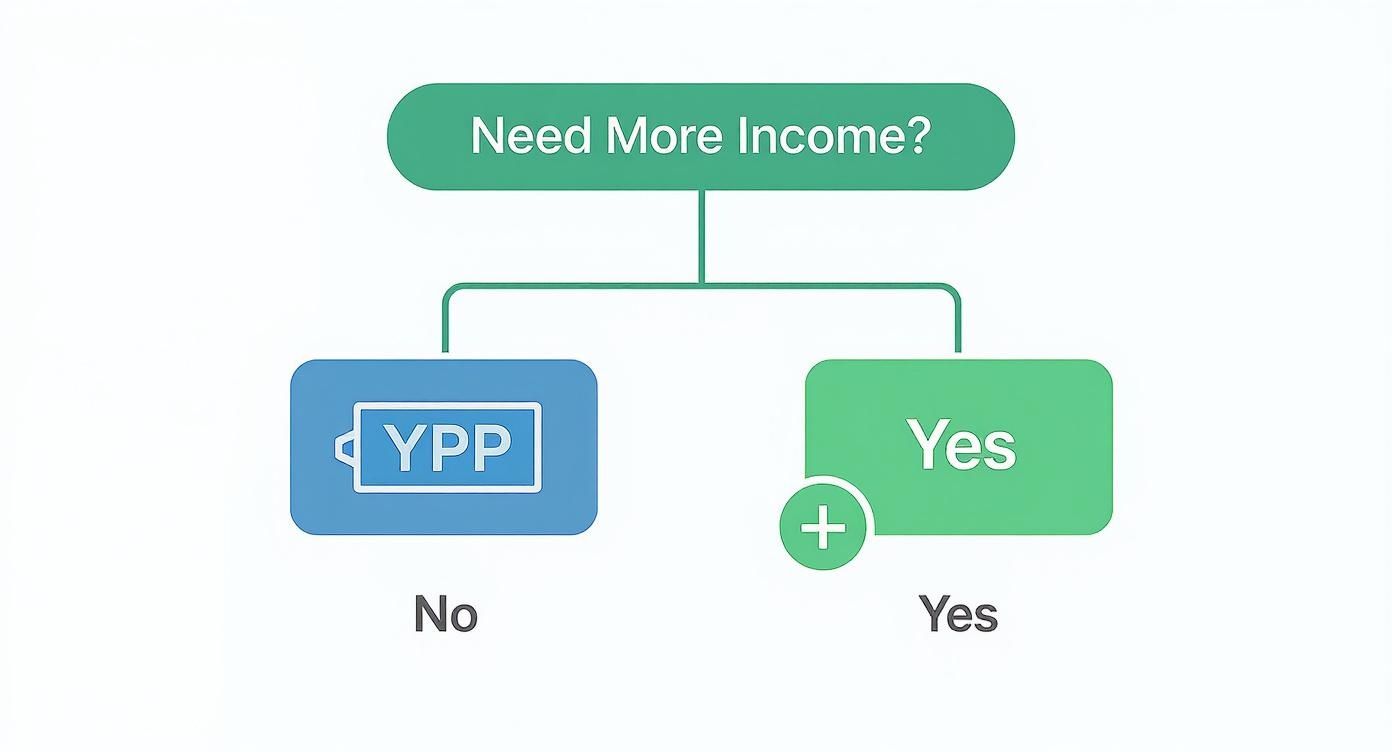
Think of it as adding another powerful, steady stream to your income river, making your channel much more financially stable.
What to Look for in a Program
Okay, so you have a list of potential partners. Now it's time to dig in and vet them properly. Don't get distracted by a high commission percentage alone; the devil is in the details.
Here’s what you need to look at closely:
- Cookie Duration: This is critical. It's the period after someone clicks your link that you'll get credit for a sale. A longer duration—think 30 to 90 days—is always better. A short window, like Amazon's infamous 24 hours, means you lose out on sales from people who take a little longer to decide.
- Payment Terms: Get clear on how and when you get paid. Some programs have a high minimum payout, like $100, which can be tough to hit when you're just starting. Look for programs with reasonable thresholds so you can see your earnings sooner.
- Commission Structure: Is it a percentage of the sale or a flat fee per conversion? A percentage works great for high-ticket items, while a flat fee might be better for lower-cost products or lead generation.
A great YouTube affiliate program is a true partnership. The brand should provide you with the resources you need to succeed, and your promotions should provide them with genuine, engaged customers. It has to be a win-win.
Finding the perfect program takes some homework, but the reward is a sustainable income source that your audience actually appreciates.
If you’re still nailing down your channel’s focus, our guide on how to find a profitable niche can help you get laser-focused. Once you know your direction, you can learn more about how to find affiliate programs for your niche and start building your dream partner list.
Placing Affiliate Links in Your Content Naturally
Alright, you’ve got your affiliate partners lined up. Now comes the real art: weaving those links into your content so they feel like a genuine recommendation, not a clumsy sales pitch. The idea is to make your links a natural extension of the value you're already delivering.
While the video description is the most common home for affiliate links, just pasting a long, messy URL in there won't cut it. It looks spammy and unprofessional.
This is where custom, branded short links are a game-changer. Services like Bitly or the WordPress plugin Pretty Links can turn an ugly affiliate URL into something clean and memorable, like yourbrand.com/gear. Not only does this look better in your description, but it's also easy to say out loud in your videos, which is a huge plus.
Expanding Beyond the Description
Your video description is valuable real estate, for sure, but don't stop there. If that's the only place you're putting links, you're leaving a lot of potential clicks on the table. Think about your entire YouTube channel as an ecosystem where your links can live and thrive.
Here are a few other powerful spots to work into your strategy:
- Pinned Comments: As soon as you publish a video, write a comment with your most relevant affiliate link and pin it. It's often the first thing people see when they scroll down to join the conversation.
- YouTube Cards: You know those little pop-ups that appear in the corner of a video? Those are Cards. You can time them to show up right when you mention a specific product, grabbing your viewer’s attention at the exact moment their interest peaks.
- End Screens: The last 5-20 seconds of your video are perfect for directing engaged viewers. Use end screen elements to link to a relevant blog post or landing page loaded with your affiliate products.
Getting your description organized is also a critical piece of the puzzle. For a deeper dive, check out our guide on how to create a YouTube channel description that actually converts.
Always Prioritize Transparency
If you take only one thing away from this section, let it be this: you must disclose your affiliate relationships. This isn't just good practice; it's a legal requirement from the Federal Trade Commission (FTC). More importantly, it's about maintaining trust.
Your audience supports you because they trust your judgment. Hiding affiliate relationships erodes that trust instantly. Always be transparent—it shows respect for your viewers and protects your credibility.
A simple disclaimer in your video description does the trick. Something like, "(Disclosure: I may earn a commission if you purchase through my links)" is clear and straightforward.
I also highly recommend mentioning it verbally in your videos. A quick, "FYI, links to all the gear I'm using are in the description, and some of them are affiliate links which helps support the channel," feels honest and builds a stronger connection with your audience. It turns a potential transaction into a transparent recommendation.
Creating Videos That Actually Drive Sales

Here’s a hard truth: just sprinkling affiliate links into random videos is a recipe for disappointment. If you want to see real results from a YouTube affiliate marketing program, you have to stop thinking like a marketer and start thinking like a problem-solver.
Your content needs to be built with a purpose—to help your viewer. The affiliate promotion should feel like the natural, helpful next step, not the reason the video exists in the first place.
When you focus on educating, entertaining, and building genuine trust, the sales follow. It’s an organic result of your audience knowing you have their back.
Video Formats That Actually Convert
Some video styles are just naturally better at driving affiliate clicks. Why? Because they meet viewers right when they're trying to make a buying decision. You’re not just mentioning a product; you’re providing genuine value that helps them.
Here are a few formats I've seen work time and time again:
- In-Depth Product Reviews: Anyone can read a spec sheet. What people want is your real-world experience. Show the product in action, talk about how you really use it, and don't shy away from its flaws. That honesty is what builds serious trust.
- "Best Of" Comparison Videos: Viewers are often overwhelmed with options. A video like "Best Budget Microphones for Podcasting" cuts through the noise. You become the expert guide who helps them find the perfect fit for their needs.
- How-To Tutorials: This is where the magic happens. A tutorial showing someone "How to Get Started with X Software" doesn't just teach them a skill—it proves the product's value right before their eyes. The affiliate link becomes the obvious next step for anyone who wants to get the same results.
To get more mileage out of these videos, think about how they can live outside of YouTube. Properly embedding YouTube videos for SEO on your blog can bring in a whole new audience and keep your content relevant for much longer.
The Secret Sauce of a High-Converting Video
No matter which format you pick, a few key ingredients are essential for building the trust that leads to sales.
First, share your personal story. How did this product fit into your life or workflow? Did it solve a frustrating problem you were having? That’s way more powerful than just rattling off a list of features from the company’s website.
Next, be relentlessly helpful. Center your content around your viewer’s pain points. Show them exactly how the product you're recommending is the solution they’ve been looking for. This simple shift turns you from a salesperson into a trusted advisor.
My Two Cents: The best affiliate videos never feel like an ad. They feel like a friend giving you a genuine recommendation. Honesty is your superpower here, especially when you point out a product's minor shortcomings. That's what makes you credible.
Today, AI tools have made it easier than ever to create professional-looking videos, which is why you see so many channels in the 10,000 to 100,000 subscriber range using them. Keep in mind that with over 90% of YouTube traffic coming from mobile, your content and the affiliate checkout process need to be seamless on a small screen. Affiliate income is a huge part of building a sustainable creator business, and it pays to get these details right.
Tracking Your Performance and Improving Your Strategy

Success with any YouTube affiliate marketing program isn't a "set it and forget it" game. If you want to see real growth, you have to get comfortable with the data. It's about digging into the numbers, figuring out what’s actually working, and tweaking your approach based on what you find. Ignoring your analytics is like flying blind—you might be moving, but you have no idea if you're headed in the right direction.
Your affiliate dashboard is ground zero for all this. Think of it as your command center. You need to get into the habit of checking your clicks, conversions, and earnings for every link you promote. Most affiliate platforms give you some pretty detailed reports that show you which products are getting clicks and, more importantly, which ones are actually making you money.
Connecting Affiliate Data with YouTube Analytics
Here’s where the real insight comes from: combining your affiliate dashboard data with your YouTube Analytics. Your affiliate program can tell you a link got 500 clicks, but it can't tell you which video those clicks came from. That’s the missing piece of the puzzle, and finding it is what separates the pros from the beginners.
By looking at your YouTube traffic sources, you can start to connect the dots. Let's say you see a big spike in affiliate conversions for a specific camera lens. Did you post a review video for that lens a few days earlier? Bingo. That's a huge sign telling you to create more content just like that. This simple process of matching up the data lets you double down on the video styles and topics that actually get your audience to buy.
Tracking isn't just about counting your commissions. It’s about understanding the "why" behind every click and every sale. That's the knowledge that turns a side hustle into a predictable business.
A Framework for Continuous Improvement
Once you’ve identified your top-performing videos, you can start testing things to make them even better. The key is to not change everything at once. Focus on tweaking one thing at a time so you know exactly what caused the change in your results.
Here’s a simple framework to get you started:
- Test Your Call-to-Action (CTA): In your next video, try changing how you verbally tell people to click the link. Instead of "Links in the description," maybe try something more direct like, "You can grab the exact tool I'm using through the first link below."
- Experiment with Link Placement: Are you always burying your links deep in the description? Try putting your main affiliate link in a pinned comment for a week and see if your click-through rate goes up.
- Rotate Product Promotions: If you have a successful video format, try featuring a different—but still relevant—product. This is a great way to discover new affiliate products your audience didn't even know they wanted.
This data-driven mindset takes all the guesswork out of your strategy. You'll learn exactly what your audience responds to, which ultimately means higher conversion rates and a much healthier income from your channel.
Your Top YouTube Affiliate Marketing Questions, Answered
Jumping into affiliate marketing on YouTube can feel like navigating a maze. A lot of questions pop up, and frankly, a lot of myths are floating around. Let's clear the air and tackle the questions I hear most often from creators who are just starting out.
Think of this as your quick-start FAQ to get you moving with confidence.
How Many Subscribers Do I Actually Need?
This is the biggest myth out there, so let's bust it right now. You need zero subscribers to start. That’s right, zero.
Affiliate marketing isn't like the YouTube Partner Program (YPP), which has those strict 1,000 subscriber and 4,000 watch hour requirements. Most affiliate programs couldn't care less about your sub count. They care about whether you can drive sales.
I've seen channels with just a few hundred dedicated followers earn more from affiliate links than channels with 50,000 disengaged subscribers. It’s all about the trust you build, not the vanity metric. Focus on your community, and the income will follow.
Which Affiliate Programs Are Best for Beginners?
When you're new, don't overcomplicate things. Go for programs that are easy to join and have products your audience will actually want.
For most people, the best place to start is Amazon Associates. Why? Because everyone already uses and trusts Amazon. The sheer variety of products means you can find something relevant for literally any niche, from tech gear to kitchen gadgets. The trust is already built-in, which makes getting that first click-to-purchase so much easier.
Once you've got your feet wet, you can explore affiliate networks:
- ShareASale: This platform opens the door to thousands of brands, from well-known companies to smaller, niche businesses you might not find elsewhere.
- CJ Affiliate: Another industry giant (it used to be called Commission Junction) that connects you with tons of reputable merchants.
Your best promotions will always be for products you genuinely use and love. Authenticity is everything. If you wouldn't recommend it to your best friend over coffee, don't try to sell it to your audience. They'll see right through it.
How Do I Properly Disclose My Affiliate Links?
Transparency isn't optional—it's a must. The FTC has clear rules about this, but more importantly, it's about maintaining the trust you've worked so hard to build with your viewers. Hiding that you might earn a commission is a surefire way to damage your reputation.
It's actually pretty simple. Add a clear disclosure right at the top of your video description.
Something like this works perfectly: "Disclosure: Some of the links below are affiliate links. This means that, at zero cost to you, I will earn an affiliate commission if you click through the link and finalize a purchase."
I also recommend mentioning it in the video itself. A quick, natural shout-out like, "By the way, I've put links to everything I'm using down in the description, and as a heads up, some of those are affiliate links," feels open and honest.
Can I Use Affiliate Links If I’m Not in the YouTube Partner Program (YPP)?
Yes, 100% yes. You do not need to be in the YPP to make money with affiliate marketing.
These are two completely different ways to earn.
- YPP is about earning a cut of the ad revenue from ads YouTube runs on your videos.
- Affiliate Marketing is about earning a commission from brands when your audience buys their products through your unique link.
You can sign up for an affiliate program on your very first day as a creator and put links in your video descriptions. It's one of the most accessible income streams for new YouTubers.
Ready to skip the slow grind of meeting monetization requirements? MonetizedProfiles offers fully approved YouTube accounts that let you start earning from ad revenue immediately, giving you a powerful head start. Explore our selection of monetized channels at https://monetizedprofiles.com.


