


In 2025, simply running a YouTube ad isn't enough. With millions of videos competing for attention, understanding specific ad formats and the strategies behind them is the key to breaking through the noise and achieving real results. Generic advice won't cut it when your ad budget is on the line. Success depends on knowing exactly which ad type to use, how to structure it for maximum impact, and what makes an audience stop scrolling and actually listen. This is why looking at a great YouTube ad example is so powerful; it provides a proven roadmap.
This guide moves beyond theory to provide a detailed breakdown of 8 critical YouTube ad examples, covering everything from skippable in-stream ads to targeted discovery ads. We will dissect each format's structure, analyze its strategic purpose, and offer actionable templates you can adapt for your own campaigns. We'll examine the hook, the value proposition, and the call to action that makes each ad work. Whether you're a SaaS marketer trying to generate leads, an e-commerce brand driving sales, or a faceless content creator building an audience, this is your blueprint for creating ads that convert and deliver a measurable return on investment.
1. Skippable In-Stream Ads (TrueView)
Skippable in-stream ads, also known as TrueView ads, are the most common video ads you see on YouTube. They play before, during, or after a video, and viewers can choose to skip them after the first five seconds. This format is a favorite for advertisers because you only pay when a viewer watches at least 30 seconds of your ad (or the full ad if it's shorter), making it a highly cost-effective youtube ad example.
The key to a successful skippable ad is capturing attention within that initial five-second window. If you fail to hook the viewer, they will click "Skip Ad" without a second thought. This model forces advertisers to be creative, direct, and value-focused from the very first frame.
Strategic Breakdown: Dollar Shave Club
The iconic Dollar Shave Club launch video is a masterclass in a skippable ad format.
- The Hook (0-5 seconds): The ad starts with the founder, Mike, directly addressing the camera with a bold, pattern-interrupting statement: "Are our blades any good? No. Our blades are f***ing great." This combination of direct address, humor, and slight shock value immediately grabs attention.
- Value Proposition: He quickly explains the core offer: quality razor blades for just a few bucks a month. The problem (overpriced razors) and the solution (Dollar Shave Club) are made crystal clear.
- Call-to-Action (CTA): The ad ends with a simple, memorable CTA: "Stop paying for shave-tech you don’t need... and start deciding where you’re going to stack all those dollar bills I’m saving you." This reinforces the value and directs viewers to the website.
Actionable Takeaways
- Lead with Personality: Don't be afraid to be bold, funny, or unique. A strong personality helps your ad stand out.
- Focus on the First 5 Seconds: Use a question, a surprising statement, or dynamic visuals to prevent the skip.
- Keep it Simple: Clearly state the problem you solve and how your product is the solution. Avoid jargon. For those starting from scratch, building a channel's authority is crucial for ad performance. You can explore options for getting a monetized YouTube channel to establish credibility more quickly.
2. Non-Skippable In-Stream Ads
Non-skippable in-stream ads are video ads, typically 15-20 seconds long, that viewers must watch in their entirety before their chosen video plays. Unlike their skippable counterparts, these ads guarantee full message delivery, making them a powerful youtube ad example for brands that need to convey a complete story or build strong awareness.
Because viewers cannot skip them, these ads can sometimes be perceived as intrusive. Therefore, the creative must be exceptionally high-quality, engaging, and concise to avoid frustrating the audience. This format is ideal for major product launches, movie trailers, or critical brand announcements where guaranteed reach is paramount.

Strategic Breakdown: Nintendo Switch
Nintendo frequently uses non-skippable ads for its game and console launches, and their "My Way to Play" campaign for the Nintendo Switch is a prime example.
- The Hook (0-3 seconds): The ads open with vibrant, high-energy gameplay footage from popular titles like Mario Kart or The Legend of Zelda. The recognizable sounds and iconic characters instantly capture the attention of the target gaming audience.
- Value Proposition: Instead of a long narrative, the ads showcase the Switch's core benefit: versatility. They rapidly cut between scenes of people playing on a big-screen TV, then seamlessly taking the console on the go, demonstrating the "play anywhere" concept without needing many words.
- Call-to-Action (CTA): The ad concludes with a clear shot of the Nintendo Switch logo and the specific game being featured, often accompanied by a simple, direct command like "Available Now." This creates urgency and clear direction for interested viewers.
Actionable Takeaways
- Make it Visually Stunning: Since viewers are a captive audience, reward them with high-quality production. Use dynamic visuals, crisp editing, and engaging audio.
- Get Straight to the Point: With only 15 seconds, your message must be incredibly focused. Showcase your core benefit immediately and avoid complex narratives.
- Match Ad to Audience: Use non-skippable ads when targeting audiences with a high affinity for your brand or product category, as they will be more receptive to a forced ad.
3. Bumper Ads
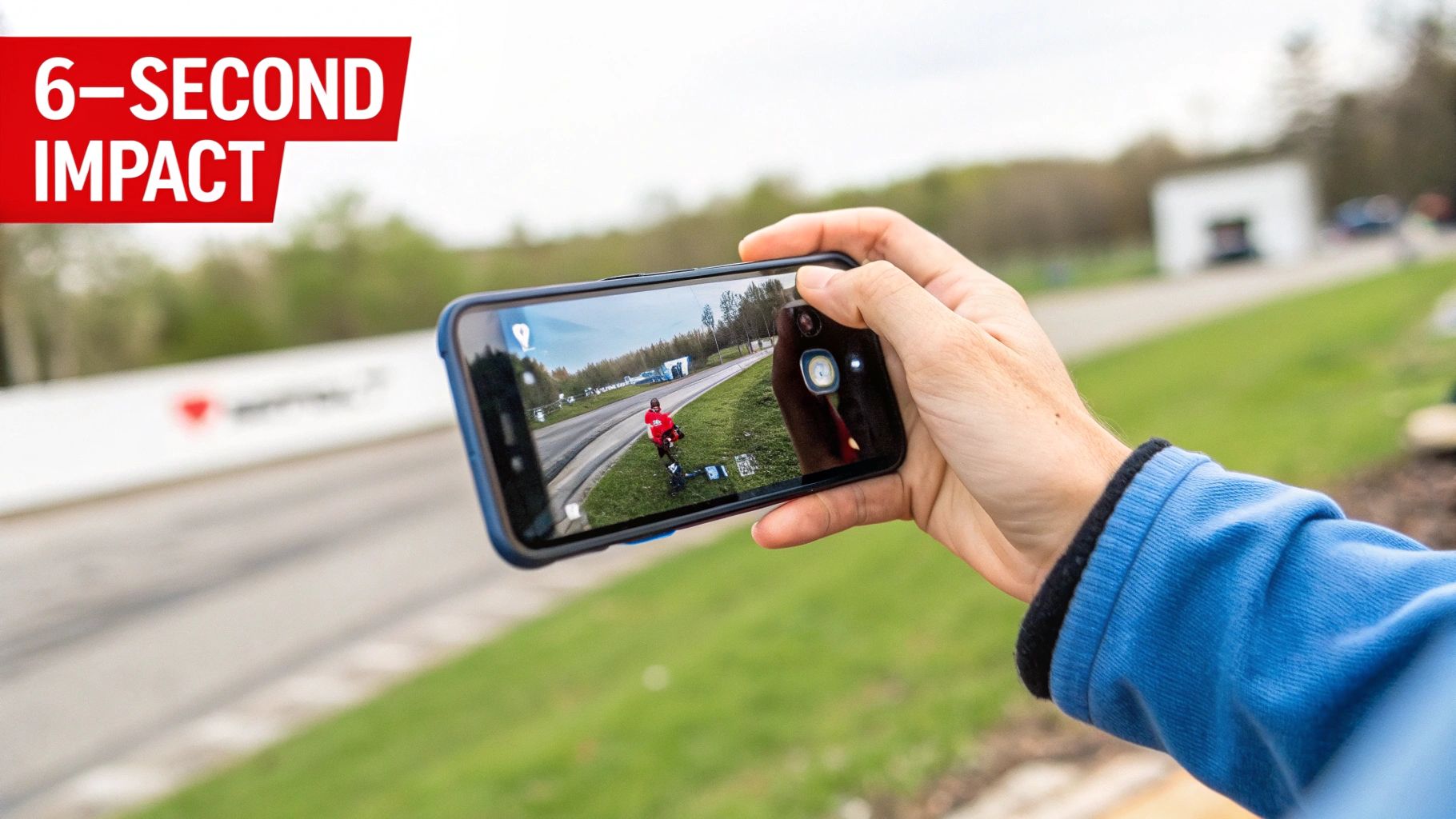
Bumper ads are ultra-short, non-skippable video ads that last a maximum of six seconds. Their purpose is to deliver a quick, memorable message and build brand awareness, making them a powerful youtube ad example for capturing the attention of mobile users with fleeting attention spans. Since viewers can't skip them, the challenge is to make an impact in a very short time.
This format forces advertisers to distill their message down to its absolute core. It's not about telling a complex story; it's about landing a single, powerful punch through bold visuals, a clear brand presence, and a message that sticks.
Strategic Breakdown: Airbnb
Airbnb uses bumper ads effectively to evoke emotion and plant a simple idea in the viewer's mind, often focusing on unique travel experiences rather than specific listings.
- The Hook (0-2 seconds): The ad opens with a visually striking and unusual scene, like a person floating in a unique natural setting. The immediate visual intrigue prevents viewers from mentally checking out.
- Value Proposition: Instead of a direct offer, the ad communicates the feeling of an Airbnb experience. The message is simple: Airbnb offers unique stays that create lasting memories. This is conveyed through beautiful, aspirational visuals.
- Call-to-Action (CTA): The ad ends with the Airbnb logo and a simple tagline like "Live There." The CTA is implicit, encouraging viewers to associate the brand with authentic travel and consider it for their next trip.
Actionable Takeaways
- Focus on a Single Idea: You only have six seconds. Pick one message, feeling, or product feature and make it the entire focus.
- Make it Visual: Since you have little time for words, your visuals must do the heavy lifting. Use bright colors, dynamic motion, and close-ups.
- Brand Prominently: Your logo or product should be clearly visible, especially at the end, to ensure brand recall. For deeper insights on maximizing ad impact, you can discover more strategies for creating effective bumper ads on our blog.
4. Overlay Ads (Banner Ads)
Overlay ads are semi-transparent banner ads that appear across the bottom 20% of a YouTube video. Unlike pre-roll ads, they don't interrupt the content, offering a less intrusive way to advertise. Viewers can click the ad at any time or close it, giving them full control over their experience. This format is effective for driving clicks to a website or landing page without disrupting viewer engagement, making it a subtle yet powerful youtube ad example.
The strength of an overlay ad lies in its simplicity and directness. Because it’s a static image or text-based banner, the message must be incredibly clear and compelling. The goal is to present a relevant offer that complements the video content the user is already watching, encouraging a click-through without being a nuisance.
Strategic Breakdown: Skillshare
Skillshare, an online learning community, frequently uses overlay ads to promote specific courses or free trial offers.
- The Hook: The banner often appears during a tutorial or educational video related to the course being advertised. For example, a viewer watching a video on "graphic design basics" might see a Skillshare overlay ad for an "Advanced Illustrator Course."
- Value Proposition: The ad copy is direct and benefit-driven. It might say something like, "Master Adobe Illustrator with a 1-Month Free Trial" or "Learn Graphic Design from Industry Pros." This immediately communicates the value and lowers the barrier to entry with a free offer.
- Call-to-Action (CTA): The CTA is always a clear, actionable directive. Phrases like "Start Learning," "Get Free Access," or "Sign Up Now" are used to guide the user on exactly what to do next.
Actionable Takeaways
- Context is King: Match your ad to the video's content. Promote a software trial on a tech review video or an e-commerce product on a "how-to" tutorial that uses it.
- Use High-Contrast Design: Your banner needs to be easily readable against a dynamic video background. Use bold colors and clean, simple fonts to ensure visibility.
- Craft a Compelling Offer: A strong offer like a free trial, a discount code, or a free download is crucial for driving clicks. Make the value proposition irresistible and clear at a glance.
5. Discovery Ads (YouTube Search Ads)
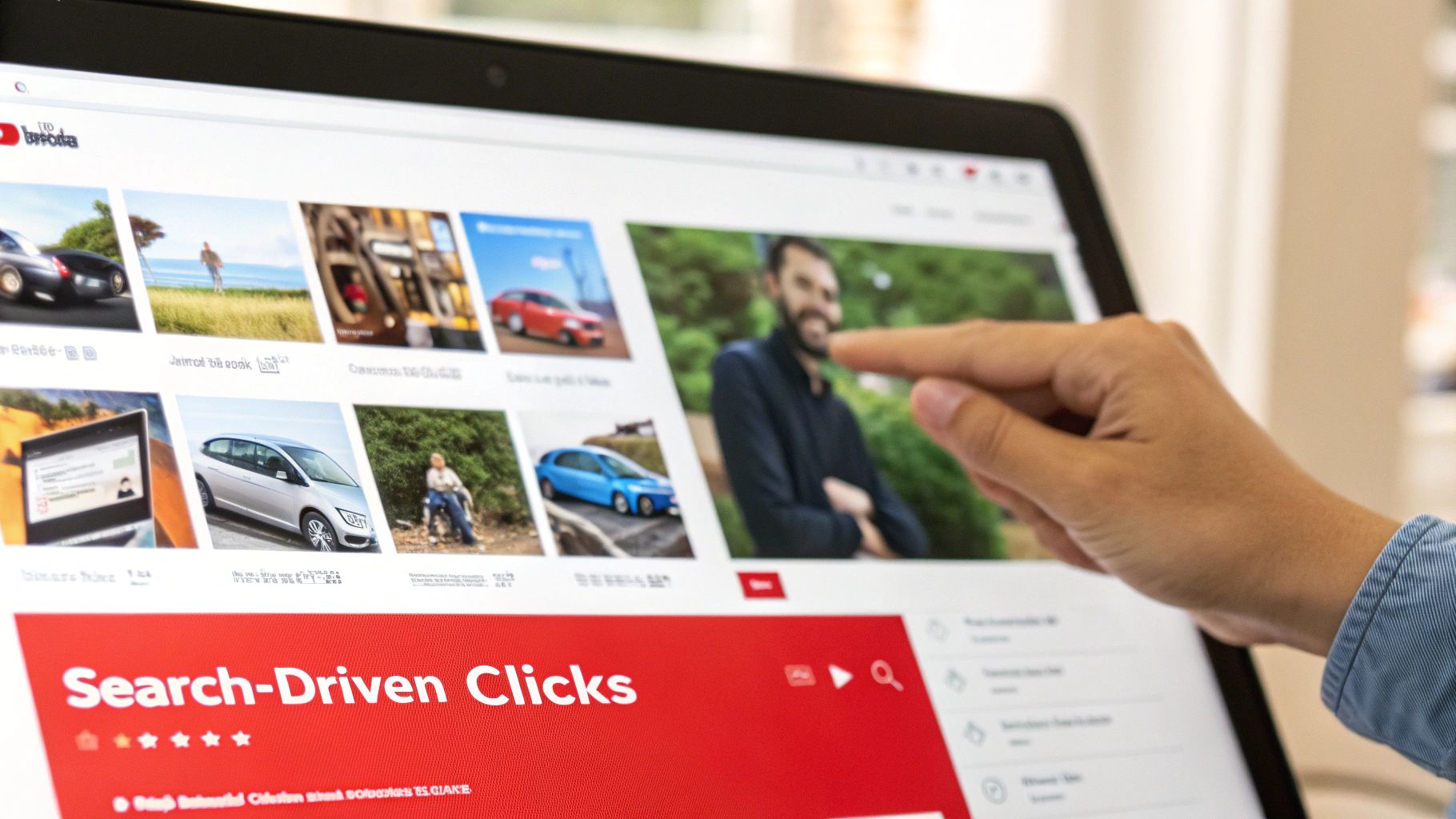
Discovery ads, often called YouTube search ads, appear in places of discovery like YouTube search results, the mobile homepage, and as recommended videos. Unlike in-stream ads that interrupt content, these ads are presented as a video thumbnail with a headline and description, targeting users actively looking for specific content. This format is a powerful youtube ad example because you pay on a pay-per-click (PPC) basis, meaning you only incur costs when a user intentionally clicks to watch your video.
This model capitalizes on user intent. Instead of pushing an ad onto a passive viewer, you present your video as a solution or relevant piece of content to someone already searching for it. Success hinges on creating an irresistible thumbnail and headline combination that stands out among organic search results. For a deeper dive, this guide on Mastering Discovery YouTube Ads for Lead Gen covers advanced setup and targeting.
Strategic Breakdown: Coursera
Online course platforms like Coursera excel with discovery ads. Imagine a user searching "learn python programming." Coursera can place a discovery ad at the top of the search results with a title like "Python for Everybody - Full University Course."
- The Hook (Thumbnail & Headline): The ad uses a clean, professional thumbnail featuring the instructor and the University of Michigan logo. The headline is direct, includes the core keyword "Python," and highlights a key benefit: "Full University Course." This combination signals authority and high value.
- Value Proposition: The description text below the headline clarifies what the user will get: "Start your programming journey with this beginner-friendly course. No prior experience needed. Enroll for free." It addresses potential barriers (experience level) and presents a low-risk offer (enroll for free).
- Call-to-Action (CTA): The implicit CTA is the click itself. By framing the ad as a valuable piece of content (a full course), the click feels like a natural next step for the searcher, leading them to a landing page where they can learn more and enroll.
Actionable Takeaways
- Align with Search Intent: Your thumbnail, headline, and ad copy must directly match what your target audience is searching for.
- Create a "Click-Worthy" Thumbnail: Use high-contrast colors, clear text overlays, and professional imagery to stand out from other search results.
- Write Compelling Headlines: Use strong keywords and clearly state the value proposition. Think like a search result, not just an ad. For brands building their presence, leveraging an established aged YouTube channel can provide an initial boost in perceived authority.
6. Masthead Ads
Masthead ads are premium, large-format video ads that appear at the top of the YouTube homepage for a 24-hour period. This is the most prominent and high-impact placement available on the platform, guaranteeing massive visibility. Due to their cost and reach, they are typically reserved for major brands aiming for maximum brand awareness, often during key launch events or promotions, making them a powerful youtube ad example.
The primary goal of a Masthead ad is not just clicks but widespread impression and brand lift. It’s an unavoidable placement that ensures your message is seen by millions of users the moment they visit YouTube, effectively functioning as a digital billboard on one of the world's most visited websites.
Strategic Breakdown: Apple's "Shot on iPhone"
Apple frequently utilizes Masthead ads for its major product launches, and the "Shot on iPhone" campaign is a perfect showcase of this strategy's effectiveness.
- The Hook (0-5 seconds): The ad immediately captivates with stunning, high-quality visuals that are vibrant and cinematic. There's no complex narrative; the beauty of the footage itself is the hook, instantly demonstrating the iPhone's camera capabilities without saying a word.
- Value Proposition: The value is shown, not told. By showcasing breathtaking user-generated content, Apple powerfully communicates that anyone can achieve professional-grade results with the device in their pocket. The core message is simple: "Your life, filmed beautifully."
- Call-to-Action (CTA): The CTA is subtle and brand-focused. It often concludes with the simple "Shot on iPhone" text and the Apple logo, driving viewers to associate this level of quality with the brand and encouraging them to learn more about the new product.
Actionable Takeaways
- Invest in High-Production Value: A Masthead placement demands premium creative. Your ad must be visually stunning and polished to justify its prominent position.
- Plan Around Major Events: Maximize impact by aligning your Masthead campaign with a product launch, a major holiday, or a significant cultural moment.
- Focus on Brand Awareness: The main KPI for a Masthead ad is brand lift and reach. Design your creative to make a memorable brand impression rather than focusing solely on direct-response clicks.
7. Shopping Ads
Shopping ads are a powerful tool for e-commerce businesses, displaying your products directly within the YouTube ecosystem. Unlike traditional video ads, these are more like interactive product listings, featuring an image, title, price, and your store name. They are automatically generated from your Google Merchant Center product feed and can appear on the home feed, search results, and next to relevant video content, making them a highly effective youtube ad example for driving direct sales.
The strength of this format is its directness. Viewers who are in a buying mindset can see the product, its price, and click to purchase with minimal friction. This makes Shopping ads ideal for retailers who want to turn views into immediate revenue, bypassing the longer journey of brand awareness for a straight path to conversion.
Strategic Breakdown: Ruggable
Ruggable, a brand known for its machine-washable rugs, effectively uses Shopping ads to capture interested buyers directly on YouTube.
- The Hook (Visual Trigger): A user searching for "living room makeover ideas" sees a Ruggable Shopping ad showcasing a stylish, modern rug. The high-quality image and clear price ($199) immediately qualify it as a viable option. The visual appeal acts as the initial hook, stopping the scroll.
- Value Proposition: The ad's concise format implicitly communicates its value. The viewer sees a visually appealing product, the brand name (Ruggable), and the price. For those familiar with the brand, it reinforces the unique selling proposition (washable). For new viewers, it presents a tangible product solution to their search query.
- Call-to-Action (CTA): The entire ad unit is a clickable CTA. Tapping on the product image or title takes the user directly to the Ruggable product page, ready to customize their size and complete the purchase. The CTA is "Shop Now" or the product price itself, streamlining the path to checkout.
Actionable Takeaways
- Optimize Your Product Feed: Your Google Merchant Center feed is your ad creative. Use high-quality, clean product images and write descriptive, keyword-rich titles.
- Keep Data Accurate: Ensure your pricing, stock availability, and product information are always up-to-date to avoid user frustration and ad disapprovals.
- Segment Your Campaigns: Don't just run one large campaign. Group products by category, price point, or profit margin to better control bids and analyze performance. This allows you to scale what works and cut what doesn't.
8. Outstream Ads (In-Article/In-Banner Video Ads)
Outstream ads extend your video reach beyond YouTube's platform, appearing on Google's vast network of partner websites and apps. These mobile-first ads are designed to be non-intrusive; they play with the sound off within an article or banner and only activate audio when a user taps on them. This format is a powerful youtube ad example for building brand awareness among audiences as they browse their favorite content online.
The primary goal of an outstream ad is to increase reach and brand visibility cost-effectively, as you only pay when your ad is viewable (based on cost-per-thousand viewable impressions, or vCPM). Because they are sound-off by default, the creative must be visually compelling enough to stop a user from scrolling past.
Strategic Breakdown: The New York Times
Major publishers like The New York Times often use outstream ads to promote new documentary series or feature articles on partner sites that share a similar audience demographic, such as news aggregators or political blogs.
- The Hook (Sound-Off Visuals): The ad starts with powerful, high-quality B-roll footage from the documentary. Dynamic text overlays and subtitles immediately convey the story's theme and key quotes, making the narrative clear without any audio. This visual-first approach is crucial for capturing attention in a sound-off environment.
- Value Proposition: The ad quickly establishes the topic and emotional core of the documentary. It presents a compelling human-interest story or a breaking news investigation that piques the viewer's curiosity, creating a strong incentive to learn more.
- Call-to-Action (CTA): The CTA is often a simple button overlay like "Watch Now" or "Read the Full Story," which directs the user to the specific content on The New York Times website. The goal is to seamlessly transition the viewer from browsing to engaging with their content.
Actionable Takeaways
- Design for Sound-Off: Your ad must make sense and be engaging without audio. Use bold text overlays, captions, and strong visual storytelling to communicate your message.
- Optimize for Mobile: Outstream ads are primarily a mobile format. Ensure your visuals and text are clear and legible on smaller screens. Use vertical or square video for a better fit.
- Focus on Brand Awareness: Use this format to introduce your brand or a new product to a broad but relevant audience. The goal is reach, not necessarily immediate conversions.
YouTube Ad Formats — 8-Point Comparison
| Ad Format | Implementation Complexity 🔄 | Resource Requirements ⚡ | Expected Outcomes 📊 | Ideal Use Cases 💡 | Key Advantages ⭐ |
|---|---|---|---|---|---|
| Skippable In-Stream Ads (TrueView) | Medium — needs strong 5s hook and editing | Moderate — video production + CPV budget | Performance-driven: conversions + measurable view metrics | Performance campaigns, demos, broad reach with cost control | Cost-effective, pay-per-view, rich analytics |
| Non-Skippable In-Stream Ads | Medium–High — strict duration and pacing | High — premium CPM and quality production | Guaranteed full-message delivery, high recall (can irritate viewers) | Brand awareness, product launches, complex messaging | 100% exposure, strong brand impact |
| Bumper Ads | Low–Medium — concise concepting required | Low — short production, CPM pricing | Very high completion and recall for short messages, low direct conversions | Mobile-first brand recall, complementing longer ads | 100% completion, cost-efficient reach |
| Overlay Ads (Banner Ads) | Low — simple creative, easy placement | Low — minimal production, CPM-based | Modest clicks/traffic, low disruption to viewer | Desktop promotions, supplemental CTAs, ecommerce links | Non-intrusive, cost-effective, good CTR on desktop |
| Discovery Ads (YouTube Search Ads) | Low–Medium — thumbnail + copy testing | Moderate — PPC-focused, strong landing pages needed | High-intent clicks, efficient conversions but lower volume | Search-driven offers, SaaS, online courses, product pages | Pay-per-click, targeted intent, measurable ROI |
| Masthead Ads | High — reserved inventory, campaign coordination | Very High — premium CPM, top-tier creative | Massive reach and brand lift, limited targeting, short daily inventory | Major launches, global campaigns, event-driven branding | Maximum visibility, guaranteed top placement |
| Shopping Ads | Medium — Merchant Center + feed management | Moderate — product feed upkeep, CPC/CPM varies | High conversion potential for product-based businesses | E‑commerce retailers, direct product sales, promo campaigns | Shows price/ratings, direct-to-product, automated feeds |
| Outstream Ads (In-Article/In-Banner) | Low–Medium — Display Network setup and testing | Moderate — adaptable creative, variable placement | Extended reach beyond YouTube, decent awareness but lower engagement | Brand awareness off-YouTube, publisher-sponsored content | Broad web reach, flexible formats, less intrusive than in-stream |
From Examples to Execution: Building Your Winning Ad Strategy
We've explored a wide array of high-performing YouTube ad examples, from the attention-grabbing hooks of SaaS companies to the subtle persuasion of faceless content channels. Each example serves as a blueprint, not just a case study. They reveal a core truth about YouTube advertising: success isn't about having the biggest budget, but about having the smartest strategy.
The most effective advertisers understand that there is no one-size-fits-all solution. They blend different ad formats to guide a viewer from initial awareness to final conversion. A snappy 6-second Bumper Ad might introduce the brand, a compelling Skippable In-Stream Ad can tell a deeper story, and a targeted Discovery Ad could be the final nudge a potential customer needs.
Your Blueprint for Action
The journey from inspiration to implementation is where the real work begins. The patterns we analyzed across each youtube ad example provide a clear, repeatable framework for your own campaigns. Remember these foundational pillars:
- Hook First, Sell Later: The first 3-5 seconds are everything. Your primary goal is to stop the scroll and earn the viewer's attention with a question, a bold statement, or a visually disruptive scene.
- Align Format with Goal: Don't use a Bumper Ad to explain complex features or a long-form In-Stream Ad just for brand recall. Match the ad type (Skippable, Non-Skippable, Discovery, etc.) to your specific campaign objective, whether it's awareness, lead generation, or sales.
- Clarity Over Complexity: A confused mind never buys. Your value proposition must be crystal clear and instantly understood. Focus on one core problem and one clear solution in each ad.
Measuring What Matters
Ultimately, creativity must be accountable to results. A campaign that feels successful is not the same as one that is provably profitable. This is why tracking your metrics is non-negotiable. To truly understand the effectiveness of your YouTube ad campaigns, it's vital to learn how to accurately calculate return on ad spend. This single metric will tell you if your ad dollars are working for you or against you, enabling you to refine your strategy with data, not just intuition.
Use the templates and breakdowns in this guide as your starting point. Test different hooks, experiment with various calls to action, and relentlessly analyze your data. The path to mastering YouTube ads is paved with iteration. Each campaign, whether a huge success or a learning experience, makes the next one stronger.
Ready to skip the slow grind of channel monetization and focus directly on creating powerful ads? MonetizedProfiles provides pre-monetized YouTube channels that are already eligible for the YouTube Partner Program. Start running ads and earning revenue from day one with a MonetizedProfiles channel.


