


Before you sink money into a brand partnership or buy a TikTok account, you absolutely have to check for fake followers. This isn't just about glancing at the follower count; it's about digging in and manually inspecting profiles, analyzing the actual engagement, and looking for weird, unnatural spikes in follower growth.
Why Bother Checking for Fake TikTok Followers?
In a world where you can buy thousands of followers overnight, that big number on a profile can be totally misleading. If you're a brand looking for the right influencer or an entrepreneur eyeing a monetized account, you need to understand that the follower count is just the tip of the iceberg. The real value is the living, breathing community behind the account.
Skipping this step is a recipe for disaster. Fake followers might inflate a profile's ego, but they deliver zero actual value. They can seriously damage your brand's reputation and your bottom line.
The Real Cost of a Fake Audience
The biggest problem with fake followers is how they water down real engagement. Have you ever seen an account with one million followers but their videos only get a few hundred likes and a bunch of generic "nice video!" comments? That's a massive red flag.
A low engagement rate like that tells the TikTok algorithm that the content is a dud. As a result, the platform is less likely to show it to the real people you're actually trying to reach.
Worse, fake followers are a direct drain on your marketing budget. When you pay an influencer, you're paying to get in front of their audience. If a huge chunk of that audience is just bots and inactive accounts, you're essentially throwing your money into a black hole. Your message isn't reaching potential customers; it's being served to ghost profiles.
The problem is bigger than you might think. Every month, people search for how to buy fake followers over 1.14 million times globally. And the demand for "buy TikTok followers" has skyrocketed by over a million searches since just January 2024. This shows a huge market for artificial growth that often flies under the radar. You can explore the full scope of the fake follower market to see just how prevalent this is.
A high follower count with low engagement is like a stadium full of mannequins. It looks impressive from a distance, but there's no real audience to hear your message or cheer you on.
At the end of the day, running a solid check for fake TikTok followers is about protecting your investment. It makes sure that your campaign dollars or your purchase price is backed by a real, active, and interested audience. Learning to spot the fakes helps you move past the vanity metrics and focus on what actually drives results.
How to Manually Spot Fake Followers
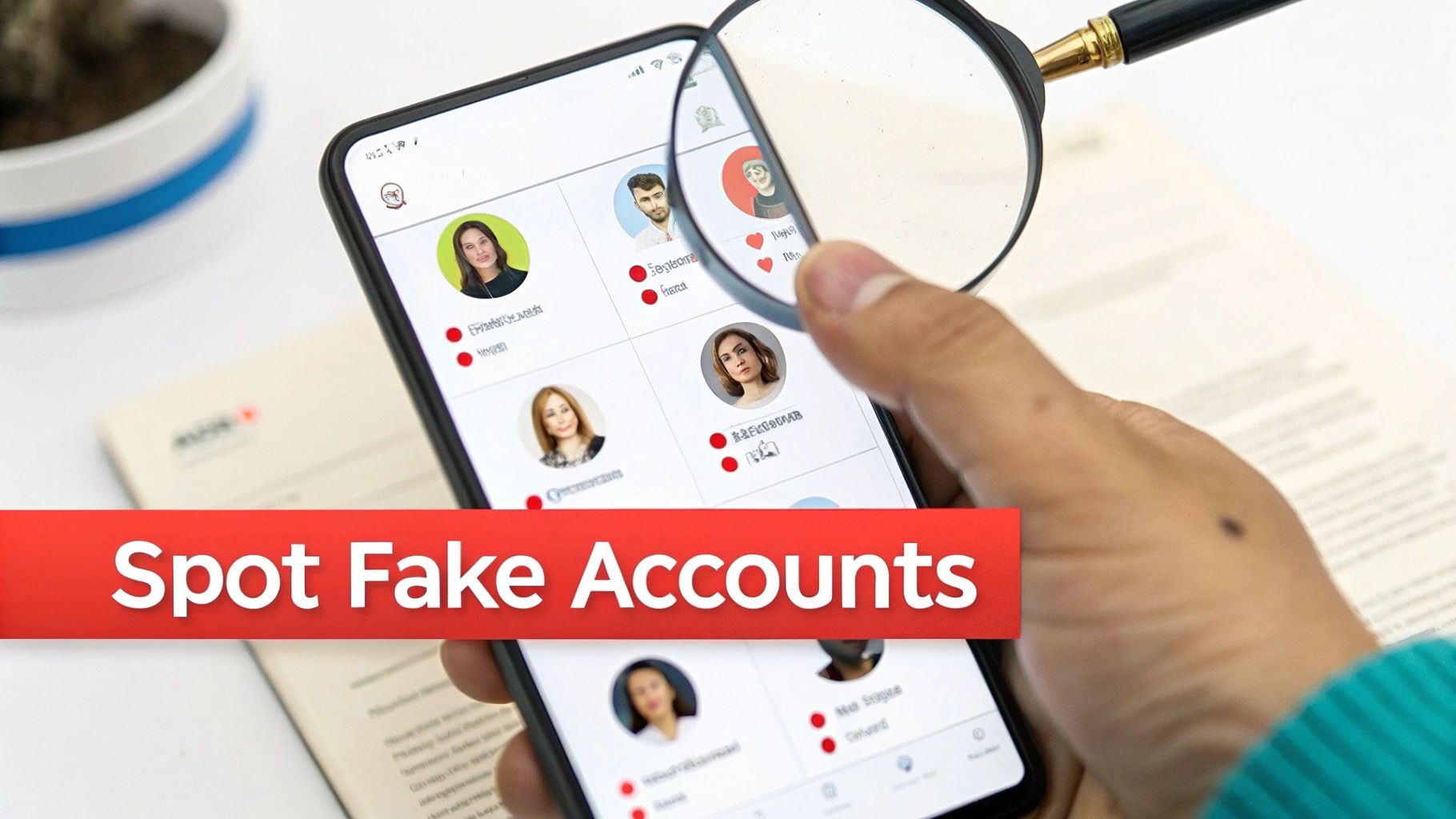
Before you get lost in analytics dashboards, trust your own eyes. The most effective tool for a quick TikTok fake follower check is your own intuition. Learning to spot a suspicious profile is your best first defense, and it's easier than you might think.
Start by doing a simple spot-check. You don't need to review thousands of profiles; just pick a random sample of an account's most recent followers and see what you find. I usually find that auditing about 15-20 profiles is enough to see a clear pattern emerge.
Profile and Username Red Flags
Fake accounts are almost always created in huge batches, which means they share some tell-tale, generic traits. The first place I look is the username. Bot-generated names are often laughably obvious—think a common name followed by a long jumble of numbers, like "jenna84729401."
Next, click into the profile itself. Does it feel like a real person is behind it? An authentic user usually has:
- A unique profile picture: A selfie, a picture of their dog, or just something personal.
- A customized bio: Even a single sentence or a few emojis shows a human touch.
- Original video content: Most real people on TikTok have posted at least a video or two.
A fake follower, on the other hand, is a ghost. You'll typically see the default gray avatar, a completely empty bio, and zero videos. If a large portion of the followers you audit fit this description, it’s a pretty safe bet the account has bought followers. If you're curious about this, our guide on the realities of buying followers on TikTok breaks down the whole process.
Analyzing Comment Quality
The comment section is where the truth really comes out. It’s a goldmine for your investigation. Real engagement is messy and human—people ask relevant questions, share inside jokes, and have genuine reactions to what they just watched. Fake engagement is the complete opposite.
Take a scroll through the comments on a few of the account's most recent videos. Bot comments are notoriously generic, have nothing to do with the video, and are incredibly repetitive.
Key Takeaway: An account with thousands of likes but a comment section full of single emojis (like 🔥 or 👍) or generic phrases like "nice video" and "good job" is a massive red flag. Real people leave specific comments that prove they actually watched.
This kind of discrepancy is easy to see once you know what to look for. For example, a video tutorial for a complicated recipe should have comments asking about ingredients or steps, not just a wall of fire emojis. When the comments feel totally disconnected from the content, you can be pretty sure that engagement was bought to create a false sense of popularity.
Using Analytics to Uncover Red Flags
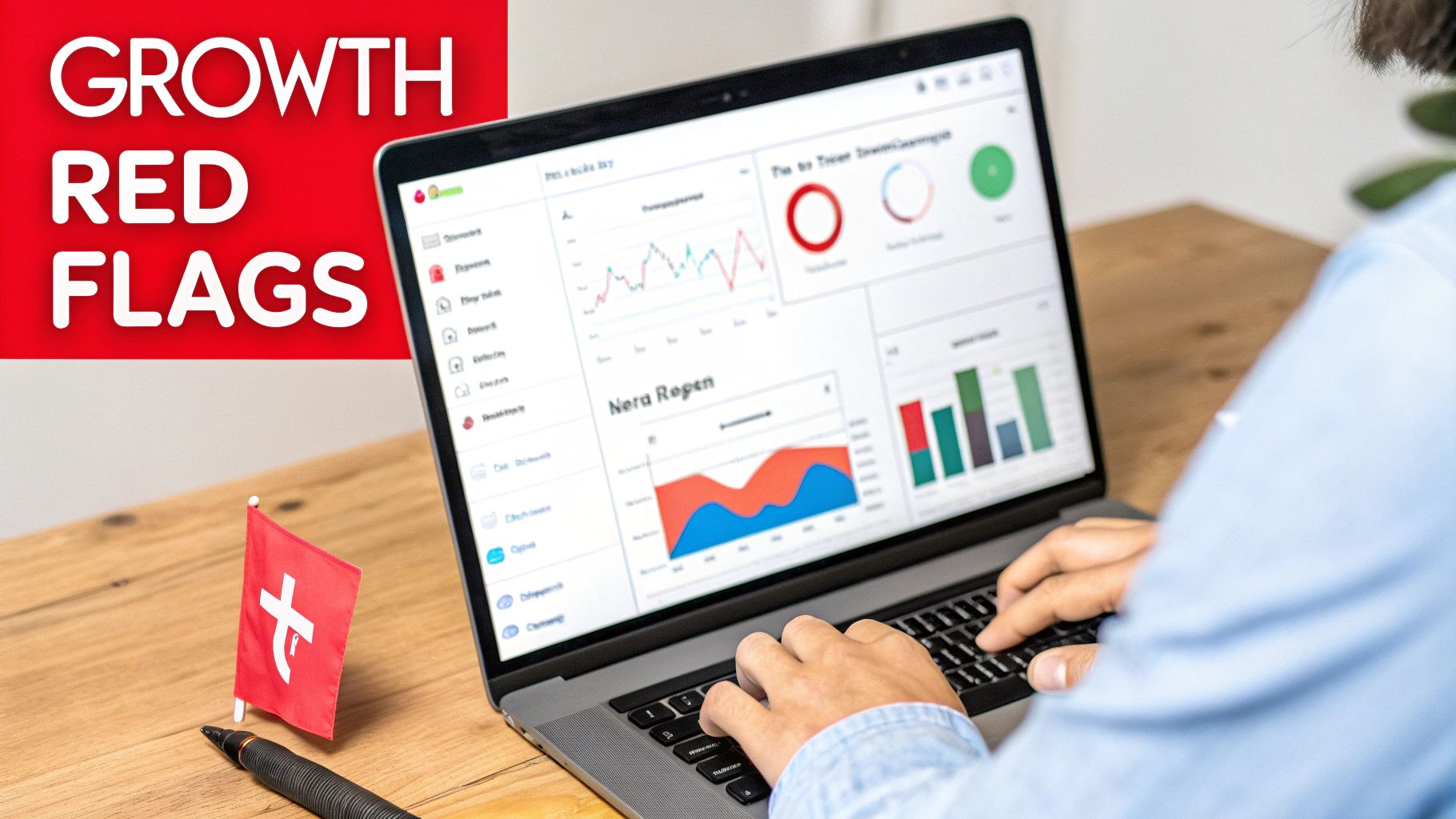
Spotting a few fake accounts manually is a good start, but the real story is almost always buried in the data. If you can get your hands on an account’s backend analytics through TikTok’s Creator Tools, you’ve got a direct line to the truth. This is where you can move beyond guesswork and find hard evidence of fake followers.
The numbers don't lie.
What Does the Follower Growth Really Look Like?
First thing you'll want to check is the follower growth chart. Real, organic growth has an ebb and a flow to it—it’s never a perfect, straight line shooting up. You’re hunting for the oddities, specifically those sudden, near-vertical spikes that come out of nowhere.
Think about it: an account that’s been chugging along, adding a couple hundred followers a day, suddenly jumps by 50,000 overnight. That’s a huge red flag. Unless that spike lines up perfectly with a video that just went massively viral, it almost always points to a bulk purchase of fake followers.
Pro Tip: Always play detective by matching follower spikes to the content timeline. Did a video get millions of views right before the jump? If not, you have to ask where those thousands of new followers really came from.
Where in the World Are These Followers?
Next, dig into the audience demographics. TikTok gives you a clear breakdown of where your followers are located, and this is often the smoking gun.
If an account is creating content in English and targeting an American audience, you'd expect the vast majority of followers to be from the U.S., Canada, the U.K., and other English-speaking countries.
So, when you see that 60% of the followers are from countries like Vietnam or Indonesia, and the content has zero relevance to those regions, alarms should be going off. This is a classic sign of bot farms, which are often based overseas and leave a clear geographical footprint.
This isn't a small problem, either. With 1.7 billion users on the platform, some estimates claim that around 253 million of those are fake accounts. Even the biggest names aren't safe—audits of huge creators like Khaby Lame and Charli D'Amelio have suggested over 26% of their followers are suspicious.
While digging through analytics yourself is powerful, several Fake Follower Checker Tools can help automate this process for a quicker, more in-depth audit.
Finally, take a quick look at the video view sources in the "Content" tab. This tells you exactly how people are finding the videos. For a healthy account, most views should come from the For You page, the Following feed, and Profile views. If you see a suspiciously high percentage coming from "Other" or unknown sources, it could mean the traffic is artificially inflated. It's one more piece of the puzzle that helps you confirm if the engagement is as real as the follower count.
2. Look at the Engagement and Growth Patterns
A massive follower count can be deceiving. The real story of an account’s health is told through its engagement patterns. If you want to spot fake TikTok followers, you have to look past the vanity metrics and see how the audience actually interacts with the content.
Real engagement is the pulse of a healthy TikTok profile. It’s proof that a genuine community exists—people who are actually watching, reacting, and participating. An account with a million followers but crickets in the comment section is like a packed stadium with no one cheering.
Interpreting the Engagement Rate
The single most critical number here is the engagement rate (ER). Knowing how to calculate TikTok engagement rate is non-negotiable for checking an audience's authenticity. It cuts right through the fluff and tells you what percentage of an account's followers are actively engaging.
On TikTok, a healthy, organically grown account usually has an ER somewhere between 5% and 12%. This can shift a bit depending on the niche, but it's a reliable benchmark.
If you see an account with 2 million followers but an ER struggling to hit 1%, that's a huge red flag. It’s a strong indicator that many of the followers are bots, inactive accounts, or just aren't interested—all classic signs of a padded follower count. For a deeper dive, our guide breaks down what makes a good TikTok engagement rate at different follower levels.
To make this easier, here's a quick reference table to help you gauge an account's health at a glance.
Engagement Rate Health Check
Use this table to quickly assess the health of a TikTok account's engagement rate based on its follower count.
| Follower Count | Healthy Engagement Rate | Potential Red Flag Rate |
|---|---|---|
| 1K - 10K | 8% - 15% | Below 4% |
| 10K - 100K | 6% - 10% | Below 3% |
| 100K - 1M | 4% - 8% | Below 2% |
| 1M+ | 3% - 6% | Below 1.5% |
These numbers aren't set in stone, as viral videos can temporarily skew the data, but they provide a solid framework for your initial analysis.
Go Deeper Than Just the Numbers
While the ER gives you a great starting point, the quality of that engagement is just as important. You need to look at the likes-to-views ratio and, more critically, the comments themselves.
Are people leaving genuine reactions and questions? Or is it just a wall of single-word compliments and emojis?
- Authentic Comments: Look for specific questions, personal stories, inside jokes, and thoughtful replies. These show someone actually watched and thought about the video.
- Suspicious Comments: Be wary of repetitive, generic phrases like "Great video!" or "Wow!" spammed across every post. A stream of fire emojis with nothing else is another classic bot signal.
The sheer volume of fake interactions is mind-boggling. In the third quarter of 2025 alone, TikTok zapped a staggering 12.62 billion fake likes from inauthentic accounts. This just shows how widespread this issue is and why manually checking the comments is so vital. You can dig into the official numbers on these TikTok enforcement actions on Statista.
A thriving TikTok account has a conversation happening in its comment section. An account propped up by fake followers has a void filled with meaningless noise.
By looking at these patterns, you can confidently tell the difference between a creator with a loyal community and an account that just bought the illusion of influence.
So, you've found fake followers on a TikTok account. Don't panic. It's a common problem, and it's definitely fixable.
What you do next really depends on your situation. Are you the creator trying to clean up your own account, or are you an entrepreneur looking to buy it? Your game plan will be completely different depending on your answer, but taking the right steps is critical for the account's future health and your investment.
If you're the creator, your mission is to scrub your audience clean. This will boost your real engagement metrics and help you get back in the good graces of the TikTok algorithm. For a potential buyer, it's all about due diligence and negotiation—you don't want to overpay for an account with a padded follower count.
For Creators Cleaning Their Account
When you find fake followers, the best thing to do is roll up your sleeves and start a manual cleanup. I know, it sounds tedious, but it sends a powerful message to the algorithm that you're serious about building a real community.
Just start going through your follower list. You're looking for those dead giveaways we talked about earlier: usernames full of random numbers, no profile picture, and zero videos posted.
- Block and Remove: Your best weapon here is the block button. When you block an account, it automatically removes them as a follower and prevents them from following you again. Just removing them isn't enough; bots have a nasty habit of finding their way back.
- Focus on Recent Followers: Start with your newest followers, especially if you recently saw a weird, sudden spike in your numbers. Bot accounts are often added in big batches, so you'll probably find them clumped together.
This isn't just about lowering your follower count. Think of it as re-calibrating your account's health. Removing 10,000 ghost followers will make your engagement from real fans shine, signaling to TikTok that people genuinely love your content.
For Buyers Evaluating an Account
What if you find fakes on an account you're thinking of buying? Don't just walk away from the deal. Use this information as leverage.
The key here is transparency. An account with some fake followers doesn't automatically mean the seller is a scammer. But you absolutely have to address it.
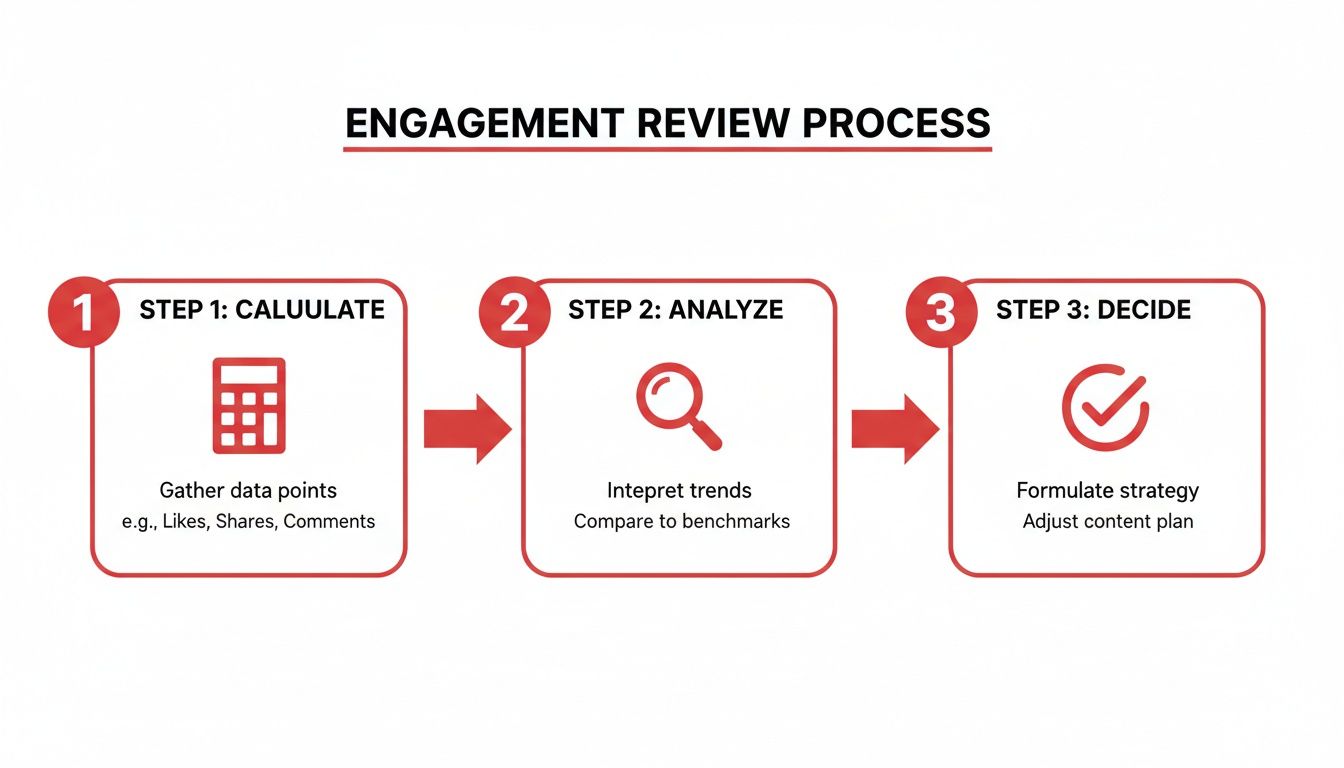
This simple flow—calculate, analyze, decide—is exactly how you should approach it. You move from the hard numbers to the story they tell, which gives you the clarity to make a smart decision.
Present your findings to the seller calmly and professionally. Show them the evidence—the bot-like profiles, the unnatural growth charts, the spammy comments. A reasonable seller will usually be willing to negotiate a new price based on the real follower count.
But if they get defensive or deny what's clearly right in front of you? That’s a massive red flag. Knowing when to walk away is one of the most important skills when you buy a TikTok account. It could save you from a major headache and a bad investment.
Answering Your Top Questions About Follower Audits
Diving into follower audits always brings up a few key questions. Whether you're a creator trying to keep your community genuine or an entrepreneur vetting a potential investment, getting straight answers is crucial. Let's tackle some of the most common things people ask when running a TikTok fake follower check.
Can I Really Trust Those Free Online Checker Tools?
Free tools are a decent first step. They're great for a quick, high-level snapshot of an account's health. They basically scrape public data to guess at an account's fake follower percentage, which can give you a general idea of what you're looking at without needing any special access.
But you have to take their results with a grain of salt. Think of them as a quick screening, not a definitive diagnosis. Their accuracy is all over the place. If you're about to make a big decision—like buying an account or signing a major brand deal—you absolutely cannot rely on a free tool's score alone. You need to back it up with the manual checks and deep analytics dive we talked about earlier. It's just one piece of the puzzle.
What's the Absolute Fastest Way to Spot a Fake Account?
If you're short on time, go straight for the engagement-to-follower ratio. Nothing tells the story faster. A real, healthy account has a natural balance between its follower count and the likes, comments, and shares it gets. Fake accounts stick out like a sore thumb here.
Just scroll through their last 10-15 videos. See an account with 500,000 followers but each video only gets a couple hundred likes and a smattering of spammy, one-word comments? That’s a massive red flag.
This huge gap between the supposed audience size and the actual human interaction is the most immediate giveaway. It's like walking into a stadium that's sold out but completely silent.
How Do I Verify Followers Before I Buy a Monetized TikTok Account?
When you're talking about buying an account, especially a monetized one, your due diligence has to be rock-solid. The stakes are way too high to just take the seller's word for it. You need proof.
Here’s a simple, safe workflow I always recommend:
- Get a Look Inside: First, ask the seller for temporary, read-only access to their TikTok Analytics. This is non-negotiable. It lets you see the real, unfiltered data on follower demographics, growth patterns, and where their views are coming from.
- Do Your Own Spot-Check: Don't just trust the numbers. Manually scroll through their followers and the comments on recent videos. Look for all those bot-like red flags we've covered.
- Read the Seller, Not Just the Account: A seller with a legitimately grown account will have nothing to hide. They'll be open and transparent.
If the seller gets defensive, makes excuses, or straight-up refuses to give you analytics access, that’s your answer right there. That kind of secrecy tells you more than any data point ever could. Be prepared to walk away and protect your investment.
Ready to skip the uncertainty and start earning from day one? MonetizedProfiles offers fully monetized, organically grown TikTok accounts, giving you a powerful head start without the risk. Find a pre-monetized account here.


