


Ever wonder how TikTok seems to read your mind? The short answer is its powerful recommendation system. It's built to serve you a never-ending stream of videos it thinks you'll love, creating a "For You" page that's unique to you.
The algorithm learns from every single thing you do on the app—every like, share, comment, and even how long you pause on a video.
How The TikTok Algorithm Decides Your For You Page
If you've ever scrolled through your For You page and felt like it knows you a little too well, you're not imagining things. That seemingly magical feed is powered by one of the smartest recommendation engines out there, and it has one job: keep you hooked.
Think of the algorithm as your personal DJ. Every time you interact with a video, you're giving feedback. A "like" is a polite nod. But watching a video all the way through, re-watching it, or hitting that share button? That’s like telling the DJ, "I love this, give me more just like it!"
This constant feedback loop helps the system build a surprisingly accurate picture of what you actually want to see.
The Core Ingredients Of Your Feed
At its core, the algorithm isn't looking at just one thing. It's mixing together a few key types of information to build your feed. These signals are constantly being weighed and re-evaluated to keep your content stream fresh, relevant, and endlessly entertaining.
This system is why a brand-new creator with zero followers can go viral overnight. If a video hits the right notes with an audience, the algorithm pushes it out, regardless of who made it.
To help you visualize how this works, here's a look at the main data points the TikTok algorithm uses to personalize your feed.
Key Inputs For The TikTok Algorithm
| Data Category | Examples of Signals | Impact on Your Feed |
|---|---|---|
| User Interactions | Likes, comments, shares, follows, re-watches, and video completion rates. | This is the most important category. Strong engagement tells the algorithm you love this type of content. |
| Video Information | Captions, hashtags, sounds, and effects used in the video. | Helps the algorithm categorize your video and show it to users who like similar content. |
| Device & Account | Language preference, country setting, and device type. | These are weaker signals but help with initial content filtering and relevance. |
As you can see, what you do on the platform has the biggest impact on what you see next.
It’s All About Engagement
The algorithm's real magic is that it prioritizes engagement over a creator's popularity or follower count. A strong signal, like someone watching a video all the way to the end, carries way more weight than a weak one, like the viewer and creator being in the same country.
For creators, understanding these inputs is the key to working with the algorithm, not against it. When you create content that signals strong engagement, you massively boost your chances of getting seen.
If you want to dig deeper into what drives these interactions, our guide on improving TikTok engagement rates is a great next step.
How TikTok's Recommendation Engine Grew Up
To really get how the TikTok algorithm works today, you have to look at where it came from. The recommendation engine didn't just appear one day with its uncanny ability to know exactly what you want to see. It’s grown and changed over the years, getting smarter with each update. This journey tells us a lot about what the platform truly values.
In the beginning, things were pretty straightforward. The algorithm mostly cared about basic, surface-level signals. It pushed videos that quickly racked up likes, comments, and follows. A video's success was all about those immediate, easy-to-measure interactions. It was a numbers game, plain and simple.
But that early approach had a problem. It often boosted low-effort or unoriginal clips that could get a fast reaction without actually being good. TikTok knew it needed to get smarter.
From Likes to Watch Time
The big shift came when TikTok realized that a quick double-tap didn't necessarily mean a user was truly enjoying themselves. The real goal was to capture and hold someone's attention. So, the algorithm’s priorities changed in a huge way, putting more weight on signals that showed deeper engagement.
Suddenly, things like video completion rate and re-watches became the most important metrics. If someone watched your entire 30-second video—and then hit replay—that told the algorithm way more than a simple like ever could. This change started rewarding creators who could tell a great story or make something so captivating that people couldn't look away.
The algorithm's mission went from asking, "Did you like this?" to asking, "Was this worth your time?" This is the core reason why a video with fewer likes but amazing watch time can blow past a video with tons of likes but terrible retention.
This was the moment the algorithm started caring more about quality and originality than just chasing raw interaction numbers.
Moving Beyond Hashtags to True Understanding
Another major leap was how the algorithm learned to understand what a video was actually about. At first, it relied heavily on simple clues like hashtags and captions. If you tagged a video with #baking, it would show it to people who had engaged with other baking videos.
That system worked, but it wasn't very sophisticated. It couldn't pick up on the subtleties. To fix this, TikTok built something much more powerful. The algorithm now uses contextual AI that analyzes everything—the words you say, the text on the screen, and even the sounds in the background—to categorize videos with 85% greater accuracy than it could before. It means the platform can recommend your video based on its true substance, not just a few keywords you tacked on. You can discover more about these algorithmic shifts and how they affect creators.
This jump in technology changed the game for creators in a few key ways:
- Content Is Everything: What you actually show and say in your video is now the most important factor.
- Originality Is Rewarded: The AI got much better at spotting and down-ranking unoriginal or copied content, giving a boost to creators who come up with fresh ideas.
- Niches Get Found: It allowed the algorithm to connect hyper-specific content with the perfect niche audience, even if there wasn't a popular hashtag for it.
This journey—from a simple like-counting machine to a smart, context-aware AI—is why any conversation about the TikTok algorithm today is really about watch time, originality, and providing real value. When you understand this evolution, you can create content that truly aligns with what the platform is designed to promote.
Understanding the Core Ranking Signals
If you want to understand how the TikTok algorithm really works, you need to think like the algorithm. At its core, it's a satisfaction engine. Its one and only job is to find videos that people genuinely love and show them to more people who will also love them. It figures this out by watching how users interact with your content.
Think of every user interaction as a "vote" for your video. A simple like is a polite nod—nice, but it doesn't mean much. The algorithm is smart enough to know that a double-tap takes almost zero effort. It's the deeper, more meaningful interactions that truly tell it you've struck gold.
Strong Signals: The Heavy Hitters
The most powerful signals are the ones that scream, "This video was amazing!" These actions tell the algorithm that your content was not just seen, but appreciated, and is probably worth showing to a much wider audience.
- Video Completion Rate: This is the big one. If someone watches your video all the way to the end, it’s a huge green flag for the algorithm. It means you held their attention, which is the scarcest resource on the platform.
- Re-Watches: Even better than a full watch is a re-watch. When someone hits that "replay" button, it's an undeniable sign that your content was so entertaining, funny, or useful that it deserved a second look.
- Shares: A share is the ultimate endorsement. When a user sends your video to a friend or posts it on another platform, they are personally vouching for its quality. The algorithm loves this.
- Saves: Saving a video to a collection signals a user's intent to come back to it later. This tells the algorithm your content has lasting value—whether it’s a recipe, a workout tip, or a hilarious skit they'll want to find again.
The hierarchy here is crystal clear. Actions that require more time and effort, like finishing a video or sharing it, carry way more weight than passive ones like a quick "like." The secret is to create content that encourages these deeper forms of engagement.
Weaker Signals: The Supporting Cast
While not as game-changing as the heavy hitters, other interactions still play a part in the algorithm's decision-making. Think of them as supporting details that help round out the picture of your video's performance.
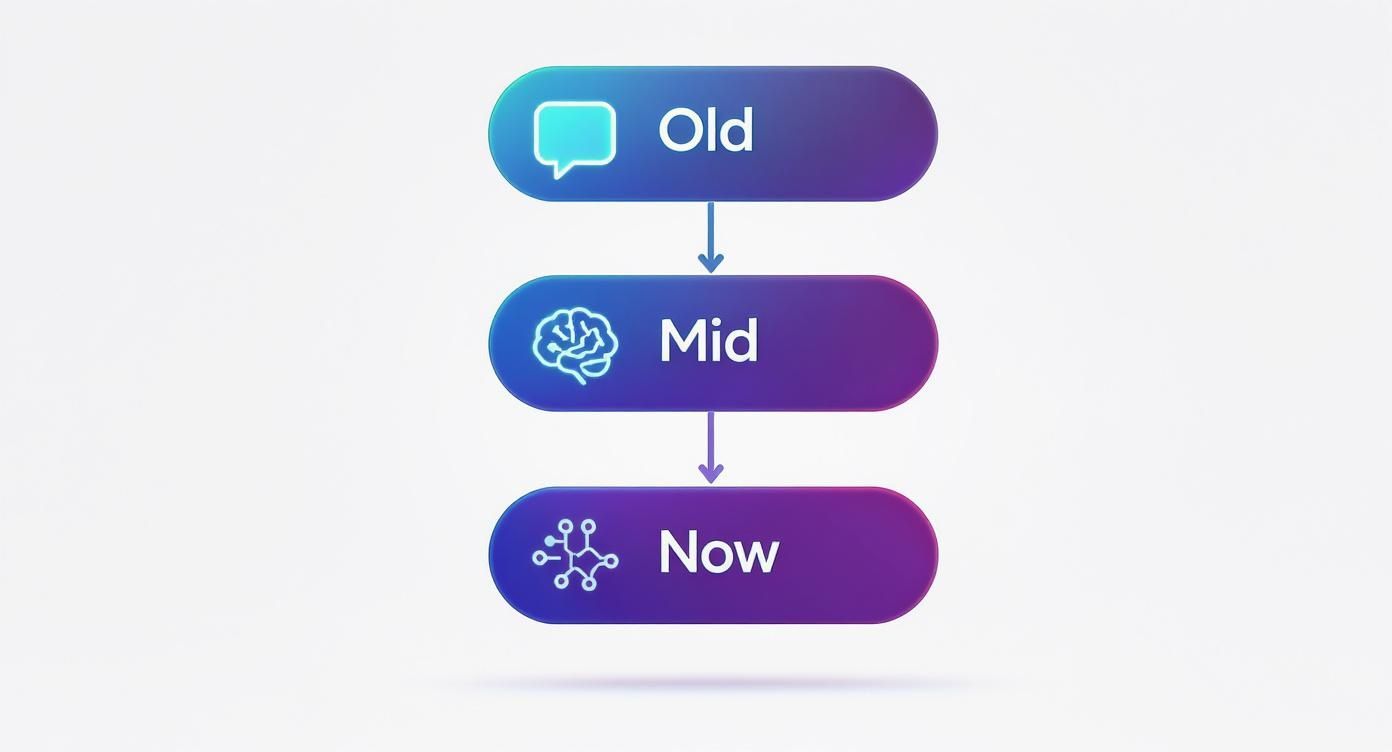
As this image shows, the algorithm has moved past just counting likes. It’s now a sophisticated system that analyzes content and user behavior on a much deeper level.
A few of these supporting signals include:
- Comments: Comments are a sign of active engagement, but not all comments are created equal. A thoughtful question or a back-and-forth conversation is far more valuable than a string of fire emojis.
- Follows: Gaining a follow from a video is a great sign for your account overall, but it's more of a signal about your potential as a creator than a direct vote for that specific video.
To really get a handle on what’s working, you need to dive into the key social media engagement metrics and see what they tell you about your audience.
The Hierarchy of TikTok Engagement Metrics
Not all engagement is equal in the eyes of the algorithm. This table breaks down the most common user actions and how much weight they typically carry.
| Metric | User Action | Signal Strength (High/Medium/Low) | Why It Matters to the Algorithm |
|---|---|---|---|
| Re-Watch | User watches the video again. | High | The strongest indicator of high-quality, engaging content. |
| Completion Rate | User watches the video to the end. | High | Shows the video held the viewer's attention. |
| Share | User sends the video to others. | High | A personal endorsement that expands the video's reach. |
| Save | User adds the video to their favorites. | Medium | Signals evergreen or high-utility content worth revisiting. |
| Comment | User leaves a comment on the video. | Medium | Indicates active engagement and community building. |
| Like | User double-taps to "like" the video. | Low | A simple, low-effort signal of passive approval. |
Understanding this hierarchy helps you focus on creating content that encourages high-value actions, not just empty likes.
How Video Information Helps TikTok Categorize Content
Beyond how people react to your video, the algorithm also looks at what your video is actually about. This is where your creative choices have a direct impact on who sees your content.
You need to give the algorithm a clear roadmap. Here’s how you do it:
- Captions and Keywords: The text in your caption is prime real estate. The algorithm scans it for keywords to understand the video's topic and match it to people searching for or interested in that subject.
- Hashtags: Hashtags are like filing labels. Using a smart mix of popular and niche tags (e.g., #fyp and #VintageBookHaul) helps TikTok sort your video into the right communities.
- Trending Sounds and Music: Hopping on a trending sound instantly places your video into an existing conversation. It's an easy way to get in front of people who are already engaging with that trend.
- Effects and Filters: Just like sounds, using a trending effect can give your video a little boost by associating it with what's popular on the platform right now.
Once the algorithm digests all this information, it starts showing your video to a small test audience. If that group responds well, it pushes it out wider and wider. For a deeper look at the data, you can unlock TikTok account analytics to boost your content and see these signals for yourself.
Finally, the most basic signals—things like the user's country and language settings—act as an initial filter. They’re the weakest signals of all, but they ensure your video starts its journey with a relevant local audience before it has the chance to go global.
Practical Strategies to Work With the Algorithm

Okay, so knowing the theory behind the TikTok algorithm is one thing. Actually putting that knowledge to work is a whole different ballgame.
To really get anywhere, you have to shift from just understanding the concepts to actively creating videos that the algorithm is designed to love. This means making content that doesn't just grab attention but holds it, gets people talking, and carves out a space in a dedicated community.
Let's dig into the strategies that actually work—the ones that help you work with the algorithm, not against it. Think of these as the practical steps you can take today to give your content its best shot at reaching a bigger audience.
Master the First Three Seconds
On TikTok, you don't get a few minutes to make your case. You get seconds. The first three seconds of your video are everything. If you can’t hook someone right away, they’re gone with a flick of the thumb, which tells the algorithm your video isn't worth watching.
A strong hook isn’t just a nice-to-have; it's a must. It’s your promise to the viewer that sticking around is going to be worth their time.
- Start with a Question: Kick things off with a question your video is about to answer. Something like, "Here's the biggest mistake you're making with your houseplants..." works wonders.
- Preview the Payoff: Give them a quick glimpse of the final result at the very beginning—the finished DIY project, the breathtaking view from the hike. It makes them want to see how you got there.
- Use Striking Visuals: Open with something unexpected, beautiful, or just plain weird. Anything that makes people stop scrolling and think, "Wait, what is this?"
A high watch time is one of the most powerful signals you can send the algorithm. Nailing the hook is the single most important step to getting there. For a deeper dive, there's a great practical guide on how to go viral on TikTok that really breaks down these strategies.
Find Your Niche and Build Community
Everyone wants to go viral, but real, lasting growth on TikTok comes from building a community. The algorithm is literally designed to connect niche content with people who are obsessed with that niche. So, instead of trying to be everything to everyone, focus on making content for a specific group.
Just look at corners of the app like #BookTok or #CleanTok. The creators there aren't just tossing random videos out into the world. They're making stuff that speaks the language of their subculture. This focus helps the algorithm figure out exactly who your videos are for, which means it gets shown to people who are far more likely to engage.
Key Takeaway: The algorithm rewards consistency in a niche. When you keep showing up with valuable content for a specific audience, you're essentially training the system on who your ideal viewer is. The result? Higher engagement and followers who actually stick around.
Craft Captions That Spark Conversation
Your caption is so much more than a place to dump hashtags. It’s your chance to get a conversation going. A great caption is a direct invitation for viewers to leave a comment, and every comment tells the algorithm that your content is genuinely interesting.
Ditch the generic descriptions and start asking open-ended questions in your captions.
- "What's one travel hack you swear by? Let me know below!"
- "Which of these outfits was your favorite? 1, 2, or 3?"
- "I can't be the only one who does this, right?"
Every single comment is like a vote of confidence in your video. The system is incredibly personalized now, tracking every pause and replay. In fact, replays have been found to be 10 times more valuable than likes in ranking calculations. This shows just how much the platform cares about deep engagement over simple, passive metrics.
Use Analytics to Refine Your Strategy
Think of your TikTok Analytics as your personal roadmap. This tool is packed with priceless data about who’s watching your stuff, what they love, and when they're scrolling through the app. Stop guessing what works and let the data guide you.
Make sure you're paying close attention to a few key areas:
- Follower Activity: This tab is gold. It tells you the exact days and hours your followers are most active. Posting during these peak windows gives your content an initial boost, signaling to the algorithm that it's worth showing to more people.
- Video Performance: Dive into the analytics for individual videos. Which ones had the highest average watch time or completion rate? Look for patterns in what’s working and, you guessed it, make more of that.
- Audience Demographics: Knowing where your followers are from and their general age helps you make your content more relatable.
Checking your analytics regularly lets you double down on what’s working and stop wasting energy on content that just isn't landing. To get your timing just right, check out our guide on the best times to post on TikTok: https://monetizedprofiles.com/blogs/monetization-on-social-media/best-time-post-tiktok-top-8-posting-tips-for-2025.
Common TikTok Algorithm Myths Debunked
Bad advice about the TikTok algorithm can seriously hold you back. It’s way too easy to get sidetracked by rumors and weird theories, but basing your strategy on myths is just a fast track to getting frustrated. Let's cut through all that noise and tackle some of the biggest misconceptions head-on.
Once you know what’s real and what isn’t, you can focus on what actually moves the needle—making great videos. By clearing these up, you can build a smarter content strategy that’s a whole lot less stressful.
Myth 1: You Need Thousands of Followers to Go Viral
This is probably the biggest myth of them all. On a lot of other platforms, your follower count is king. But on TikTok, the algorithm puts good content first, not your popularity. Every video you post, whether you have ten followers or ten million, starts its journey with a small test audience.
If that first little group loves your video—watching it all the way through, sharing it, liking it, and leaving comments—the algorithm takes notice and shows it to more and more people. This is exactly why you see brand new accounts with under 1,000 followers suddenly rack up millions of views. It’s a content-first world.
The For You page is all about discovery. The system doesn't care if you're a big-shot creator or just starting out; it only cares if your video can grab and hold someone's attention.
Myth 2: Shadowbanning Is a Common Penalty
Ah, the "shadowban." You'll hear this term thrown around anytime a creator sees their views suddenly tank. The theory is that TikTok is secretly punishing your account by hiding your content from the For You page. The truth is, this is almost never what's actually happening.
A sudden drop in views is usually just the algorithm doing its thing. It's always testing your videos with different pockets of users. Sometimes, a video just doesn't land with a particular test group, and when that happens, the algorithm simply stops pushing it out so aggressively. It's not a penalty; it's just how the system works.
Instead of jumping to the shadowban conclusion, dig into your analytics:
- Check your watch time: Is your average watch time lower than usual? That's often the real culprit.
- Analyze your hook: Did the first three seconds fail to stop the scroll? If the hook is weak, the video is dead on arrival.
- Review your niche: Did you post something way off-topic that might have confused the algorithm about who to show it to?
Myth 3: Deleting Videos Hurts Your Account
Here’s another one that causes a lot of unnecessary stress: the idea that deleting a video that flopped will somehow damage your account's reputation with the algorithm. This is completely false. TikTok has gone on the record to say there is no penalty for deleting old videos.
Honestly, it’s usually better to just private a video instead of deleting it. That way, you can still access its analytics later and learn from what went wrong. But if you do hit delete, rest assured it won't hurt you. The algorithm is focused on the performance of your new content, not the stuff you've already removed. So, stop worrying about old duds and focus on making your next video a hit.
Got Questions About the TikTok Algorithm? We've Got Answers.
We've covered a lot of ground, but you probably still have a few questions buzzing around. Let's tackle some of the most common ones creators ask about how TikTok's algorithm really works.
How Long Does It Take for the Algorithm to Push a Video?
You'll usually get a sense of a video's potential within the first couple of hours. The algorithm is looking for strong early signals—things like people watching all the way through or sharing it right away. If it sees that, it starts showing it to more and more people.
That said, don't lose hope if a video doesn't take off immediately. Some videos have a "delayed explosion," where they suddenly find their perfect audience days or even weeks later and then blow up.
Does My Posting Time Actually Matter?
Yes, it absolutely does. Think of it like this: you want to drop your video right when the party is getting started. Posting when your followers are most active gives your content the best shot at getting that crucial initial burst of engagement.
The best way to figure this out is to dive into your TikTok Analytics. Head over to the "Followers" tab, and it will show you the exact hours and days your audience is scrolling the most.
Is It Possible to Use Too Many Hashtags?
You won't get penalized, but you can definitely confuse the algorithm. Jamming your caption with tons of irrelevant hashtags is like giving someone bad directions. It makes it harder for the system to understand who your video is for.
A good rule of thumb is to stick with 3-5 highly relevant hashtags. Pick ones that genuinely describe your video's content and the audience you want to reach.
Does the Algorithm Like Longer or Shorter Videos Better?
This is a common misconception. The algorithm doesn't care about a specific video length; it cares about a high completion rate.
A 15-second video that people watch from start to finish is way more valuable to the algorithm than a 60-second video that everyone scrolls away from after 10 seconds. The goal is simple: make content that keeps people hooked for its entire duration, whatever that may be.
Ready to skip the grind and start earning on TikTok from day one? MonetizedProfiles offers fully approved, monetized accounts so you can focus on creating great content. Hack your creator journey and start earning now.


