


Ask any ten YouTube creators "What's the perfect video length?" and you'll likely get ten different answers. That's because there's no magic number. A video's ideal length is completely tied to its goal. If you're chasing viral reach, a quick video under 60 seconds is your best bet. But if you want to maximize ad revenue and establish yourself as an authority, you'll need to aim for over 8 minutes.
The secret is to match the video's runtime to its purpose.
Debunking the Myth of a Perfect Video Length

So many creators get hung up on one question: "How long should my YouTube video be?" They're looking for a single, perfect duration that will unlock views and subscribers.
Here’s the honest truth: no such number exists. The "ideal" length is a moving target, one that changes based on your specific goals, the topic you're covering, and what your audience has come to expect from you.
Think of it like having a conversation. Sometimes, you just need a quick, punchy chat to get a point across—that’s a YouTube Short. Other times, you need a deep, detailed discussion to really explore an idea. That calls for a much longer, more comprehensive video.
The most successful creators don't ask, "How long should this be?" They ask, "What does this video need to accomplish, and how much time do I need to make that happen?"
That simple shift in mindset is the foundation of a successful channel. When you stop trying to cram your ideas into a random time slot, you start serving both your audience and the algorithm a lot more effectively.
Shifting from Time to Purpose
When you stop looking at the stopwatch and start focusing on your purpose, your entire content creation process changes. Every single video you publish should have a primary goal. Are you trying to go viral? Maximize your AdSense? Or build a loyal community that sees you as an expert?
Each of these goals is best served by a different approach to video length:
- Viral Reach: Think short, snappy, and shareable. Videos under 2 minutes are built for quick consumption and maximum exposure.
- Ad Revenue: This is where the 8-minute mark becomes critical. Crossing this threshold allows you to place mid-roll ads, which can dramatically increase your earnings.
- Community Building: Longer, in-depth videos are fantastic for building trust. They give you the time and space to foster a real connection with your viewers.
Understanding this goal-oriented approach is key to figuring out how the YouTube algorithm works. At the end of the day, the platform rewards videos that keep people watching, no matter how long they are.
The core principle is value density. A killer 2-minute video packed with value is infinitely better than a bloated 10-minute video that just wastes everyone's time. Your job is to make every single second count.
Looking at the data can give us a good starting point. The average YouTube video is exactly 11.7 minutes long, which covers everything from short tutorials to long-form documentaries. But remember, that's just an average. Most creators find that the 5-15 minute range is a sweet spot for engagement, but only if the first 15 seconds are compelling enough to stop the scroll.
To help you connect these ideas to your own channel, here’s a quick reference table.
Matching Video Length to Your Primary Goal
This table offers a quick-reference guide that connects common creator goals to recommended video lengths, helping you align your content strategy from the start.
| Creator Goal | Recommended Video Length | Primary Metric Affected | Best For |
|---|---|---|---|
| Maximize Reach & Virality | Under 60 seconds (Shorts) or 1-3 minutes | Views, Shares, Impressions | Getting new eyes on your channel, trend-jacking, quick tips |
| Boost Watch Time | 10-20 minutes | Watch Time, Audience Retention | Deep dives, tutorials, educational content, storytelling |
| Increase Ad Revenue | 8+ minutes | RPM (Revenue Per Mille), CPM | Monetized channels, reviews, commentary, vlogs |
| Build Community & Authority | 20+ minutes (or Livestreams) | Session Time, Subscriber Growth | Podcasts, interviews, in-depth analysis, live Q&As |
Ultimately, this isn't about rigid rules. It's about having a strategic framework you can use to make smarter decisions for your channel's growth.
How Video Length Impacts Your Channel Goals
Figuring out the "why" behind your video's length is way more important than obsessing over a perfect number. The runtime of your content isn't just a random choice; it's a strategic move that tells both your audience and the YouTube algorithm what you're trying to accomplish.
Think of it like this: a sprinter and a marathon runner are both athletes, but their training and race strategies are worlds apart. The same logic applies to your videos. A short, punchy video is built for a totally different purpose than a long, in-depth piece of content.
When you align your video's length with a specific goal, you give it a much better shot at succeeding. Let's break down the three main goals most creators have and see how video length is the key to hitting each one.
Goal 1: Maximize Your Reach and Discoverability
If you just want to get your videos in front of as many new people as possible, shorter is almost always better. Videos in the 1 to 3-minute range are tailor-made for how people watch content today—they’re quick, easy to digest, and super shareable.
These videos are like a billboard for your channel. They're short, so people are more willing to click and take a chance. If you deliver value fast, viewers are far more likely to share it, which is the fuel for going viral. The algorithm sees all those clicks and shares as huge positive signals, pushing your content out to an even wider audience.
- Best for: Quick tips, funny skits, trend-based content, and simple listicles.
- Why it works: It's a low-commitment click for the viewer, which leads to higher initial watch rates.
- The tradeoff: You'll generate less watch time per view, which isn't great for monetization or building deep authority.
This strategy is all about casting a wide net. The idea is to attract new subscribers who might then stick around to check out your deeper, longer content.
Goal 2: Boost Watch Time and Ad Revenue
Once you've got an audience, your focus will probably shift to making money and keeping viewers engaged. This is where mid-length videos—specifically those over 8 minutes long—become your secret weapon. Hitting this mark is a huge milestone for any creator who's serious about earning an income on YouTube.
So, why is 8 minutes the magic number? Because that's the threshold for placing mid-roll ads. These are the ads you can strategically drop inside your video, not just at the beginning or end. This one feature can easily double a video's potential revenue compared to one that's just a few seconds shy of the 8-minute mark.
The ability to place mid-roll ads fundamentally changes the economics of a YouTube channel. A 9-minute video isn’t just slightly longer than a 7-minute one; it’s in a completely different monetization tier.
Longer videos are also crucial for racking up the watch hours you need to get into the YouTube Partner Program. As you probably know, hitting 4,000 watch hours is a non-negotiable requirement. (You can learn more in our deep dive on how to get 4000 watch hours on YouTube). Videos in the 10-15 minute range often hit that sweet spot, giving you enough time to cover a topic well without losing your audience's attention.
Goal 3: Build Authority and Community
For creators who want to be seen as the go-to expert in their field, long-form content is the ultimate power move. Videos that are 20 minutes or longer give you the runway to deliver massive value, build real trust, and establish yourself as an authority.
This is the home of content like:
- In-depth Tutorials: Step-by-step guides that leave no stone unturned.
- Expert Interviews: Deep conversations that offer unique and valuable insights.
- Video Podcasts: Detailed discussions that help you build a loyal listener base.
- Documentaries: Deep dives into complex topics that really captivate an audience.
Sure, the average retention percentage might be lower on these long videos, but the total watch time from each dedicated viewer is massive. Someone who sticks with you for a 30-minute video is sending a powerful signal to YouTube that your channel creates high-value content. This is how you build a true community of fans who trust you and come back for more. For faceless creators, this is a fantastic way to build a powerful brand based purely on the quality of your information.
What's the Right Length for Different YouTube Formats?
There's no magic number for the perfect YouTube video length. The real answer changes completely depending on the type of video you're making. A strategy that crushes it for a 30-second Short will fall flat for a standard 10-minute video, and neither of them plays by the same rules as a two-hour livestream.
Think of each format as a different tool in your creator toolbox. You're not going to use a sledgehammer for a finishing nail, right? Same idea. Each format is built for a specific job, whether that's grabbing new eyeballs or building a die-hard community.
Getting this right means matching your video's length and style to what viewers expect from that format and what the YouTube algorithm wants to see. Your main goal—whether it's growing your audience, making money, or building authority—is the starting point for everything.
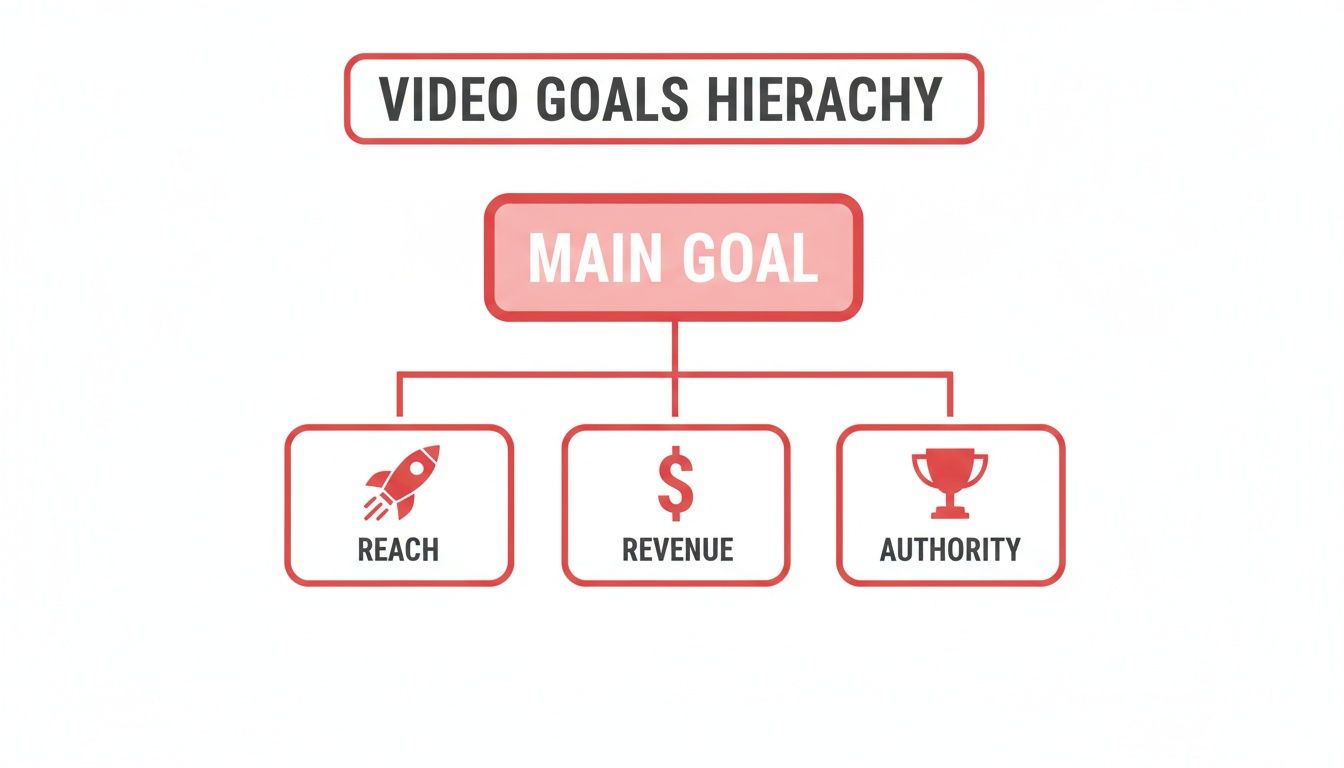
As you can see, your primary goal informs which path to take, and that path dictates the right format and length for the job.
Let's break down how these different formats work and why their ideal lengths vary so much.
To get a clearer picture, it helps to see how the three main formats stack up against each other. Each one is a different game with its own set of rules.
Strategic Comparison of YouTube Video Formats
| Format Type | Ideal Length Range | Primary Goal | Key Algorithm Signal |
|---|---|---|---|
| YouTube Shorts | 15 - 30 seconds (under 60s max) | Maximum Reach & Discovery | Average Percentage Viewed (APV), especially >100% |
| Standard Videos | 8 - 15 minutes | Engagement, Watch Time & Monetization | Average View Duration (AVD) & Click-Through Rate (CTR) |
| Livestreams & Long-Form | 30+ minutes | Community Building & Authority | Total Watch Time & Live Audience Interaction |
This table gives you a cheat sheet for aligning your video strategy with the right format. Now, let's dig into the "why" behind these numbers.
YouTube Shorts: The Under-60-Second Powerhouse
YouTube Shorts are all about one thing: maximum reach and discoverability. While they can be up to 60 seconds long, the sweet spot is usually between 15 and 30 seconds. Why so short? It’s all about the rewatch.
The Shorts algorithm is obsessed with a metric called Average Percentage Viewed (APV). If someone watches your 15-second video all the way through and then watches it again, you just scored a 200% APV. That's a massive signal to YouTube that your content is sticky, and it will push it out to more people.
The goal with a Short isn’t to tell a complex story. It's to deliver a single, satisfying punch of entertainment or information so quickly that people can't help but watch it again. The loop is your best friend.
This makes Shorts perfect for:
- Quick Tips: A single, game-changing piece of advice.
- Viral Clips: Funny moments, mesmerizing visuals, or jumping on a trend.
- Channel Teasers: A quick taste of a longer video to drive viewers back to your main channel.
Standard Videos: The Sweet Spot for Monetization and Engagement
When we talk about "regular" YouTube videos (sometimes called VOD, or Video on Demand), the length conversation gets way more interesting. There’s no hard-and-fast rule, but a strategic sweet spot has definitely emerged: 8 to 15 minutes.
This range hits the bullseye for two reasons. First, it's long enough to actually deliver meaningful value and build a real connection with your audience. But more importantly for anyone trying to make a living on YouTube, videos over 8 minutes are eligible for mid-roll ads. This is a huge deal and can seriously boost your revenue.
A well-paced 12-minute video gives you enough runway to explore a topic properly, rack up a ton of watch time, and strategically place an ad or two without totally killing the vibe. Go much longer, and you risk losing people, unless your content is absolutely captivating.
Livestreams and Long-Form: Building a Loyal Community
Ready to go deep? This is where livestreams and long-form content (think 30 minutes or more) come into play. With these formats, you’re not chasing broad reach; you’re building a rock-solid community.
Forget about high average view duration percentages here. Nobody is going to watch a two-hour stream from start to finish, and YouTube knows that. Instead, the algorithm cares about total watch time and live interaction—things like chat messages and Super Chats. These formats create a shared experience that short-form content just can't touch.
They are the perfect fit for:
- Live Q&A sessions with your audience
- Deep-dive tutorials or project walkthroughs
- Video podcasts and interviews
- Live gaming broadcasts
And the best part? A long livestream is a content goldmine. Once it’s over, you can slice it up into a dozen high-value standard videos or create a whole week's worth of Shorts from the best moments. It's the ultimate way to serve both your super-fans and the new viewers just discovering your channel.
How to Find the Ideal Video Length for Your Niche
Trying to nail down one “perfect” length for a YouTube video is a fool's errand. It’s like asking a chef for the single best cooking time—it completely depends on whether you're making a steak or baking a cake.
What works for one niche is a total flop in another. The ideal length is tied directly to your audience and what they’ve come to expect. A 25-minute, unedited "let's play" video might be exactly what a gaming audience craves, but that same length would feel like an eternity on a comedy channel where punchy, 5-minute skits rule.
Context is everything. Your niche sets the unspoken rules, and understanding your specific audience's viewing habits is the real key to success. When people subscribe, they're buying into a certain style of content, and that includes a preferred length. If you stray too far from that, you risk confusing the very people you're trying to win over.
Niche Expectations and Common Lengths
While you should always dig into your own analytics, you can see some clear patterns across YouTube's biggest categories. Think of these as common-sense starting points, not unbreakable laws.
-
Gaming: This world loves long-form content. Gamers are there for the immersive experience, which is why 20-40 minute "let's plays," deep dives, and walkthroughs are so popular. Livestream VODs can easily run for hours and still get tons of views.
-
Education and Tutorials: Here, it's all about clarity and getting the job done. People want a complete answer without the fluff. The sweet spot usually lands between 8 and 18 minutes—long enough to explain a topic well and, conveniently, long enough to be eligible for mid-roll ads.
-
DIY and Crafts: Project videos need to be tight and focused. Your audience wants to see the process and the final result without a lot of detours. Keeping videos under 12 minutes almost always works best here.
-
Commentary and Vlogs: These channels are built on personality. A range of 10-20 minutes gives you enough breathing room to tell a compelling story and really connect with your viewers on a personal level.
These benchmarks are a great starting point, but the best data will always come from a little bit of your own detective work.
A Simple Way to Analyze Your Niche
Instead of just guessing, you can use a simple, data-driven approach to figure out what’s already working in your space. This takes the guesswork out of the equation and gives you a clear baseline based on your competitors' success.
This research shows you what the YouTube algorithm is already promoting and what your target audience is actively watching.
By analyzing the top-performing videos for your main topics, you're essentially getting a free report on your audience's behavior. The length of those videos isn't an accident; it's a reflection of proven engagement.
Here’s how to do it in three simple steps:
-
Identify Your Core Keywords: First, list 5-10 main topics you want to build your channel around. If you have a baking channel, this might be "sourdough recipe for beginners" or "how to decorate a birthday cake."
-
Search and Analyze the Winners: Open an incognito window in your browser (so your watch history doesn't influence the results) and search for each keyword on YouTube. Look at the top 3-5 organic results—skip the ads—and write down the length of each video.
-
Find the Pattern: After you do this for a few of your keywords, a pattern will start to pop up. Are most of the top videos around 12 minutes? Are they all over 20? That average is your data-backed starting point. This process is a huge leg up, especially for faceless creators who have to rely completely on their content to hook an audience.
Using Analytics to Find Your Audience's Perfect Length
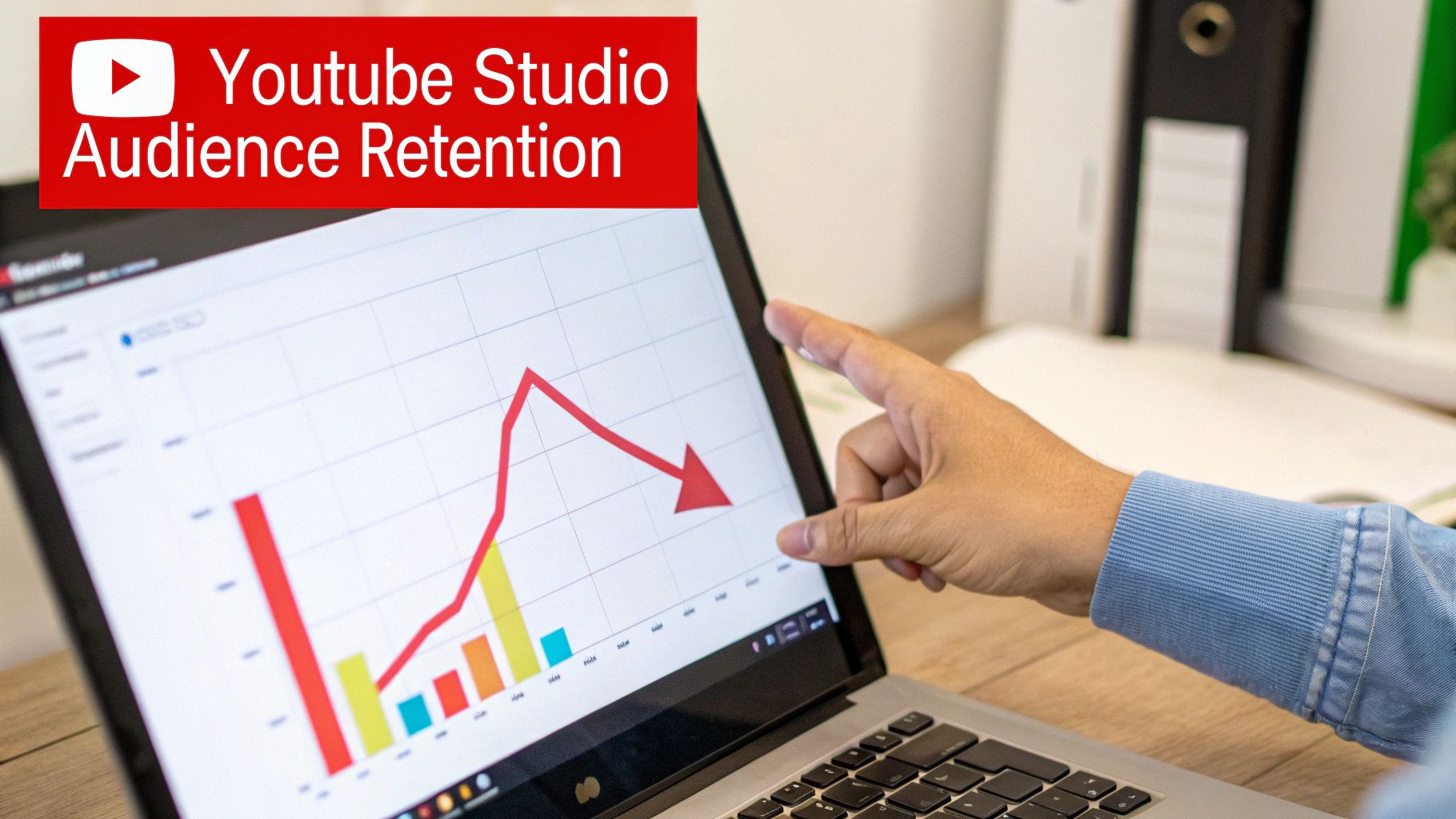
While industry averages and niche research can give you a decent starting point, the most powerful data is already sitting inside your own YouTube Studio. Your audience's behavior is the ultimate source of truth, showing you exactly what’s working and what’s sending them packing. If you learn to read your analytics, you can finally stop guessing and start making smart decisions about the length of your YouTube videos.
Think of your analytics dashboard as a direct line to your viewers. It reveals their attention spans and what they truly want to see from you. For this mission, we need to focus on two key metrics: Average View Duration and Audience Retention.
Decoding Your Audience Retention Graph
Your Audience Retention graph is easily the most powerful tool you have for understanding viewer engagement. It’s a visual report card that shows you, second by second, what percentage of your audience is still watching.
This graph shows exactly where people get hooked and where they get bored.
The chart reveals a steep drop-off right at the beginning—a classic sign of a weak hook—followed by a more gradual decline. See those flat sections? Those are the moments that successfully captured viewer attention. Understanding how YouTube views work is key here, because keeping viewers watching is what gives a view its real power in the algorithm.
When you dive into your own graphs, keep an eye out for these patterns:
- Steep Drops: If you see a massive drop in the first 30 seconds, your intro is failing. People are clicking away before you even get to the good stuff.
- Gradual Declines: A slow, steady downward slope is perfectly normal. But if you spot a consistent drop-off point across multiple videos—say, around the 6-minute mark—that’s a huge clue that your videos might be dragging on too long for your audience.
- Spikes and Bumps: These are pure gold! A spike means viewers are actually rewinding to re-watch a specific part. This tells you exactly what kind of content hits home and what you need to make more of.
- Flat Plateaus: A flat line means you’ve hit a sweet spot of high engagement. Whatever is happening in these segments is working perfectly to keep your audience glued to the screen.
Turning Data Into Action
The real magic happens when you stop looking at just one video and start seeing the patterns across your entire channel. If ten of your last twelve videos show a major viewer exodus after the eight-minute mark, your audience is screaming at you that they prefer shorter, more concise content.
Your analytics aren't just numbers; they're a direct conversation with your audience. A consistent drop-off point isn't a failure—it's clear feedback telling you the ideal length your viewers are looking for.
Use this feedback to immediately adjust your strategy. If people always bail before you get to your call-to-action at the end, why not move it earlier? If you see spikes every time you tell a certain kind of joke or use a specific editing trick, lean into that.
This data-driven approach lets you systematically fine-tune the length of your YouTube videos to perfectly match what your unique audience wants, maximizing both watch time and viewer satisfaction.
A Simple Way to Test and Nail Down Your Video Length
Knowing your analytics is great, but actually using that data to make better videos is what separates the pros from the amateurs. Instead of just guessing what video length will work, you need a repeatable process to test and figure it out. This framework takes the emotion out of it and lets the data do the talking.
The idea is really straightforward: run controlled experiments. You're basically a scientist in a content lab. You want to change just one big thing at a time—in this case, video length—to see what happens. This methodical approach will show you what your audience actually wants to watch.
Setting Up Your Test
To get started, you’ll set up a simple A/B test on your channel. This means you'll make two videos on nearly identical topics, but one will be noticeably longer than the other. The trick is to keep everything else—the thumbnail design, the title style, your delivery—as consistent as you can.
Let’s say you have a cooking channel. Your experiment could look like this:
- Video A (The Short One): A punchy, 8-minute video titled "5 Quick Sourdough Tips for Beginners."
- Video B (The Long One): A deeper dive, 15-minute video called "The Ultimate Sourdough Guide for Beginners."
See how they both target the same audience and keywords? The only real difference is the runtime. This isolates the length as the main variable you're testing, which means you'll get much clearer results.
Watching the Right Numbers
Once your videos are live, it's time to be patient. You need to give the YouTube algorithm and your audience some time to interact with the content. The standard for getting solid performance data from YouTube Studio is a 28-day window.
During this time, resist the urge to just obsess over view counts. Views are nice, but you need to focus on the metrics that show how engaged your audience really is.
Here’s what to keep an eye on:
- Click-Through Rate (CTR): This tells you how well your title and thumbnail combo worked. If one video has a way higher CTR, it might just mean the topic was more appealing, which could skew your results.
- Average View Duration (AVD): This is your total watch time divided by your total views. It’s the clearest signal you have for how long, on average, people are actually sticking around.
- Audience Retention: Pull up the retention graphs for both videos and compare them side-by-side. Did people bail on the longer video right away, or did it hold their attention surprisingly well? Make a note of the percentage of viewers still watching at key milestones, like the 3-minute and 8-minute marks, for a direct comparison.
After 28 days, the "winner" isn't always the video with more views. It’s the one with a better mix of Average View Duration and retention. Those are the powerful signals that tell YouTube your content is worth recommending.
This little framework gives you a process you can run over and over again. Over time, making these small, data-driven tweaks will build a much stronger, more predictable content strategy for your channel.
Got More Questions About YouTube Video Length?
Let's clear up some of the common questions creators have about how long their videos should be. These are the quick answers you need to start putting these ideas into practice right away.
Do Longer Videos Automatically Rank Higher?
Nope, not necessarily. It’s a classic "it depends" situation. While a longer video has the potential to rack up more total watch time—a huge factor for the algorithm—that only works if people actually stick around to watch it.
Think about it this way: a 20-minute video that people ditch after two minutes tells YouTube it's a dud. But a tight, engaging 8-minute video that keeps viewers hooked will almost always perform better. Engagement will beat sheer length every single time.
The goal isn't just making long videos. It's making videos that are good enough to justify a longer runtime. If you deliver value from start to finish, the algorithm will notice.
What's the Magic Number for Monetization?
There's no minimum video length to make money once you're in the YouTube Partner Program (YPP). First, you have to hit the entry requirements: 1,000 subscribers and 4,000 hours of watch time.
But there is a key threshold for earning more money from a single video. To be eligible for mid-roll ads, your video needs to be over 8 minutes long. Mid-rolls let you place ad breaks in the middle of your video, which can be a game-changer for your revenue.
Should I Pad My Videos Just to Add More Ads?
Please don't. This is one of the biggest mistakes I see creators make, and it almost always backfires. Stretching a 5-minute idea into an 8-minute video just to cram in more ads will kill your audience retention.
Viewers can sniff out fluff from a mile away. When they get bored and click off, it sends a powerful negative signal to YouTube, telling the algorithm not to recommend your video. Always make the video as long as the topic needs to be, and no longer. Prioritize the viewer, not the ad slot.
Ready to skip the grind and start earning from day one? MonetizedProfiles offers fully monetized YouTube accounts that meet all the requirements, perfect for creators who want to focus on content, not just metrics. Get your monetized channel today at MonetizedProfiles.


