


Alright, let's cut through the noise. The internet is full of "get rich quick" promises, but making a real, sustainable income online isn't about finding a magic button. It's about building something valuable, one step at a time.
We're going to walk through a realistic roadmap, focusing on four proven paths that actually work: freelancing, creating content, selling digital products, and affiliate marketing.
Forget the overnight success stories. The real goal here is to match what you already know and love with a strategy that fits you. This first decision is everything, because it sets the foundation for everything that comes next.

What Makes This Possible?
The opportunity to earn online has never been bigger. We're talking about a global digital economy worth roughly $16 trillion—that’s about 15% of the world's entire GDP, and it's still growing like crazy.
This isn't just some passing trend. It's a massive shift in how we work and create value. Your unique skills, whether it's writing, design, video editing, or just being great at explaining things, have a real market waiting for them.
Your Four Main Options on the Table
To get you started, let's break down the most common entry points. Each one has its own timeline, pros, and cons.
- Freelancing: This is the most direct path. You offer a skill—like writing, graphic design, or social media management—to clients on platforms like Upwork or Fiverr. It's often the quickest way to see cash, but you're trading time for money.
- Content Creation: Think building an audience on YouTube, TikTok, or a blog. You make money from ads, brand deals, or eventually selling your own stuff. It’s a slow burn at first, but the potential to scale is huge.
- Digital Products: Here, you create and sell your own assets like ebooks, Notion templates, or online courses. This is a fantastic way to generate passive income once the upfront work is done. If you're curious about this route, we have a whole guide on https://monetizedprofiles.com/blogs/monetization-on-social-media/ways-to-generate-passive-income-online.
- Affiliate Marketing: You earn a commission by recommending other people's products. It's a low-risk way to start and fits perfectly with content creation.
I've noticed the most successful people rarely stick to just one thing. A YouTuber might start with ad revenue, add affiliate links to their descriptions, and then launch their own course once they have a loyal audience. It’s all connected.
If you’re feeling overwhelmed, affiliate marketing is a great place to dip your toes in. You can learn the ropes of online marketing without having to create a product from scratch. This beginner's guide to affiliate marketing is a solid primer on how to get started with popular programs.
Comparing Online Income Models for Beginners
To make this even clearer, here's a quick comparison of these popular online income streams. It should help you figure out the best starting point based on your goals and what you have to work with right now.
| Method | Startup Cost | Time to First Dollar (Avg.) | Skill Requirement | Scalability |
|---|---|---|---|---|
| Freelancing | Low (Laptop & Internet) | 1-4 Weeks | Specific skill needed | Low-Medium (Time-based) |
| Content Creation | Low to Medium | 6-12+ Months | Creative & Consistent | Very High |
| Digital Products | Medium | 3-6 Months | Expertise in a niche | High |
| Affiliate Marketing | Very Low | 2-6 Months | Marketing & Persuasion | Medium-High |
Ultimately, the "best" method is the one you can stick with consistently. Freelancing offers quick wins, while content creation and digital products are more of a long-term investment in building an asset you own.
Choose Your Platform and Build Your Foundation
Deciding where to set up shop online is easily one of the most important moves you'll make. This isn't just about picking a platform; it's about choosing the digital home where you'll connect with your audience, clients, or customers. The right choice has to feel right for your skills, your goals, and the kind of work you actually want to do.
Think of it like choosing a physical storefront. You wouldn't see a high-end boutique setting up in a flea market, and a casual food truck wouldn't rent a formal dining room. Every online platform has its own vibe, its own audience, and its own unwritten rules.
Picking Your Digital Home Base
So, where do you begin? Your strategy for making money will point you in the right direction. A freelance writer needs a totally different setup than a TikTok creator, and they both need something different from an artist selling digital prints. Let's break down the main options.
For Service-Based Freelancers (Writers, Designers, VAs)
If you have a marketable skill, platforms like Upwork and Fiverr are essentially talent marketplaces. They're amazing for landing your first clients because they bring the customers directly to you. The catch? The competition is fierce, and the platform fees can take a bite out of your earnings—sometimes up to 20%.
- Who does well here? People with a specific, in-demand skill who can build a profile that really pops.
- What's the key to success? A killer portfolio, a steady stream of positive reviews, and personalized proposals are absolutely non-negotiable.
For Content Creators (YouTubers, TikTokers, Bloggers)
YouTube and TikTok are all about building an audience. The game here is to create content that people love and share, attracting a loyal following you can eventually monetize through ads, brand deals, or affiliate marketing.
- Who does well here? Creative types who are comfortable on camera (or creating "faceless" content) and can churn out videos or articles consistently.
- What's the key to success? You have to keep a pulse on trends, get really good at crafting catchy titles and thumbnails, and genuinely engage with your community.
For Product Sellers (Etsy, Gumroad)
If you're making digital products like templates, ebooks, or Notion dashboards, platforms like Etsy and Gumroad are perfect. They handle all the messy stuff like payment processing and file delivery, freeing you up to focus on creating and marketing your stuff.
- Who does well here? Creators with a good eye for design who can serve a specific niche with genuinely useful digital downloads.
- What's the key to success? High-quality product images, listings optimized with the right keywords, and top-notch customer service.
Defining Your Niche and Offer
Once you've got a platform in mind, you have to get crystal clear on what you're selling and who you're selling it to. A vague offer like "I'm a writer" gets lost in the noise. But a specific offer like "I write SEO-optimized blog posts for early-stage tech startups" is magnetic.
Your niche is that perfect intersection of your passions, your skills, and what people are actually willing to pay for. This focus makes it so much easier to attract the right clients and command better rates. If you're stuck, getting some outside perspective can be a huge help in figuring out how to find a profitable niche for your new venture.
The biggest mistake I see beginners make is trying to be everything to everyone. The real money is in the niches. It’s how you become the go-to expert for a very specific problem.
An Unconventional Shortcut: The 'Faceless' Creator
Let's be real: building an audience from zero is a long, hard slog. For content creators, there's a different path that’s becoming more popular, especially for those who want to stay anonymous. It's the "faceless" creator route, often paired with pre-monetized accounts.
This approach means creating content where you never show your face. Think:
- Relaxing Scenery Videos: Rain sounds or epic drone footage on YouTube.
- Tutorials: Simple screen recordings showing how to use software.
- Quote or Meme Accounts: Curated, shareable content on TikTok or Instagram.
The biggest wall every new creator hits is the monetization requirements—like needing 1,000 subscribers and 4,000 watch hours on YouTube. By buying an account that's already monetized, you can leapfrog over that entire waiting period. It's a strategic investment that lets you start earning ad revenue from day one, turning a potential year-long grind into an immediate opportunity. If your main goal is to start earning as fast as possible, this is a serious accelerator.
Create Products and Content People Actually Want
So, your online platform is ready to go. But a beautiful storefront is worthless without anything on the shelves. This next part is where the real work begins, and it's what separates the winners from the wannabes: creating something people will actually pay for.
It doesn’t matter if you’re a freelancer, a YouTuber, or selling digital planners—what you produce is your currency in this game.
Success isn't about throwing ideas at the wall and hoping something sticks. It’s about finding a specific problem for a specific group of people and solving it for them. That means your first move isn't to create; it's to listen.
Do Some Simple digging first
Before you pour hours into writing a blog post or designing a digital product, you have to be sure someone out there actually wants it. This isn't complicated and doesn't require expensive software. You're just looking for that sweet spot where your skills meet a real, existing demand.
Here are a few dead-simple ways to get started:
- Hang Out in Niche Communities: Jump into Reddit subreddits, Facebook Groups, or Discord servers where your target audience lives. What are the recurring questions? The common complaints? These conversations are a goldmine for product and content ideas.
- Spy on Your Competitors: Check out the top dogs in your niche on platforms like YouTube, Etsy, or Upwork. Don't just copy them—analyze them. What videos are getting all the views? Which digital products have a ton of reviews? What freelancer skills are in high demand? The clues are all there.
- Use Free Keyword Tools: Sites like AnswerThePublic or Google Trends literally show you what people are typing into search engines. If you search for "meal planning," you’ll immediately see things like "meal planning for busy families" or "high-protein meal planning." These are specific needs you can build around.
The best ideas often come from solving a problem you once had. If you figured out a killer system to manage your finances or taught yourself a tricky piece of software, I guarantee thousands of other people are stuck on the same thing and would gladly pay you for a shortcut.
Don't skip this research. Seriously. It’s the difference between earning a real income and burning out creating things nobody ever sees.
Shaping Your First Offer
Once you have an idea that you know people want, it's time to build it. The right approach really depends on which path you've chosen.
For Freelancers: Build a Proof-of-Concept Portfolio
Potential clients don't care about your skills; they care about results. If you have zero experience, you need to create some. A new writer should start a blog. A graphic designer can mock up a brilliant brand identity for a fake company. Your portfolio needs to scream "I get results," not just "I have skills."
For Content Creators: Nail Your First Few Pieces
Your first videos or posts need to be laser-focused on delivering value. A simple but effective formula is "hook, value, call-to-action." You need to grab their attention in the first 3-5 seconds, give them the useful info or entertainment you promised, and then tell them what to do next (subscribe, comment, check out a link). Every single post is a chance to learn how to earn from social media by growing a real audience.
For Digital Product Sellers: Start Small
Don't try to build a massive 200-page ebook right out of the gate. Start with a Minimum Viable Product (MVP). This could be a simple one-page checklist, a cheat sheet, or a basic template. This lets you test the market waters fast, without sinking hundreds of hours into a potential flop.
Take a look at the Etsy marketplace for "digital planner." It's a massive category.
The top sellers are all doing a few things right: their products look great, they solve a specific problem (like the "ADHD Digital Planner"), and they have thousands of reviews proving people love them. If your plan involves selling digital art or design services, you'll also need to figure out profitable digital art commission pricing to stand out. Your goal is to create something that not only catches the eye but solves a real, nagging problem for your ideal customer.
Your Action Plan for the First 30 and 90 Days
Big goals are only ever reached by taking small, consistent steps. Having a clear plan turns the vague dream of "making money online" into a series of tasks you can actually tackle. This roadmap is designed to help you build real momentum from day one, focusing on getting your foundation right before you start scaling up.
It’s so easy to get overwhelmed by all the things you could be doing. This plan cuts through that noise. Think of it as a flexible framework that guides your effort where it really counts, so you don't burn out on activities that don't move the needle.
This visual breaks down the entire journey into a simple, logical workflow.
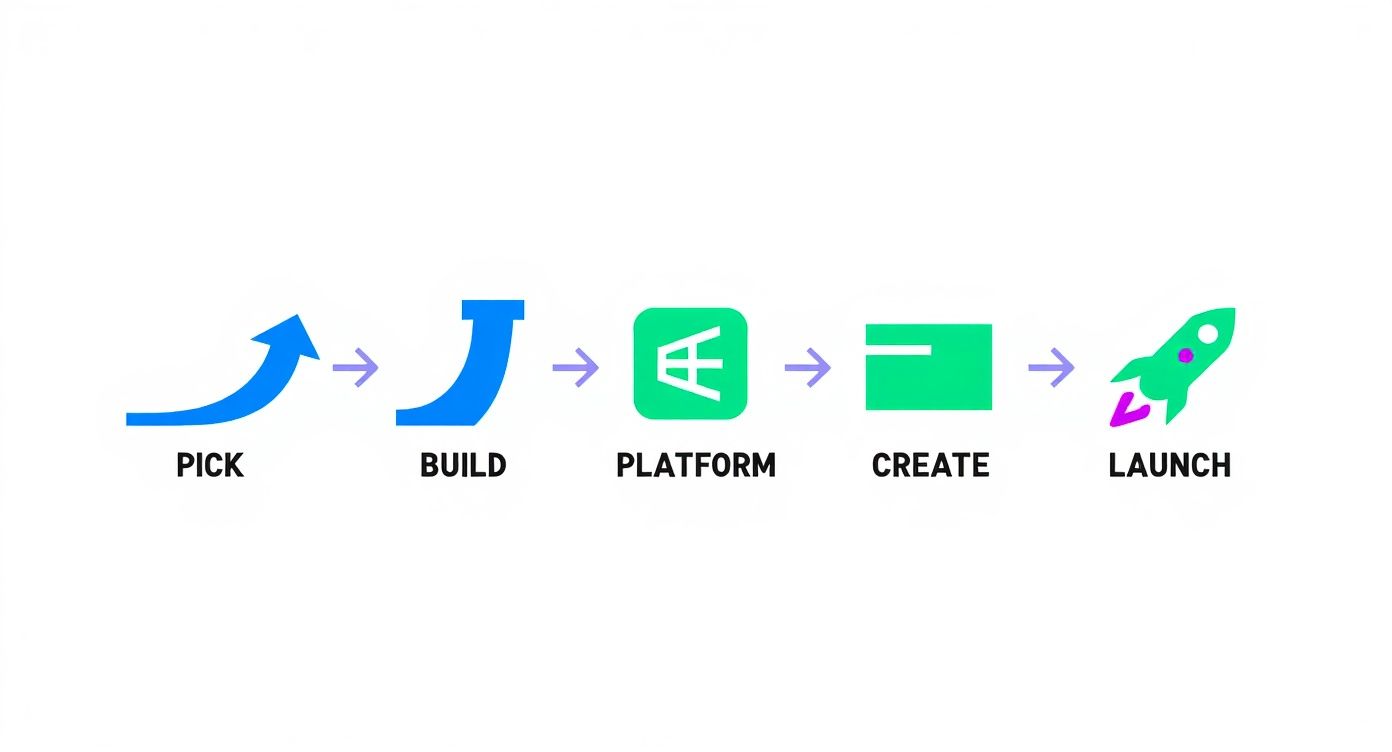
The process flows from big-picture decisions to hands-on action, which is exactly how we've structured your 30 and 90-day plans.
The First 30 Days: Building Your Launchpad
Your first month is all about laying the groundwork and building habits. Forget about perfection or massive results. Your only job is to show up, do the work, and learn as you go. The goal here is consistency over intensity.
I like to compare it to starting a new workout routine. The first few weeks aren't about lifting the heaviest weights; they're about learning proper form and just making it a non-negotiable part of your schedule. You're building the muscle you'll need for the long haul.
Here’s where to focus your energy for the first 30 days.
Core Tasks for Everyone
- Set Up Your Foundation: This means creating and fully optimizing your main profiles. Whether that’s on Upwork, YouTube, TikTok, or Etsy, fill out every single section professionally. Don’t skip the bio.
- Establish a Simple Workflow: Decide on a realistic schedule and stick to it. Commit to publishing one new YouTube video or three TikToks per week. At this stage, just showing up consistently is your most powerful tool.
- Engage Authentically: Spend 15-20 minutes every day just being a part of your community. This isn't about spamming your links everywhere. It’s about joining conversations on Reddit, leaving thoughtful comments on other creators' posts, or answering questions in relevant Facebook groups.
The momentum you build in the first 30 days is almost entirely psychological. Seeing your first few posts go live or getting that first client inquiry, no matter how small, is the fuel that will carry you through the inevitable slow periods.
To keep yourself on track, use a simple checklist. It's a great way to visualize your progress and make sure nothing essential falls through the cracks during this critical setup phase.
30-Day Launch Checklist
| Task | Status (To Do, In Progress, Done) | Notes/Deadline |
|---|---|---|
| Choose primary platform/channel | ||
| Create and optimize profile(s) | ||
| Define content/service niche | ||
| Set a weekly creation schedule | ||
| Publish first piece of content/service listing | ||
| Engage in community for 15 mins/day | ||
| Set up basic analytics tracking | ||
| Brainstorm initial monetization ideas |
This isn't meant to be exhaustive, but it covers the core actions that will give you the strongest possible start.
Days 31-90: Shifting Into Growth Gear
After a month of foundational work, it’s time to shift from just doing the work to improving the work. The 90-day mark is all about looking at the initial feedback and data you've gathered and using it to make smarter moves. You've built the habit; now you refine the strategy.
This is when you start figuring out what's actually connecting with people. Which video got the most shares? What type of freelance proposal actually landed an interview? Early data, even from a tiny audience, is pure gold.
This next phase is less about a rigid to-do list and more about a repeating cycle: create, measure, learn, and repeat.
Key Focus Areas for Growth
- Analyze Early Data: Dive into your analytics. On YouTube, which video has the highest audience retention? On Etsy, which listing gets the most clicks? Find the early winners and double down on those topics and formats.
- Expand Your Reach: Now it’s time to actively promote your stuff. This could mean creating Pinterest pins that lead to your blog, sharing clips of your videos on other platforms, or proactively pitching your freelance services to 5-10 ideal clients each week.
- Introduce Monetization: If you haven’t already, start now. Add relevant affiliate links into your content where they genuinely help the audience. If you bought a pre-monetized account to skip the line, focus on creating content that maximizes ad revenue from day one. For freelancers, it’s time to raise your rates slightly after your first few successful projects.
A Real-World 90-Day Example
Let's imagine you're a "faceless" YouTube creator who bought a monetized account to fast-track the process. Here’s what your plan could look like:
- Month 1 (Days 1-30): You produce 12 videos (3 per week) in your chosen niche. The entire focus is on building a backlog of quality content and understanding your audience's comments. Don't even look at the revenue yet.
- Month 2 (Days 31-60): Look at your first 12 videos. Which ones performed best? Identify the common threads and create your next 12 videos based on that winning formula. Start sharing short clips on TikTok or Reels to drive new viewers back to your main channel.
- Month 3 (Days 61-90): With 24+ videos live and earning, you find your most popular video and create a simple digital product related to it (like a checklist or a short guide). You then add a link to this product in the descriptions of your top videos, creating a second income stream beyond ad revenue.
This structured approach turns the overwhelming goal of "making money online" into a clear, step-by-step process. It’s not about getting everything perfect; it's about making consistent, forward progress every single week.
Navigating the Bumps and Staying on Track
Let’s be real for a second: this journey isn’t a perfect, straight line to the top. The path to making money online is littered with frustrating dips, confusing U-turns, and moments where you'll want to throw in the towel. Trust me, every single successful creator or freelancer out there has hit a wall at some point.
The secret isn't learning how to avoid these roadblocks—that's impossible. It's about learning to anticipate them. When you know what’s coming, you can build the mental toughness to push through without losing all your momentum. This is where your mindset becomes just as critical as your strategy.

Dodging Shiny Object Syndrome
Picture this: you've just fully committed to growing a YouTube channel. Then you scroll past a TikTok where someone boasts about making $5,000 last month selling digital planners on Etsy. All of a sudden, your YouTube plan feels slow and outdated, and the urge to jump ship is overwhelming.
That, right there, is shiny object syndrome in action. It's the constant, frantic chase for the "next best thing," and it is the single biggest killer of progress for new creators. If you're constantly switching your focus, you never give any single strategy the time it needs to actually bear fruit.
Here’s how to fight back:
- Lock in for 90 Days: Commit to your one primary platform and strategy for at least 90 days. No exceptions, no excuses. This is non-negotiable.
- Create a "Later" List: When a shiny new idea pops up, don’t just ignore it. Jot it down on a "someday/maybe" list and promise yourself you’ll look at it again after your 90-day sprint is done.
- Curate Your Feed: Your social media feeds should inspire you, not distract you. If certain accounts consistently make you second-guess your plan, it's time to hit mute or unfollow. Protect your focus at all costs.
Beating Creator Burnout
Burnout is what happens when you feel like you’re pouring every ounce of energy into your project and getting absolutely nothing back. You're churning out content, sending proposals, or building products, but the needle just isn't moving. The silence can be deafening, and it’s easy to feel like you’re shouting into an empty room.
One way to get a quicker win is to offer a freelance service. Things like data entry, virtual assistance, or simple content writing can land you a paying client in weeks, not months. This provides a tangible reward and a much-needed morale boost, which is a powerful antidote to the slow, long grind of building an audience. You can find more ideas on the variety of online income opportunities at MilesWeb.in.
To manage this feeling long-term, you have to redefine what "progress" looks like in the beginning.
Forget about vanity metrics like views or followers for the first few months. Instead, measure your consistency. Did you stick to your content schedule this week? That's a win. Did you send out those five proposals? That's a win, too. Celebrate the actions you take, not just the results you get.
Taming Imposter Syndrome and Your Own Expectations
Imposter syndrome is that nagging little voice in your head whispering, "Who are you to be doing this?" It's the feeling that you're not smart enough, creative enough, or experienced enough to pull this off, and that any minute now, someone is going to "find you out."
The truth? Everyone starts at zero. That expert you admire on YouTube? They once filmed shaky, awkward videos in their bedroom. That top-rated freelancer on Upwork? They once sent their very first proposal with sweaty palms, terrified of hitting "submit."
Here are a few ways to quiet that inner critic:
- Keep a "Win" Journal: Start a simple doc or a physical notebook where you jot down your small wins. Looking back at where you started a month ago is a powerful reminder of how far you've actually come.
- Focus on Helping Just One Person: Instead of trying to be an expert for the whole world, create your next video or blog post with the goal of helping one person solve one specific problem. This shrinks the task and makes it feel way more manageable.
- Set Sane Income Goals: You are not going to make $10,000 in your first month. Aim to earn your first $100. Then shoot for $500. These small, achievable milestones build real confidence and prove to your brain that this thing is actually working.
Got Questions? Let's Get Them Answered
Diving into the world of making money online always brings up a ton of questions. It's totally normal to feel a mix of excitement and "what if?" Here are some straight-up answers to the things most beginners are wondering.
Think of this as a quick chat to clear up any confusion so you can get moving with confidence.
How Much Can I Realistically Earn in My First Year?
This is the million-dollar question, isn't it? The honest answer is that it's all over the map. Your income really hinges on which path you take, how much time you put in, and whether you stick with it. Pinning down an exact number is impossible, but we can definitely look at some realistic starting points.
- Freelancers usually see the fastest cash flow. If you're consistently landing clients and doing good work, pocketing your first $1,000 to $5,000 within 6-12 months is absolutely doable.
- Content Creators have a slower start. That first year is all about building an audience, not raking in cash. Earning anywhere from $0 to a few hundred dollars a month from ads or small affiliate sales is a solid, realistic goal.
- Digital Product Sellers often see a slow burn. You might pull in a few hundred to a couple of thousand dollars in your first year as you create your product and figure out who your customers are.
The real trick is to focus on earning your first $100, not your first $10,000. Those small wins create the momentum you need to build something big.
How Much Does It Cost to Start Making Money Online?
One of the best things about starting an online gig is how cheap it can be to get off the ground. You don’t need a huge business loan or a brick-and-mortar shop. But "free" isn't always free—you're going to invest either your time or your money.
Here’s a quick look at what your startup costs might look like:
| Expense | Bare-Bones Budget ($0 - $50) | Growth Budget ($100+) |
|---|---|---|
| Platform | Stick to free options like Gumroad, YouTube, or social media. | A self-hosted WordPress site (around $10-15/month). |
| Tools | Use the free versions of Canva, Google Docs, and basic email tools. | Upgrade to pro software, premium themes, or scheduling tools. |
| Learning | Dive into YouTube tutorials, free blogs, and library books. | Invest in paid courses, ebooks, or a coaching program. |
Your most important investment at the start isn't cash—it's your time. Simply committing to a schedule and learning as you go will get you way further than buying fancy software you don't even know how to use yet.
Do I Have to Show My Face to Be Successful?
Not at all. The explosion of "faceless" creators is proof that you can build a seriously profitable online business without ever stepping in front of a camera. For introverts or anyone who just likes their privacy, this is a huge win.
Faceless content is perfect for tons of niches. Just think about it:
- Tutorials: Simple screen recordings showing how a piece of software works.
- Relaxation Videos: Beautiful compilations of nature sounds or calming visuals.
- Motivation Accounts: Sharp, text-based graphics or short videos.
- Review Channels: Using only your hands to unbox and show off a product.
For a lot of these creators, the real bottleneck is just getting monetized. This is where buying a pre-monetized account can be a total game-changer. A faceless creator can skip the long, painful grind for subscribers and watch hours and start earning money from their very first video. It turns a potential year-long wait into an immediate opportunity to make an income, making it a powerful shortcut for anyone who wants to stay anonymous and still build a profitable channel.
Ready to skip the wait and start earning from your content right away? MonetizedProfiles offers fully approved YouTube and TikTok accounts, letting you focus on making great stuff while we handle the monetization hurdles. Check out our ready-to-earn accounts and kickstart your creator journey today.


