


Starting a side hustle from home really boils down to four key moves: finding a niche that plays to your strengths, testing your idea so you don't spin your wheels, setting up a simple digital home base, and then launching smart to get cash flowing.
You don’t need a huge budget or a massive online following to make this work. Think of this guide as your practical, no-fluff roadmap to building a real income stream right from your kitchen table.
Your Blueprint for a Profitable Home Side Hustle
Jumping into a side hustle can feel like a huge step, but honestly, it’s more about smart, small moves than just blind passion. This guide is designed to cut through the noise and give you a clear path forward. So many people get paralyzed trying to find the "perfect" idea, but real success comes from starting small, testing the waters, and seeing what sticks.
This whole process is built around efficiency and getting actual results. We’re going to walk through how to:
- Figure out a real-world niche by matching what you’re good at with what people actually want to buy.
- Test your concept without sinking a ton of time or money into it first.
- Build a simple digital foundation using tools and workflows that just plain work.
- Start making money from day one, skipping that painfully slow "building" phase.
To get a bird's-eye view of the journey ahead, here's a quick breakdown of the entire process.
Side Hustle Success Blueprint Quick Overview
| Phase | Key Action | Primary Goal |
|---|---|---|
| Phase 1: Ideation | Identify skills and market gaps. | Choose a niche that's both enjoyable and profitable. |
| Phase 2: Validation | Test the idea with a small audience. | Confirm people will pay for your product or service. |
| Phase 3: Setup | Build your digital infrastructure. | Create a simple, effective online presence and workflow. |
| Phase 4: Launch & Monetize | Go live and start selling. | Generate initial revenue and gather customer feedback. |
| Phase 5: Scaling | Automate and optimize processes. | Increase income while reducing your time investment. |
This table lays out the core steps we'll be diving into, giving you a clear structure from start to finish.
Understanding the Earning Potential
Let's be real—the money is a big motivator. And the good news is, the potential for side hustle income is not only real but growing. The data shows a clear upward trend, making these ventures more viable than ever.
On average, side hustlers are pulling in about $891 a month, which is a 10% jump from the year before. While it's true that 68% make under $500 monthly, consistency is everything. For those who stick with it, 35% end up earning over $1,000 every month.
The numbers tell a compelling story.
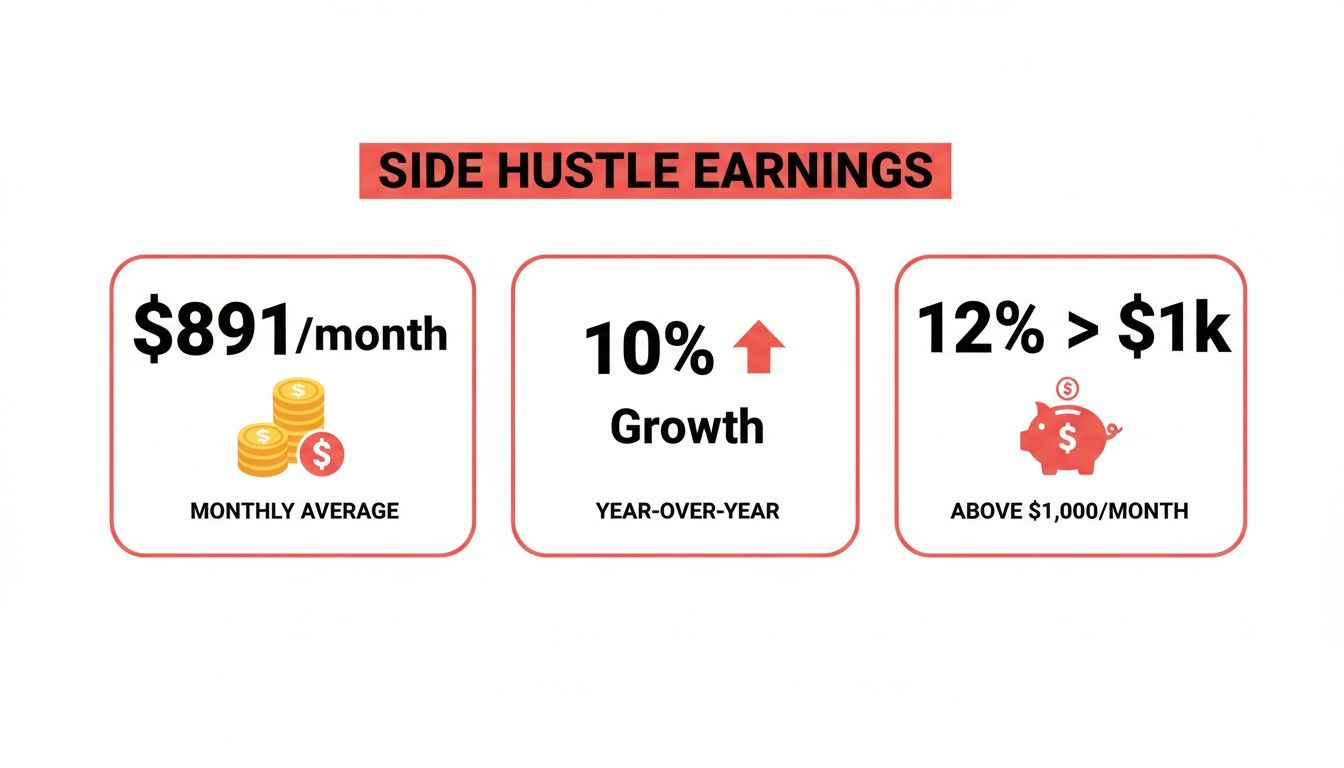
These figures aren't just abstract stats; they prove that with a solid plan, what starts as a small side project can absolutely grow into a serious source of income.
A Modern Approach for Creators
This isn't your parents' side hustle guide. It’s built for today’s creators, especially those who want to stay behind the scenes. You don't have to become an influencer or a public personality to build a profitable online business.
We'll dig into how "faceless" creators are using platforms like TikTok and YouTube to build huge audiences and generate revenue without ever appearing on camera. A core strategy we'll cover is starting with pre-monetized accounts, which lets you bypass the long waiting periods for ad revenue and start earning from your very first post.
If you’re worried about startup costs, there are plenty of options. This guide on how to start a side hustle with no money is a great place to begin. Consider this blueprint your direct path to building a valuable income stream, all on your own terms.
Finding and Validating Your Side Hustle Idea
The best side hustle idea isn't just about what you love doing—it's about what people will actually pay you to do. This is where your passion project needs to meet real-world demand. Getting this right from the start is the single best way to avoid wasting months on an idea that was never going to fly.
The whole process kicks off with a simple inventory of what you already bring to the table. Think way beyond your job title. What are you genuinely good at? What do your friends and family always ask for your help with? Maybe you’re the go-to person for whipping chaotic closets into shape, polishing resumes until they shine, or breaking down complicated stuff in a way anyone can understand.
Brainstorming With Purpose
Instead of just waiting for a lightning bolt of inspiration, you can methodically uncover some truly profitable ideas. Start by mapping out three key areas: your skills, your interests, and your available time. Just make three lists and see where the magic happens—right in the overlap.
- Your Skills: This is the stuff you do well, whether you learned it at work, through a hobby, or just by figuring it out yourself. We're talking about things like writing, graphic design, social media management, video editing, or even being ridiculously good at planning detailed travel itineraries.
- Your Interests: What do you find yourself reading about or doing in your free time? It could be anything from ancient history and personal finance to vintage fashion or sustainable gardening. Genuine passion is what will keep you going when things get tough.
- Your Time: Let's be real about your commitment. Do you have five hours a week or fifteen? This will dictate whether you should focus on a project-based service (like designing a logo) or something that needs daily attention (like managing a TikTok account).
Once you've got those lists, hunt for the sweet spot. For instance, a skill in video editing plus an interest in history could become a killer faceless YouTube channel. A knack for organization and a love for productivity might just be the foundation for a digital planner business.
Key Takeaway: The most successful side hustles pop up at the intersection of what you're good at, what you enjoy, and what the market actually needs. Don't just chase trends; find where your unique abilities can solve a real problem for a specific group of people.
The Crucial Step: Validate Before You Build
An idea is just a starting point. Honestly, the biggest mistake new side hustlers make is spending months building something nobody actually wants. Validation is how you test your concept without sinking a ton of time or money into it. The goal is to get a clear "yes" or "no" from the market before you go all in.
Think of it as small-scale market research. You’re looking for hard evidence that people aren't just interested in your idea, but that they’d be willing to pull out their wallets for it. Luckily, there are a bunch of low-cost ways to do this.
Let's say you want to start a 'faceless' YouTube channel that breaks down complex scientific topics. Instead of grinding away to produce ten full-length videos, you could first create a handful of 60-second clips for TikTok or YouTube Shorts. This lets you test which topics get the most views, comments, and shares, giving you priceless data on what your future audience is hungry for.
Low-Cost Ways to Test Your Idea
Here are a few practical methods to validate your home-based side hustle concept without breaking the bank. Each one offers a different level of insight and requires a different amount of effort.
Testing your idea doesn't have to be complicated or expensive. Sometimes, the simplest methods give you the clearest answers. Below is a quick comparison of a few popular validation techniques to help you decide which one makes the most sense for your concept.
Comparing Side Hustle Validation Methods
| Validation Method | Cost | Time Investment | Best For |
|---|---|---|---|
| Social Media Polls | Free | Low | Quickly gauging interest on a specific topic or feature. |
| 'Coming Soon' Page | Low | Low | Testing demand for a specific product or service before building it. |
| Competitor Analysis | Free | Medium | Confirming a market exists and identifying gaps you can fill. |
Each of these methods provides a piece of the puzzle. The goal is to move from "I think this will work" to "I have evidence this will work."
Here’s a closer look at how you can put these into practice:
- Run Social Media Polls: This is the easiest way to get a quick pulse check. Post a poll on Instagram Stories, X (formerly Twitter), or in a relevant Facebook group. Just be sure to frame the question to measure intent, not just idle curiosity. For example, instead of "Do you like historical stories?" ask, "Which historical era would you most want to see explained in short videos?"
- Create a 'Coming Soon' Page: Use a simple tool to whip up a one-page website describing your product or service. Add a clear call to action, like "Sign up to be notified on launch day and get 20% off." If a decent number of people hand over their email addresses, you've got strong evidence of real demand.
- Analyze Existing Competitors: Look for other people already succeeding in your niche. This isn't a reason to quit—it's proof that a market exists! See what they do well and, more importantly, identify gaps you could fill. Are their prices too high? Is their content quality a bit meh? Your side hustle could thrive by offering something better, faster, or more affordable.
For a deeper dive into different approaches, explore our other guides on the MonetizedProfiles blog. Remember, the key is to get real feedback from potential customers before you invest too much of yourself into the idea. This validation phase is what turns a hopeful guess into a smart business decision.
Building Your Digital Home Base
Okay, you've got a solid idea. Now it's time to build the engine that will run your side hustle. The goal here isn't to create some monstrous, complicated system. It's about setting up a simple, efficient hub so you can focus on making money, not fighting with technology.
This is all about picking the right tools for the job, especially if you're going the content route. Think lean and mean. You absolutely do not need a bunch of expensive software to get off the ground. I've seen incredibly successful creators run their entire show with just a handful of smart, often free, tools.
Your setup should work for you, taking the boring stuff off your plate so you can pour your energy into the things that actually grow your income.

Assembling Your Go-To Toolkit
Your specific tools will change depending on what you're doing, but some things are non-negotiable. Whether you're a faceless creator, a freelance writer, or selling digital products, you need a way to manage projects, create stuff, and get paid.
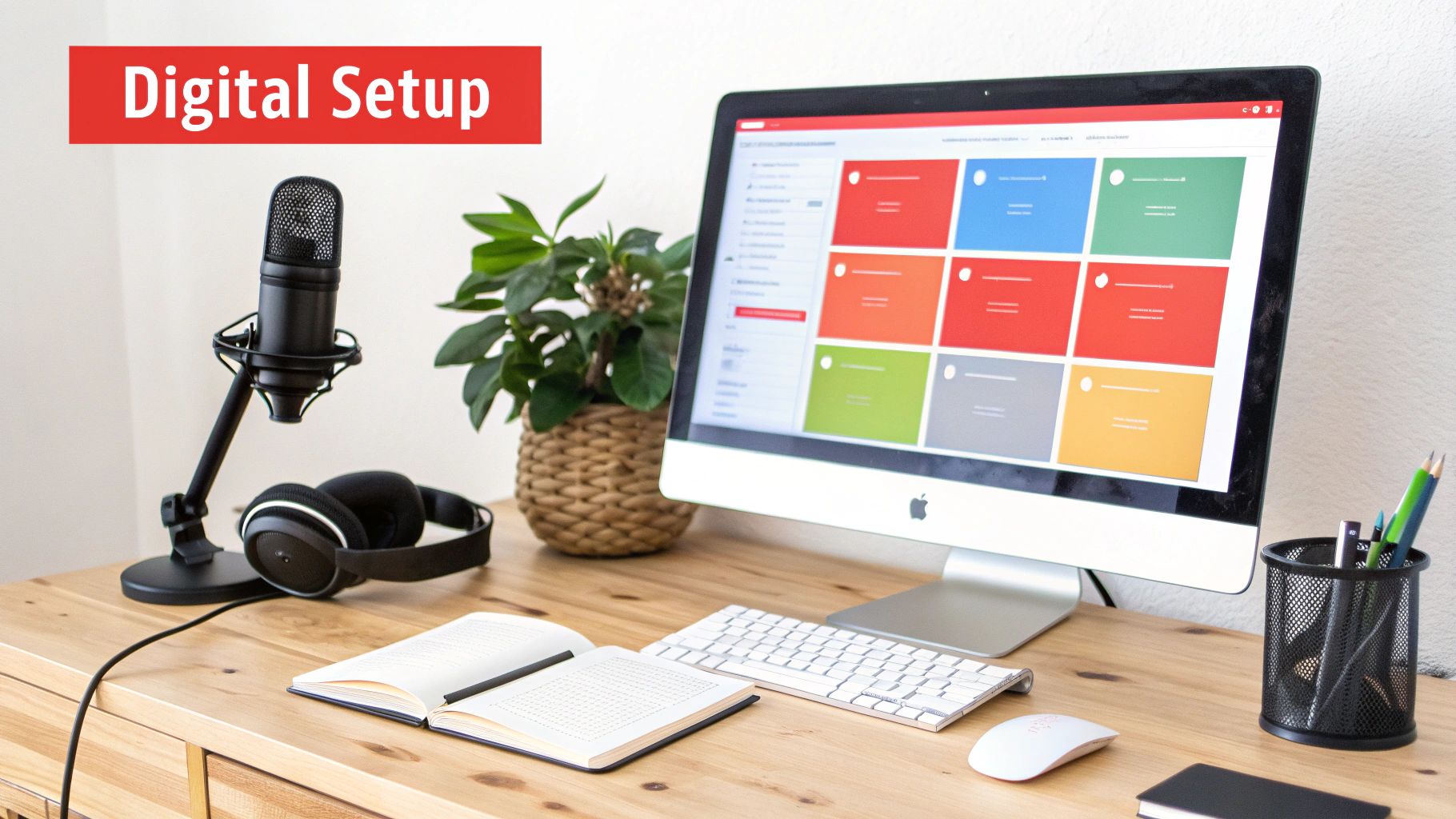
For keeping your projects straight, something simple like Trello or Asana is perfect. You can literally drag and drop your ideas through a workflow, from a spark of inspiration to a published piece. This visual map of your work is a lifesaver—it stops good ideas from getting lost in the shuffle.
For example, a Trello board for a YouTube channel could have columns for "Video Ideas," "Scripting," "Recording," "Editing," and "Published." It's dead simple and keeps you organized without needing a user manual.
Creating Content Like a Pro (Without Being One)
Content is the lifeblood of most online side hustles. How quickly you can put out quality stuff is directly tied to how much you can make. The good news? The tools available today make this easier than ever, even if you’ve never edited a video in your life.
Here are a few workhorses that should be in your content creation corner:
- Video Editing: For faceless content on TikTok or YouTube, you need something user-friendly. Tools like CapCut (on your phone or computer) are shockingly powerful for being free. Or check out a platform like Descript, which lets you edit video just by editing a text transcript. Mind-blowing.
- AI Assistants: Use AI to give yourself a boost. It's great for brainstorming video titles, outlining scripts, or even generating voiceovers. This can slash your production time, helping you get content out the door way more often.
- Design Tools: A platform like Canva is a must-have. You can whip up everything from YouTube thumbnails and social media graphics to simple digital products like eBooks or planners. Its templates make you look like a pro in minutes.
Pro Tip: Don't get stuck in "tool paralysis." Pick one simple tool for each job and get really good at it. A creator who masters CapCut will pump out better content faster than someone who dabbles in five different complicated editing programs. Consistency beats complexity, every single time.
Sorting Out Clients and Payments
If your hustle involves a service—like freelance writing, virtual assistance, or coaching—you need a smooth system for managing clients and getting paid. A clunky payment process is a surefire way to lose a sale and look unprofessional.
Simple invoicing tools make this a breeze. Many let you create slick-looking invoices and accept credit card payments right away, dropping the money straight into your bank. It's a huge step up from asking someone to Venmo you.
For managing clients, you don't need a massive CRM system to start. A well-organized spreadsheet or another Trello board can easily track client projects, deadlines, and communication. Just have a system, so nothing falls through the cracks.
As you start signing up for different platforms, consider grabbing a virtual phone number for verifications. It's a smart way to keep your personal and business lives separate and more secure from day one.
The Secret Weapon: A Pre-Monetized Platform
This is where you can get a massive head start. One of the most powerful moves you can make is to build your digital home on a pre-monetized account. Instead of grinding for 6-12 months just to meet the platform's monetization rules, you can start on an account that's ready to earn from day one.
Think about it. You could launch your faceless history channel on a YouTube account that's already monetized. Your very first video could start earning ad revenue. This completely changes the game, turning your side hustle from a long-term bet into an asset that can produce income immediately.
This isn't just about the money, either. It’s about momentum. A monetized channel instantly gives you credibility. It signals to viewers (and potential sponsors) that you're serious, which can supercharge your growth and open up other opportunities much faster. Baking this into your initial setup is one of the smartest things you can do.
Bringing in the Money: Launch and Monetization
Alright, this is where the fun really begins. You’ve laid the groundwork, and now it's time to flip the switch and start generating actual income from all your hard work.
The biggest mistake I see new creators make is getting tunnel vision on ad revenue. That's just one slice of the pie. We're going to build a much more resilient income strategy by mixing a few powerful methods together, from affiliate marketing to brand deals and your own digital products.
Think Beyond Ads: Diversifying Your Income Streams
Relying only on ad payouts is a rookie move. It's like building your entire business on a foundation you don't control. Algorithms change overnight, and ad rates can tank without warning. A much smarter play is to weave together multiple income streams from the get-go.
This approach doesn't just protect you from platform whims; it actually gives you more ways to serve your audience.
Here are the three pillars you should focus on for a rock-solid home-based business:
- Affiliate Marketing: This is just a fancy way of saying you recommend products you already use and love. When someone buys through your unique link, you get a small commission. It’s monetization that feels authentic because you're genuinely sharing things that help you.
- Digital Products: This is the real game-changer. You create a valuable resource once—like a template, checklist, or mini-guide—and it can sell over and over again while you sleep.
- Brand Sponsorships: As you build an audience, brands will pay you to talk about their products. And you don’t need 100,000 followers to start; many brands are hunting for smaller creators with highly engaged communities.
These three work in perfect harmony. Your content pulls people in, your affiliate links offer them the tools you use, and your digital products provide a deeper, more tailored solution.
Affiliate Marketing That Doesn't Feel Slimy
The secret to making affiliate marketing work is simple: trust. People can sniff out a phony recommendation from a mile away. Only promote things you genuinely believe in.
Start by just listing out the tools, software, or services you use every single day for your side hustle. That's your starting list.
For instance, if your faceless YouTube channel is all about productivity hacks, you could share affiliate links for your video editor, the project management app that keeps you sane, or the exact microphone you use. When you weave these recommendations into your content naturally, it comes across as helpful, not salesy.
Here’s what that looks like in the real world: Let's say you make a video called "My 30-Minute Weekly Planning System." In it, you actually show yourself using a specific digital planner to organize your tasks. In the description, you drop your affiliate link to that exact planner. You're not just selling; you're offering the solution you just demonstrated.
Your First Simple Digital Product
Want to scale your income without cloning yourself? Digital products are the answer. And you don't need to write a 200-page manifesto to get started. Honestly, the best digital products solve one specific, nagging problem really well.
Think about the questions you get all the time or the hurdles your audience keeps mentioning. Your first product idea is probably hiding in there.
- Running a personal finance channel? Create a simple "Debt Payoff Calculator" spreadsheet.
- Teaching graphic design? Sell a pack of "Beginner-Friendly Canva Templates."
- Helping new writers? Offer a downloadable "Perfect Blog Post Outline" checklist.
These are incredibly valuable to the right person but don't take you weeks to build. You can sell them using simple platforms and create a revenue stream that works for you 24/7.
The Monetized Account Shortcut
For anyone building a content-based side hustle, especially on platforms like YouTube or TikTok, the grind to get monetized is a killer. You can spend months creating video after video, just hoping to hit the magic numbers for subscribers and watch time. This is where starting with an already-monetized account gives you an almost unfair advantage.
Picture two new, identical faceless finance channels. One starts from scratch. The other buys a pre-monetized account.
The first channel is looking at 6 to 12 months of creating content for free, grinding away with zero ad revenue. It's a long road with no guarantee of a payoff.
The second channel, however, starts earning ad revenue from video number one. That immediate income is a huge motivator and provides cash flow to reinvest. Plus, it instantly signals to potential sponsors that the channel is legit, making it far easier to land brand deals. If you want to skip that initial soul-crushing phase, checking out what a monetized YouTube channel can do for you is a no-brainer. It lets you jump straight to the good part: creating great content that pays.
Juggling Your Hustle Without Burning Out
Making money on the side is a great feeling, but a hustle that leaves you exhausted isn't a win. The real victory is building something that adds to your life, not just to your to-do list. To do that, you have to get a handle on two things: your time and the basic business essentials.
This isn't about adding more complexity. It's about creating simple systems that protect your energy and keep things running smoothly. Let's dig into how you can make that happen.
Run Your Calendar, Don't Let It Run You
When you're balancing a day job with a new business, time is everything. Without a solid plan, your side hustle can easily start creeping into every spare minute, and that's a fast track to burnout. The trick is to be intentional with your hours.
Time-blocking is a game-changer here. Instead of just saying you'll "work on stuff later," get specific. Block out 7 PM to 9 PM on Tuesdays and Thursdays in your calendar. Maybe it's a solid four-hour chunk on Saturday mornings.
Treat these blocks like you would a doctor's appointment. They're non-negotiable. This simple mental shift creates the structure you need and protects your personal time from being swallowed whole.
Let the Robots Do the Boring Work
So many of the tasks that come with running a side hustle are mind-numbingly repetitive. Posting to social media, sending out welcome emails, tracking stats—these things eat up time you could be using for more important work. This is where automation becomes your best friend.
You don't need a computer science degree to make this work. A few simple tools can handle the grunt work for you.
- Social Media Schedulers: Use a tool to line up a week's worth of TikToks or Instagram posts in one go. This takes the pressure off having to create and post something new every single day.
- Email Workflows: If you sell digital products, set up an automated email that sends the files to a customer the second they buy. They get instant service, and you don't have to lift a finger.
- Content Templates: Don't start from scratch every time. Create basic templates for your video scripts, thumbnails, or product descriptions. This simple step can easily cut your creation time in half.
The goal isn't to work harder. It's to build a smart system where technology handles the repetition, freeing you up to focus on the creative, money-making activities that actually grow your business.
Getting the Business Basics Right
The words "legal" and "taxes" can sound scary, but for a home-based side hustle, the basics are pretty simple. Figure them out now, and you'll save yourself a world of pain later.
The first thing you should do? Open a separate bank account for your side hustle. This is non-negotiable. All your income goes in, and all your business expenses come out. That's it.
When tax season rolls around, this makes everything a thousand times easier. You can clearly see your profits and identify all your deductible expenses—things like software subscriptions, course fees, or new equipment. You don't need fancy accounting software to start; a basic spreadsheet will do the job just fine.
What's Your Business Structure?
The moment you start making money, the government sees you as a sole proprietor. It’s the default and simplest business structure. There’s no paperwork to file—you and your business are considered the same entity for tax purposes.
As you grow, you might hear about forming a Limited Liability Company (LLC). The key advantage here is that an LLC creates a legal wall between your business and your personal life. This protects your personal assets (like your house or car) if your business were to ever get into legal trouble.
| Feature | Sole Proprietor | Limited Liability Company (LLC) |
|---|---|---|
| Setup | Automatic, no paperwork | Requires state registration |
| Liability | Personal assets are at risk | Protects personal assets |
| Taxes | Simple, reported on personal tax return | Flexible, can be taxed like a sole proprietor |
For most people just starting out, being a sole proprietor is completely fine. Once you start bringing in more serious money or working with bigger clients, it might be worth paying for a 30-minute chat with a tax professional or lawyer just to be safe. For more details on business operations, you can read more about the responsibilities outlined in our terms of service.
Your Top Side Hustle Questions, Answered
Even with the best roadmap, you’re bound to have questions as you get started. Let’s tackle some of the most common worries and hurdles I see new side hustlers run into. Getting these answers straight will help you keep moving forward without getting stuck.
How Much Money Do I Need to Start This Thing?
This is always the first question, and the answer is usually a relief: probably nothing. Seriously. Most of the best home-based businesses, especially if you're going the content route, can be kicked off with tools you already own. Your smartphone is a fantastic camera, and there’s a ton of free software for editing, design, and keeping your projects on track.
The real investment here is your time, not your cash. If you focus on offering a skill you have or creating digital content, you can start making money before you ever spend a dime on your business. The smart play is to generate cash flow first, then use a slice of those profits to upgrade your tools down the line.
But What If I Don’t Have Any “Skills”?
I hear this a lot, and it's almost never true. It’s easy to think you don’t have any skills worth paying for, but it’s all about how you frame it. You don't need to be a world-renowned expert. You just need to know a little more than the person you're trying to help.
Think about your "hidden" talents:
- You're an amazing organizer: Do friends marvel at how you plan trips or organize your kitchen? That’s a legitimate, sellable service.
- You're a research whiz: Can you dive into Google and pull out the most important information on any topic? Businesses and individuals will absolutely pay for that.
- You're a hobby fanatic: Are you the go-to person for advice on gardening, vintage video games, or sourdough starters? That's the seed of a killer content channel.
Everyone is an expert at something. Do an honest audit of what you’re good at and what people ask you for help with. You'll find a skill worth monetizing.
Can This Actually Replace My Full-Time Job?
Yes, it absolutely can—but you have to treat it like a marathon, not a 100-meter dash. Going from a side gig to your main source of income takes a ton of patience, consistency, and a solid game plan. Please, don't quit your day job the second you make your first $100.
Instead, give yourself a clear financial milestone. A great rule of thumb is to have your side hustle consistently bring in 75-100% of your current job's monthly salary for at least six months straight. This proves your business is stable and you didn't just have a few lucky months.
A Quick Reality Check: Your side hustle doesn't have to become your full-time gig to be a massive win. An extra $500 or $1,000 a month can be life-changing. It can pay off debt, fund vacations, or just give you breathing room, all without the pressure of it needing to support you entirely.
How Do I Market Myself When I Have Zero Audience?
Everyone starts at zero. Every single successful creator or freelancer you admire started with no followers, no email list, and no audience. The trick isn't to shout into the void; it's to go where your ideal customers are already gathered and just be helpful.
For instance, if you're a freelance writer who loves tech, become a regular, helpful voice in tech-focused subreddits or LinkedIn groups. Answer people's questions, share what you know, and build a reputation for being the person with the answers. This "give first, ask later" approach builds trust that naturally turns into paid work.
For creators, short-form video on platforms like TikTok or YouTube Shorts is a gift. Their algorithms are built to push new, engaging content to huge audiences, meaning a brand-new account can go viral overnight.
Marketing yourself early on isn't about having a massive following. It's about consistently showing up and adding value where it matters. The audience will find you.
Ready to skip the slow grind and get straight to creating and earning? At MonetizedProfiles, we offer monetization-approved social media accounts so you can start making money from your very first post. Take a look at our available accounts and launch your profitable side hustle today. Learn more at https://monetizedprofiles.com.


