


So, you want to build a content creation business. That means more than just posting online; it’s about strategically picking a niche, building a real brand, pumping out content consistently, and making money from it in a bunch of different ways. You have to treat it like a real enterprise right from the get-go.
Your Blueprint for a Modern Content Business

Let's toss out the old advice to just "follow your passion." A thriving content business in today's world is built on a smart, strategic playbook. The mindset shift is crucial: you're an entrepreneur first, and a creator second. This modern approach is all about building a sustainable system that actually works for you, helping you sidestep the burnout that plagues so many creators.
Think of this guide as your complete roadmap. We're going to skip the fluffy, generic tips and dive straight into the actionable pillars that will support a business built to last.
The Core Pillars We'll Cover
- Niche & Brand: We'll dig into finding that sweet spot—a profitable corner of the internet where your interests and real audience demand overlap. Then, we’ll talk about how to build a memorable brand around it.
- Content System: This is about creating a realistic plan for making content. We'll figure out the best platforms for you and lock in a schedule you can actually stick with.
- Monetization Strategy: It's time to think beyond basic ad revenue. We’ll explore a mix of income streams, from brand sponsorships and affiliate marketing to selling your own digital products.
- Business Operations: We’ll get into the nuts and bolts—the legal, financial, and admin stuff you need to handle to turn your creative work into a legitimate, professional business.
Before you start building, it’s really helpful to understand what it means to be a content creator today. The definition has evolved, shifting the focus from simply being a personality to being a business owner.
The real goal here is to build an asset, not just a following. A successful content business delivers value, solves problems, and brings in revenue—whether you're the face of it or you're running a 'faceless' automated channel.
This mindset is what creates longevity and opens the door to scaling up. If you want to get a head start on the foundational steps of entrepreneurship, our guide on how to start an online business is a great resource. By nailing these core components, you’re setting yourself up for success that lasts, instead of just chasing the latest trend.
Okay, let's start building your blueprint.
Finding Your Profitable Niche and Unique Brand

Let's start with a hard truth: passion alone won't build a business. The bedrock of a successful content brand lies at the intersection of three things: what you're genuinely interested in, what a specific audience is desperate for, and what they're willing to pay to solve.
Nailing this from the get-go is the difference between building on solid ground and sinking in quicksand. Too many creators start with an idea that's either so broad it speaks to no one, or so niche that only five people on the planet care. Your first real task is to find a specific group of people with a clear problem and become their go-to resource.
Uncovering and Validating Your Niche
First things first, what could you talk about for the next five years without getting bored? Jot down every hobby, professional skill, or weirdly specific knowledge you have. A content business is a marathon, not a sprint, so you need fuel for the long haul.
Once you have a list of potential topics, it's time to stop guessing and start investigating. You need proof that people are actually looking for what you want to create.
- Check the Vitals with Google Trends: Is interest in your topic growing, or did it peak back in 2012? A quick search will give you a high-level view of the trend line.
- Become a Fly on the Wall: Lurk in Reddit communities, Facebook groups, and forums related to your ideas. What are the recurring questions? What pains and frustrations pop up over and over again? This is pure gold.
- Scope Out the Competition: See who’s already playing in this space. Don't be discouraged by competitors—it means there's a market. Instead, look for the gaps. What aren't they covering? Is there an underserved audience they're ignoring?
This validation process is the core of learning how to find a profitable niche. It turns a vague idea into a data-backed plan. And the opportunity is massive. The content creator economy is currently worth over $250 billion and is on track to explode to $480 billion by 2027. There's plenty of room, but only for those who serve a real need. If you want to dive deeper, check out this great breakdown of the creator economy's explosive growth on spiralytics.com.
Building a Brand That Resonates
Okay, you've got a validated niche. Now, you need to build a brand that feels like a magnet for your ideal audience. A brand isn't just a slick logo and a cool color scheme. It's the gut feeling people have when they see your name pop up. It’s the promise you make and keep with every piece of content you release.
Your brand is what people say about you when you're not in the room. It’s the trust, authority, and connection you build with every piece of content you publish.
Defining your brand early on gives you a compass for every future decision, from the tone of your emails to the style of your videos.
Defining Your Brand Identity
Let's get this down on paper. Answering these questions now will save you countless hours of confusion later. This will become your brand's North Star.
- What's Your Mission? Why does this brand exist? What specific change do you want to create for your audience? A great mission is concrete, like: "To help beginner freelancers earn their first $1,000 online."
- What's Your Voice and Tone? Are you the seasoned mentor? The funny, relatable friend? The data-obsessed analyst? Your voice needs to be consistent everywhere, so your audience knows what to expect.
- What’s Your Unique Value Proposition (UVP)? This is your "why you" statement. In one or two sentences, what makes you different? A strong UVP clearly states who you serve, the result you deliver, and why you’re the best person to help them.
A powerful brand identity doesn't just attract the right people; it actively repels the wrong ones. That kind of focus is crucial when you’re starting out. It helps you build a tight-knit, loyal community that will champion your growth from day one.
Designing a Sustainable Content Strategy
Your content is your business. And in this game, consistency is what separates the creators who make it from those who fizzle out. Without a real strategy, you’re just reacting—chasing trends, guessing what might work, and heading straight for burnout. A solid plan gives you a roadmap, so you can create great stuff on a regular basis without losing your mind.
This isn't just about what you post, but why you're posting it. The goal is to build a reliable, valuable experience for your audience. When people know what to expect from you and when to expect it, they'll keep showing up.
Define Your Core Content Pillars
Before you ever hit record or type a single sentence, you have to lock in your content pillars. These are the 3-5 core topics your brand will own. Think of them as the main sections of your content library; they give you structure and make sure every single thing you create ties back to your brand's purpose.
For instance, if you're building a personal finance brand, your pillars might look like this:
- Budgeting for Beginners
- Investing in Your 20s
- Side Hustle Ideas
- Understanding Debt
Suddenly, content planning gets a whole lot easier. Instead of staring at a blank calendar, you can just ask, "What's a new angle I can cover under 'Investing in Your 20s' this week?" This keeps you focused and helps you build real authority in your space.
Match Your Format to Your Strengths and Audience
Okay, now it’s time to decide how you'll deliver your content. Don’t just start a TikTok channel because it's what everyone else is doing. The key is to find the sweet spot between what you're good at and where your target audience actually hangs out.
Be honest with yourself. Are you a natural talker who can go on for hours? A podcast could be your golden ticket. Do you see the world in beautiful visuals? Lean into YouTube or Instagram. You have to pick a medium you won't get tired of, because this is a long-term play.
To help you decide, here’s a quick breakdown of where different formats shine.
Content Platform and Format Matrix
This table is a simple guide to help you choose the right platforms and content formats based on your niche, target audience, and business goals.
| Platform | Primary Format | Audience Demographic | Best For |
|---|---|---|---|
| YouTube | Long-form video | All ages, seeking solutions & entertainment | In-depth tutorials, educational deep dives, evergreen content |
| TikTok | Short-form video | Gen Z & Millennials, trend-driven | Quick tips, personality-driven content, entertainment, virality |
| Visual (Photos, Reels) | Millennials & Gen X, visually-focused | Lifestyle content, brand aesthetic, community building, behind-the-scenes | |
| Newsletter | Written (Email) | Loyal followers, professional audiences | Building deep relationships, direct sales, sharing exclusive insights |
My advice? Don't try to be everywhere at once. It's a classic rookie mistake. Get really good at one or two platforms where you know your people are, build a following there, and then think about expanding.
Create a System for Consistent Creation
Consistency is king, but it doesn't have to be a grind. The secret isn't working harder; it's working smarter. You need a system that makes your content creation process feel almost automatic.
Content batching will change your life. Seriously. Instead of creating a single piece of content from scratch every day, you group similar tasks together. Maybe Monday is for scripting four videos. Tuesday is for filming all of them. Wednesday is for editing. This cuts down on the mental drain of constantly switching gears and boosts your output massively. It's how the pros do it—in fact, 70% of high-earning video creators spend at least 4 hours daily on their content, a pace made possible by smart systems like this. You can find more data on creator workflows and statistics on spiralytics.com.
Your content calendar isn't a prison; it's your ticket to freedom. It kills the daily panic of "What am I going to post today?" and hands you a clear plan.
Finally, you need to master the art of repurposing. One great piece of content can be your ticket to a dozen smaller ones. That 10-minute YouTube video you just finished? It can also become:
- A detailed blog post on your website.
- Five or six short clips for TikTok and Instagram Reels.
- A handful of quote graphics for Instagram.
- The main talking points for your next newsletter.
This is how you maximize the value of every single idea and maintain a strong presence everywhere without running yourself into the ground. A sustainable content strategy isn't just a plan; it's your blueprint for building something that lasts.
How to Monetize Your Content Effectively
Alright, your content is flowing and you're building an audience. Now for the big question: how do you actually make money from all this hard work?
Relying just on ad revenue from platforms like YouTube or TikTok is a rookie mistake. It's unpredictable, and one algorithm change can tank your income overnight. The real secret to a long-lasting content business is building several different income streams. Think of it like a financial safety net.
Your goal here isn't just to get a few paychecks, but to build a stable business that frees you up to create your best work without financial stress. Let's walk through the exact models that top creators use to build their empires.
Affiliate Marketing and Brand Sponsorships
For most creators, this is where the money starts to get serious. Why? Because you're cashing in on the most valuable thing you have: your audience's trust.
Affiliate marketing is pretty straightforward. You find products you already use and genuinely believe in, then you share a special link. When someone buys through your link, you get a cut of the sale. It’s a win-win. Your audience gets a trusted recommendation, and you earn a commission. This feels completely natural if you’re already reviewing products or sharing your favorite tools. Just keep it real—only promote stuff you’d recommend to a friend.
Brand sponsorships (or brand deals) are the next level. This is when a company pays you directly to feature their product in your content. It could be a dedicated video, a quick mention in a newsletter, or a series of Instagram Stories. In the beginning, you might have to pitch brands yourself, but as you grow, they’ll start coming to you.
These two methods are incredibly popular because they flat-out work. Data shows that 98% of creators are earning from affiliate commissions, and a huge 77% bring in cash from brand deals.
Selling Your Own Digital and Physical Products
While partnerships are great, nothing compares to the control and profit you get from selling your own stuff. This is the move that turns you from a creator into a full-fledged entrepreneur.
Digital products are the perfect place to start. There’s no inventory to manage, and you can sell the same product a million times over.
- Ebooks & Guides: Got a lot of knowledge on one topic? Package it into a PDF and sell it.
- Templates & Presets: Save your audience time with things like Notion templates, video editing presets, or custom spreadsheets.
- Online Courses: If you’re ready to go deep, a structured online course can become your signature product and a massive revenue driver.
Once you’ve got the hang of digital, you can even explore physical products. Think branded t-shirts, mugs, or even a unique physical tool that solves a problem for your specific audience. Creating your own products builds a much stronger brand and a direct connection with your customers.
Offering Premium Services and Subscriptions
The final piece of the monetization puzzle is selling your time and expertise directly. This is for when you've built real authority in your niche and people are willing to pay for direct access to you.
Here are a few ways to do it:
- Coaching & Consulting: Offer one-on-one calls to help people with the exact problems you talk about in your content.
- Freelance Services: Your content is the ultimate portfolio. Use it to land client work, whether that’s writing, video editing, or social media management.
- Paid Communities: This is a big one. You can create a private group on a platform like Patreon or Discord where members pay a monthly fee for exclusive content, community, and direct access to you.
A paid community is a game-changer. It creates a predictable, recurring revenue stream that doesn't depend on algorithms or ad-spend. It's one of the most reliable ways to stabilize your income.
To help you figure out where to start, here’s a quick comparison of the most common monetization models.
Creator Monetization Models Comparison
| Monetization Model | Effort Level | Income Potential | Best For Beginners? |
|---|---|---|---|
| Ad Revenue | Low | Low to Medium | Yes |
| Affiliate Marketing | Low to Medium | Medium to High | Yes |
| Brand Sponsorships | Medium | Medium to High | After building an audience |
| Digital Products | High (Upfront) | High | Yes |
| Services/Consulting | High (Ongoing) | High | After establishing expertise |
| Subscriptions | Medium (Ongoing) | High | After building a loyal community |
No single model is "the best"—the strongest businesses use a mix. Start with one or two that feel like a natural fit for your content, and then gradually add more as you grow.
The infographic below shows how all these pieces fit together. Your core content topics (pillars) and your smart repurposing strategy are what fuel every single one of these income streams.
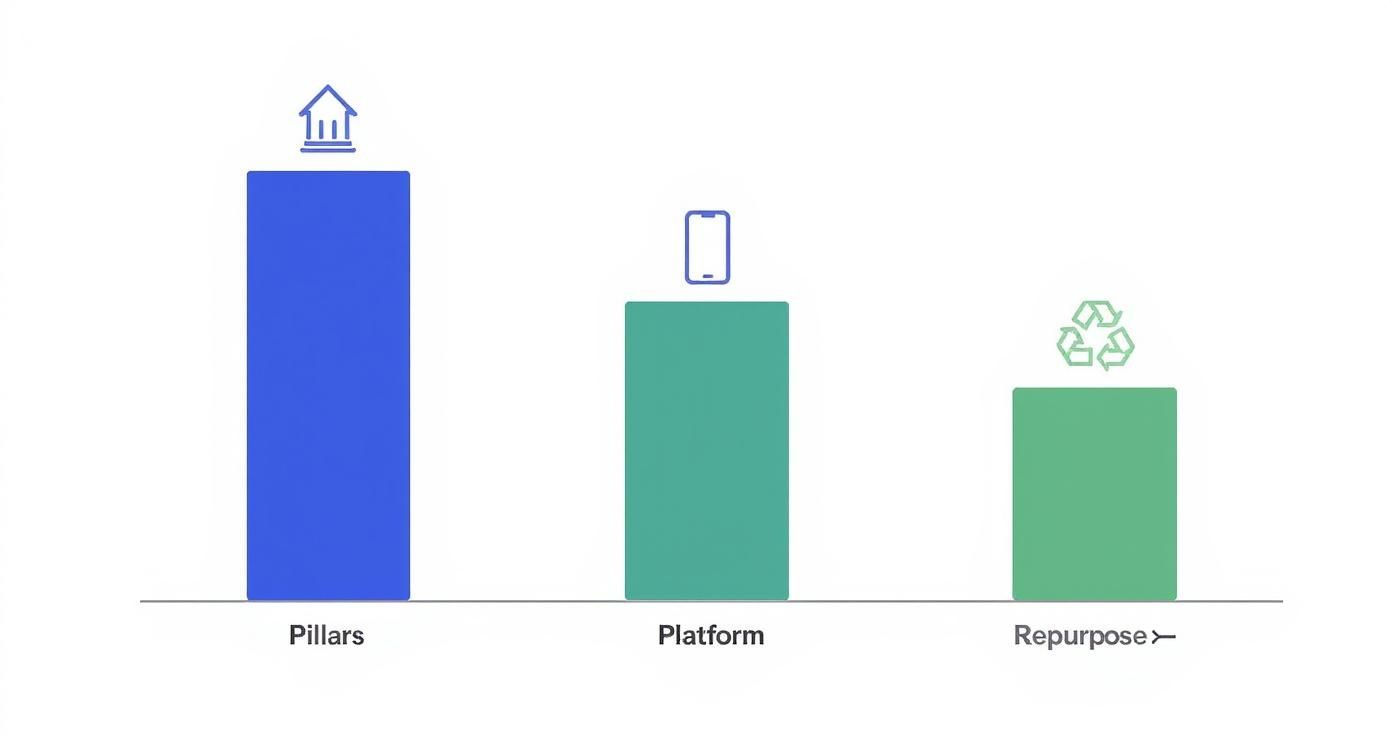
A solid content engine is the foundation for everything. For more practical tips on applying these strategies, check out our full guide on how to earn from social media. Layering these methods is how you build a resilient business that can weather any storm.
Managing the Business Side of Your Brand
This is where you make the switch from creator to CEO. Your content is the product, sure, but the business side of things—the legal, financial, and admin systems—is what actually makes your brand last. Honestly, skipping this part is a fast track to headaches you could have easily avoided, from ugly tax-season surprises to messy brand deals.
When you start acting like a business owner, you build a foundation that protects you, keeps your money organized, and, most importantly, frees you up to do what you're actually good at: creating. It’s all the unglamorous, behind-the-scenes work that makes long-term success possible.
Setting Up Your Legal and Financial Foundation
The very first move to professionalize your brand is to treat it like a real business. That means getting it completely separate from your personal life. This isn't just a tip for staying organized; it's a critical step for legal protection and financial sanity.
Opening a dedicated business bank account is non-negotiable. Do it yesterday. This one simple action makes tracking income and expenses a million times easier, which is an absolute lifesaver when tax time comes knocking. Mixing your business and personal money is a recipe for chaos and can land you in hot water if you ever get audited.
From there, you'll want to think about forming a legal entity.
- Sole Proprietorship: This is the default for most creators just starting. It's easy—no setup required—but it gives you zero liability protection. That means your personal assets, like your car or house, could be on the line if your business gets sued.
- Limited Liability Company (LLC): An LLC puts a legal wall between your business and personal finances. It gives you the liability protection of a bigger corporation but with way less complexity, making it the go-to choice for creators who are serious about their business.
Forming an LLC sends a clear signal to brands, partners, and even yourself that you are running a professional operation. It’s a foundational move that buys you peace of mind and builds serious credibility.
Once you’re set up, you need a simple way to manage the money. Grab some accounting software like QuickBooks Self-Employed or FreshBooks to keep track of every dollar coming in and going out. This will show you how profitable you are and help you make saving for taxes a habit. A solid rule of thumb is to set aside 25-30% of everything you earn for taxes. Don't touch it.
Your Essential Creator Toolkit
Running a modern content business takes more than a camera and a video editor. The right software can genuinely save you dozens of hours a week by automating boring tasks and giving you a clear picture of what’s working. Think of these tools as your digital employees, working for you 24/7.
Here are the main categories you should focus on building out:
- Project Management: Tools like Trello, Asana, or Notion are your command center. Use them to map out your content calendar, track where every video is in the production process, and manage anyone you're working with.
- Email Marketing: Your email list is one of the only assets you truly own—unlike your social media followers. Platforms like ConvertKit or Mailchimp help you build a direct line to your biggest fans.
- Analytics: You need to go deeper than the basic platform metrics. Use tools like Google Analytics for your website or other social media analytics software to really understand your audience and fine-tune your strategy.
It's also worth remembering that most creators are juggling this on top of other things. Recent data shows that 6 in 10 content creators also have full-time jobs, and only 2 in 10 run their content business as their main gig. You can dig into more stats on the creator economy over on spiralytics.com. This just proves that having an efficient toolkit isn't a luxury; it's a necessity if you want to grow.
Knowing When to Delegate and Outsource
As your brand grows, you're going to hit a wall where you simply can't do it all. The second you feel constantly overwhelmed and realize admin tasks are eating into your creative time, it's time to start outsourcing.
First, identify the repetitive, low-impact tasks that drain your energy. For most creators, the first hires are usually:
- A Video Editor: Editing is almost always the biggest time sink.
- A Virtual Assistant (VA): A good VA can handle your email, schedule, social media posting, and basic customer service.
- A Graphic Designer: To create killer thumbnails, social graphics, and other brand assets.
Learning to delegate is a skill in itself. It takes clear communication and a bit of trust, but it’s the only way you’re going to scale your impact and your income. You can start small by hiring someone for a single project on a platform like Upwork or Fiverr to test the waters. Getting tasks you dislike or aren't great at off your plate lets you focus on the creative work that only you can do.
Strategies for Scaling Your Reach and Impact
Once your content engine is humming along, it’s time to pour some fuel on the fire. Scaling isn’t about grinding harder; it’s about working smarter to find a bigger audience and deepen your influence. You're shifting from just making content to strategically distributing it.
Your initial growth came from being consistent, but real, long-term success comes from being discoverable and building connections. Let's break down a few key ways you can take your brand from a small channel to a recognized name in your niche.
Mastering SEO for Long-Term Discoverability
Think of Search Engine Optimization (SEO) as your secret weapon for growth that lasts. A viral video is great for a temporary traffic spike, but ranking on Google or YouTube for the right search terms brings a steady, reliable stream of your ideal audience for months, sometimes even years.
Start by figuring out what problems your audience is actually searching for. You can use free tools like Google Keyword Planner to find the exact phrases they're typing in.
Once you have a list of keywords, you just need to weave them naturally into your work:
- Video titles and descriptions
- Blog post headlines and the main text
- Podcast show notes
This simple habit helps platforms understand what your content is all about, which means they can show it to the very people who are looking for it.
Strategic Collaborations to Tap New Audiences
Partnering with other creators is one of the fastest shortcuts to growth. It's like getting a direct, warm introduction to a whole new audience that already trusts the creator you're working with.
Look for creators in your niche who are at a similar stage or just a bit bigger than you. You could co-host a webinar, be a guest on their podcast, or create a joint video project. The most important thing is making sure the collaboration offers real value to both audiences. When you're ready to get serious about this, using some of the best influencer marketing tools can really help you find the right partners and manage your campaigns.
Don't see other creators as competition. See them as potential partners. The content world is built on collaboration—a rising tide lifts all boats.
Using Data to Double Down on What Works
Your analytics dashboard is a goldmine of direct feedback from your audience. Seriously, spend some time in your YouTube Studio, TikTok analytics, or website data. Look for the content that gets the most engagement, watch time, or shares.
These aren't just numbers; they are your audience telling you exactly what they want more of.
If you notice that a certain topic or format is a clear winner, turn it into a recurring series. Stop guessing what might work. Let the data guide your content strategy so you can put your energy where it will have the biggest impact. This is a fundamental principle for anyone learning how to start a content creation business that can stand the test of time.
Content marketing is still a massive engine for growth, with a staggering 81% of marketers planning to make it a core business strategy in 2025. This just goes to show how critical a data-driven approach is for staying ahead. You can find more stats about the future of content marketing on sqmagazine.co.uk.
By blending smart SEO, strategic collaborations, and a close eye on your data, you create a powerful growth loop that constantly expands your reach and cements your place in the market.
Got Questions? Here Are Some Straight Answers
Diving into the world of content creation always kicks up a few questions. I've heard them all. Let's get right to the most common ones so you can move forward with a clear head.
What's the Real Startup Cost?
Honestly, you can get this whole thing off the ground for next to nothing. Your smartphone is a powerhouse studio, and free tools like Canva for design and DaVinci Resolve for video editing are ridiculously good these days.
Your biggest investment at the start won't be cash; it'll be your time.
Once the money starts trickling in, that's when you reinvest. A solid microphone (around $100), some decent lighting (starting at $50), or a premium software subscription can be your first upgrades. The strategy is simple: start lean and let your earnings fund your growth.
How Long Before I Can Quit My Day Job?
Let's be real: there's no fixed timeline. But if you're looking for a ballpark, plan on one to three years of dedicated, smart work. I know you see stories of people blowing up in six months, but that’s like winning the lottery—it happens, but you can't bank on it. Those rare cases usually involve a perfect mix of a hot niche, a brilliant strategy, and a healthy dose of luck.
Forget the timeline for a minute. Your first job is to build a community that genuinely values what you do. A full-time income is the reward for earning an audience's trust, not the reason they show up.
Success isn't about your personal appearance; it's about the value you deliver. A strong brand identity, a distinct voice, and excellent content can build a massive, profitable business without ever showing your face.
Do I Really Have to Show My Face?
Not at all. This is one of the biggest myths out there. The rise of "faceless" creators is proof that you don't need to be on camera to build a massive following.
Think about it—we've seen this succeed in all sorts of niches:
- Finance and productivity tutorials
- Cooking and recipe channels
- Guided meditations and ambient soundscapes
- Tech reviews and unboxings
In these cases, your brand's unique style, the quality of your work, and your distinct voice become the face of your business.
Ready to skip the slow grind of building an audience from scratch? MonetizedProfiles offers monetized YouTube and TikTok accounts that let you start earning from day one. Perfect for faceless creators and automation experts, it's the ultimate shortcut to launching your content business. Find your perfect monetized account and get started.


