


So, you want to get paid for your content? The first question everyone asks is, "How many subscribers do I actually need?"
The magic number for getting your foot in the door on YouTube is 500 subscribers. But that's just part of the puzzle. You also need to prove people are actually watching, which means hitting either 3,000 public watch hours in the last year or a whopping 3 million Shorts views in the last 90 days.
Breaking Down What These Numbers Really Mean
Every platform has its own set of hoops to jump through before you can start monetizing. These aren't just random numbers; they're designed to make sure you've built a real community that's genuinely interested in what you're creating.
YouTube, for example, recently changed its rules to give smaller creators a better shot at earning sooner. Before this, the climb was much steeper. The new model for the YouTube Partner Program (YPP) recognizes that a dedicated audience is valuable, even if it's not massive.
To get into the YPP, you need to meet a few key criteria:
- 500 subscribers
- 3 public video uploads in the last 90 days
- Either 3,000 public watch hours on your long-form videos or 3 million views on your Shorts
This visual really helps simplify YouTube's new, more creator-friendly requirements.
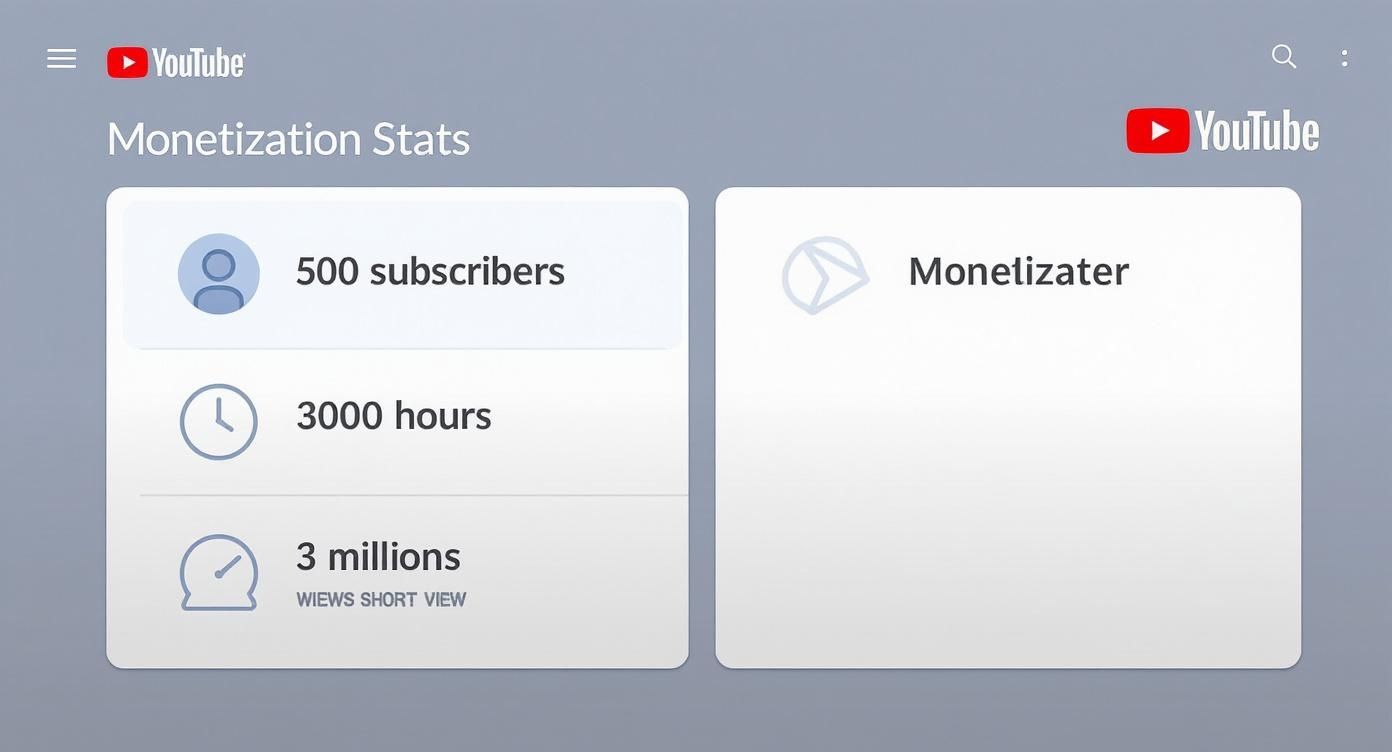
The best part is the flexibility. It gives you two distinct paths to monetization, whether your strength is in detailed, long-form content or in punchy, viral Shorts.
Platform Monetization Requirements at a Glance
Trying to keep all the rules straight can be a headache. This simple table breaks down the basic entry requirements for the two biggest video platforms right now.
| Platform | Minimum Subscribers | Watch Time / Video Views | Other Key Requirements |
|---|---|---|---|
| YouTube | 500 for early access | 3,000 watch hours (12 mos) OR 3 million Shorts views (90 days) | 3 public uploads (90 days), follow Community Guidelines, live in an eligible country. |
| TikTok | 10,000 | 100,000 video views (30 days) | Be at least 18 years old, have an account in good standing, post original content. |
As you can see, the strategy that works for one platform won't necessarily work for another. TikTok demands a larger following and a big splash of recent virality, while YouTube offers a slower, more sustained path to earning.
More Than Just Numbers
Hitting these milestones is a huge achievement, but it's not the final step. Staying monetized means playing by the rules. You have to be diligent about things like copyright—for example, you need to know how to license music for your content to avoid getting a strike that could jeopardize your entire channel.
And remember, ad revenue is just one piece of the pie. Once you're eligible, you can unlock a bunch of different income streams. We cover more ways you can earn from social media in our detailed guide.
Why Monetization Rules Keep Changing

If you feel like the goalposts for monetization are always moving, you’re not wrong. Think of these rules like the cover charge at a popular club—the owners can change the price anytime based on how busy it is and the kind of crowd they want to bring in.
For a long time, one specific set of numbers dominated the creator world. The classic YouTube benchmark, set back in 2018, was tough: you needed 1,000 subscribers and 4,000 hours of public watch time in the last year. This was a serious grind for most people, and you can actually see how YouTube monetization has evolved on epidemicsound.com to get the full picture.
That old model clearly rewarded creators who made longer videos that could hold an audience's attention. It was the platform's way of saying they prized deep, meaningful engagement over quick, fleeting views.
The Big Shift to Accessibility
So, what caused the recent shake-up? It really boils down to two things: fierce competition and the unstoppable rise of short-form video. Platforms like TikTok completely changed the game, proving that you could build a massive following with quick, snappy content.
This sent ripples across the entire industry. Other platforms knew they had to adapt or risk losing the next wave of talented creators. Lowering the bar for monetization, especially the subscriber count, is a direct answer to this new reality.
By giving creators a taste of earning potential earlier, platforms motivate them to stick around and make more content. This keeps viewers engaged and on the site longer, creating a win-win cycle for the entire ecosystem.
Ultimately, these changes are about being smarter and more inclusive. Platforms now recognize that a creator with 500 truly dedicated fans can be just as valuable as one with thousands of passive followers. The focus is shifting from raw numbers to the actual relationship between a creator and their audience, rewarding genuine connection over pure scale.
Understanding YouTube's Tiered Monetization Path
So, how many subscribers do you actually need to get paid on YouTube? The answer isn't a single magic number anymore. YouTube has built a tiered system that lets creators start earning much sooner, which is great news for anyone starting out.
Think of it like leveling up in a game. You unlock a few key abilities at the beginning and then gain access to the full arsenal once you've proven yourself.
This journey begins with the first level of the YouTube Partner Program (YPP), which opens up once you hit 500 subscribers. Hitting this first milestone is like getting the keys to the front door, even if you can't access every room in the house just yet.
Tier 1: Early Access at 500 Subscribers
At this first stage, you don't get a cut of the ad money from commercials that run on your videos. Instead, you unlock what are called "fan-funding" features. These are basically tools that let your biggest fans support you directly.
This tier gives you access to:
- Super Thanks: A way for viewers to buy a little animation that pops up on your video as a one-time tip.
- Super Chat & Super Stickers: During live streams, fans can pay to make their comments stand out.
- Channel Memberships: You can create your own "fan club" where people pay a monthly fee for special perks like custom emojis and badges.
This first step is huge. It lets you start building a revenue stream straight from your community while you work toward the bigger goal.
Tier 2: Full Monetization and Ad Revenue
The second tier is what most people are really aiming for—this is where you start earning a share of the ad revenue from your videos. For a deep dive into all the specifics, it’s worth reading up on the official YouTube Partner Program eligibility requirements.
To unlock this level, you need to hit the classic benchmarks: 1,000 subscribers and 4,000 watch hours. The watch time is often the toughest nut to crack, but our guide on the fastest way to get 4000 watch hours on YouTube breaks down a solid strategy for getting there.
How Monetization Works on Other Platforms
While YouTube has a pretty clear-cut path for creators to start earning, it's definitely not the only game in town. Other platforms have their own ways of paying creators, each with its own set of rules and rewards. TikTok, especially, has become a powerhouse for creators looking to turn their content into cash.
Knowing the subscriber and view count milestones for different platforms is crucial if you want to build a solid, diversified income stream. TikTok's main system, the Creativity Program, is a great example. It’s designed to reward creators for high-quality, original videos that are longer than one minute.
This move is a pretty big deal. It actively encourages a totally different style of video than the short, snappy clips that made the platform famous. It shows TikTok is starting to value deeper engagement and longer watch times, putting it more in line with YouTube’s model.
TikTok Creativity Program Requirements
To get into the TikTok Creativity Program, you have to hit some very specific benchmarks, and they’re quite different from what YouTube asks for. The focus isn't so much on a slow, steady build but on proving you can go viral right now.
Here's what you'll need to qualify:
- Follower Count: A minimum of 10,000 followers. This is a much steeper climb than YouTube's entry-level tier and means you need a fairly established audience.
- Video Views: At least 100,000 video views in the last 30 days. This is TikTok's way of making sure your content is currently hitting the mark.
- Age Restriction: You have to be 18 years or older.
- Content Rules: Your videos must be original, over a minute long, and, of course, follow TikTok's Community Guidelines.
The biggest difference is the timeline. YouTube looks at watch hours over a full year, rewarding long-term consistency. TikTok’s 30-day view count means you have to keep your foot on the gas to qualify.
This system really works for creators who are great at making longer vertical videos that grab attention immediately. The follower count is high, sure, but that view requirement can be knocked out with just a couple of viral hits. For anyone who's cracked the code of TikTok's fast-moving algorithm, it's a very compelling way to earn.
Strategies to Reach Your First Monetization Goal
Knowing the numbers is one thing, but actually hitting them is where the real work begins. Let's move from theory to practice and talk about the strategies that actually build sustainable growth on your journey to monetization. This isn't about chasing a single viral hit; it's about building a real community that wants to stick around for the long haul.
First things first: you need to define your niche. A channel that tries to cover everything for everyone usually ends up meaning nothing to anyone. When you focus on a specific topic—say, Squarespace tutorials, vintage camera reviews, or gluten-free baking—you attract people who are genuinely passionate about what you're sharing. That kind of targeted content naturally leads to better engagement and much higher watch times.
Create Content That Connects
Once you've nailed down your niche, your most powerful tool is consistency. You need to get into a rhythm with a regular posting schedule, whether that’s one video a week or two a month. This simple act trains your audience to look forward to your content and tells the platform's algorithm that your channel is active and worth recommending. It's this steady, compounding effort that builds the momentum you need to hit those big monetization milestones.
Think of your titles and thumbnails as the billboards for your videos. They have one job: to make someone stop scrolling.
- Write Intriguing Titles: Your titles should either spark curiosity or promise a clear, valuable solution to a problem.
- Design Clickable Thumbnails: A great thumbnail is clean, easy to read, and gives a visual clue about the value packed inside the video.
A huge mistake I see creators make is obsessing over subscriber counts. Your real focus should be on creating content that earns watch time. One person who watches your entire video is far more valuable than a subscriber who never even clicks.
Build a Community, Not Just an Audience
This is what separates the successful channels from the ones that fizzle out. Genuine engagement turns casual viewers into a loyal community. Take the time to respond to comments, ask questions in your videos, and give shout-outs to your followers. This back-and-forth shows them you value their time and makes them want to come back for more. In the long run, a strong community is your single biggest asset on the road to getting paid.
If you want to dig even deeper into this growth journey, our guide on how to get your first 1000 subs on YouTube breaks down even more tactics.
Ultimately, it all comes down to combining a clear niche with a consistent schedule and a genuine effort to engage your community. This provides a solid foundation for reaching your goals. It’s definitely a marathon, not a sprint, but these strategies will make sure you’re running in the right direction.
Going Beyond Subscribers to Secure Your Income
https://www.youtube.com/embed/cahJdHXnj6c
Hitting that magic subscriber number is a great feeling, but it's only half the battle. A big subscriber count might look impressive, but if nobody's actually watching your videos, it's just a vanity metric.
Platforms and advertisers are much more interested in how many people are genuinely engaged with your content.
Think about it: a channel with 10,000 subscribers who have notifications turned off is way less valuable than a channel with 2,000 die-hard fans who tune in for every single upload. This is why metrics like audience retention and total watch hours are the real currency on these platforms.
These numbers are proof that you can hold an audience's attention. High watch time signals to the algorithm that your content is good, which leads to more recommendations and a natural growth spiral. For advertisers, it means their ads are more likely to be seen by real, interested people, making your channel a much safer bet for their ad spend.
Building a Channel That Lasts
Beyond the numbers, the long-term health and trustworthiness of your channel are everything. To build a channel that actually makes money, you need to build one that can last by playing by the rules.
Consistently following the platform's policies is non-negotiable if you want to stay in good standing. Here's what you absolutely have to get right:
- Community Guidelines: Steer clear of harmful, hateful, or misleading content. Getting a strike—or worse, having your channel terminated—can wipe out all your hard work in an instant.
- Copyright Rules: Using music, video clips, or images you don't have the rights to is one of the fastest ways to get your videos demonetized. Stick to royalty-free assets or get the proper licenses.
- Ad-Friendly Content: Keep your videos appropriate for a broad audience. The more advertiser-friendly your content is, the more opportunities you'll have to earn.
Ultimately, a monetized channel is a trusted channel. When you focus on creating real engagement and respecting the guidelines, you’re not just checking a box to get paid—you’re building a sustainable and resilient business.
Common Questions About Getting Monetized

Even when you know the rules, the road to monetization can feel a bit mysterious. It’s totally normal to have questions pop up along the way. Let’s clear up a few of the most common ones I hear from creators.
A big worry for many is, "What happens if my subscribers drop below the magic number?" Good news: once you're in a partner program, you're generally safe. A small dip won't get you kicked out, as long as your channel stays active and you keep playing by the platform's rules.
How Long Does Approval Take?
So you’ve hit the numbers and sent in your application. Now comes the hard part: waiting. The review time really depends on the platform.
YouTube typically takes about a month to get back to you. They use this time to do a deep dive into your channel, making sure everything is original and follows their policies before you can start earning.
Can I Use Other People's Content?
This is a big one, and the answer is almost always no. Using copyrighted music, clips, or images that you don’t own is playing with fire. It can lead to copyright strikes that will kill your monetization chances before they even start.
Your safest and smartest move is to focus on creating 100% original content. It’s how you build a real, sustainable channel that’s all your own.
Ready to skip the grind and start earning right away? MonetizedProfiles offers fully approved YouTube and TikTok accounts that are ready for revenue from day one. Check out our available profiles at https://monetizedprofiles.com.


