


So, you want to get paid for your YouTube views? The main way this happens is by joining the YouTube Partner Program (YPP). Once you're in, YouTube starts placing ads on your videos, and you get a cut of the revenue. This is the first and most fundamental step to turning your channel into a real income source.
How YouTube Views Actually Turn Into Money

It sounds straightforward, but there’s a little more to it than just getting views. Here’s a common misconception: you don't get paid for the views themselves. You actually get paid when someone watches or clicks on the advertisements that play on your videos.
This whole process is handled by Google AdSense, which acts as the matchmaker between you and the advertisers. Companies pay YouTube to show their ads to specific audiences, and if your channel fits their target, those ads run on your content.
Getting a Grip on CPM and RPM
To really understand your earnings, you need to know the difference between two key metrics: CPM and RPM. They sound similar, but they tell very different stories about your income.
- CPM (Cost Per Mille): This is the "Cost Per 1,000 Impressions" an advertiser pays to run their ad. Think of this as the advertiser's cost, not what lands in your pocket.
- RPM (Revenue Per Mille): This is your "Revenue Per 1,000 Views," and it’s the metric you should be watching. It shows your total revenue (from ads, Super Chats, memberships, etc.) for every 1,000 views on your videos. This is a much better indicator of your actual earnings.
For instance, a high CPM in the gaming niche is great, but it won't mean much if your viewers all use ad-blockers or skip every ad. RPM gives you the real-world picture of your channel’s health. If you want to dive deeper, you can learn how to calculate your YouTube revenue per 1000 views in our detailed guide.
Here's the key takeaway: not every view has the same value. A single view from someone in the U.S. watching a video about investing is often worth far more to an advertiser than ten views from a different region on a prank video.
YouTube Monetization Pathways at a Glance
Making money from YouTube ads is just the beginning. As your channel grows, you can unlock several other income streams. The table below gives a quick snapshot of the primary ways creators earn on the platform.
| Monetization Method | Primary Requirement | Earning Potential (RPM) |
|---|---|---|
| YouTube Ad Revenue | YouTube Partner Program (YPP) Approval | $1 - $20+ |
| Channel Memberships | YPP Approval & 30,000+ Subscribers | Varies (Based on Tiers) |
| Affiliate Marketing | Established Audience Trust | Varies (Commission-Based) |
| Brand Sponsorships | Engaged & Niche Audience | Varies (Negotiated Rates) |
Each of these pathways lets you monetize your content and community in a different way. We'll get into the specifics of how to qualify for and make the most of each one later in this guide.
Getting into the YouTube Partner Program
Alright, let's talk about the first major hurdle every creator has to clear: getting into the YouTube Partner Program (YPP). This is the official gateway to earning ad revenue, and while the big numbers get all the attention, it’s the fine print that can make or break your application.
Think of this as your first big milestone. To even knock on the door, you need to hit some key metrics.
Most creators are shooting for the classic requirements:
- 1,000 subscribers on your channel.
- 4,000 valid public watch hours within the last 12 months.
But if you're all-in on Shorts, YouTube has a different path for you: 1,000 subscribers and 10 million valid public Shorts views in the last 90 days. Nail one of these combos, and you're eligible to apply.
What “Valid Public Watch Hours” Actually Means
This is a classic rookie mistake. Not all watch time is created equal in YouTube's eyes, and knowing the difference is crucial.
"Valid public watch hours" only come from videos you’ve set to public. Simple as that.
YouTube will not count hours from:
- Private videos
- Unlisted videos
- Deleted videos
- Ad campaigns (so no, you can't just run Google Ads to fast-track this)
- Videos played from the Stories and Shorts shelf
Your growth has to be real, coming from viewers who genuinely find and watch your public videos. You can always see where you stand by heading over to the "Earn" tab in your YouTube Studio.
Quick heads-up: That 4,000-hour requirement is a rolling 12-month window, not a calendar year. If your one viral hit was 13 months ago, those hours just fell off your total. You have to keep the momentum going.
Playing by YouTube’s Rules (This is Non-Negotiable)
Hitting the subscriber and watch time goals is just step one. The real test is whether your channel respects YouTube's policies. Honestly, this is where most applications get denied.
Your channel absolutely must comply with all of these:
- YouTube Community Guidelines: The basics—no spam, scams, hate speech, or dangerous content.
- Terms of Service: The legal stuff you agree to when you use the platform.
- Copyright Policies: You need the rights to everything you upload. That means video clips, background music, everything.
- Google AdSense Program Policies: This covers things like click fraud and other shady tactics.
Breaking any of these rules is a fast track to rejection or, even worse, getting kicked out of the program down the road. For a really detailed breakdown, check out our guide on what the YouTube Partner Program is and how it works.
The Advertiser-Friendly Hurdle
Even after you’re in the YPP, not every video will make you money. Why? Because of the Advertiser-Friendly Content Guidelines. Brands are picky about where their ads show up, and they'll avoid anything controversial.
Let's take a real-world example. A true-crime channel might pull in tons of views, but videos about violent events often get slapped with "limited monetization" (that dreaded yellow dollar sign). This means few, if any, ads will run, and your earnings for that video plummet.
On the flip side, a channel that reviews financial software is a goldmine for advertisers. The content is considered brand-safe, attracting high-paying ads from relevant companies.
The Application and Review Process Itself
Once you've checked all the boxes, you can finally apply right from your YouTube Studio. The process is pretty straightforward:
- First, you’ll review and accept the YPP terms.
- Next, you need to connect an active Google AdSense account. You can set up a new one if needed, but remember—you can only have one AdSense account in your name.
- Then, you wait.
A real person at YouTube will review your channel. They’ll look at your overall theme, your most-watched videos, your newest content, and all your metadata (titles, thumbnails, descriptions) to make sure you're following the rules. This usually takes about a month.
If you’re rejected, don’t panic. You can re-apply after 30 days, but you have to actually fix whatever problems they pointed out first.
How to Maximize Your YouTube Ad Revenue
So you've made it into the YouTube Partner Program and the money is starting to trickle in. Congratulations! But you'll quickly discover a hard truth: not all views are created equal. One of your videos might earn a healthy $15 per 1,000 views, while another barely scrapes by at $2.
Understanding that gap is the secret to turning your channel into a serious earner. It all boils down to two things: the topics you cover and where your audience is watching from. Advertisers pay top dollar to get their products in front of the right people, and that's where you come in.
Target High-Value Niches and Audiences
The fastest way to boost your ad revenue is to create content that attracts an audience advertisers are fighting to reach. Think about it—some industries just have bigger marketing budgets because their products and services are worth more.
Here are a few of the most profitable areas on YouTube right now:
- Finance and Investing: Content about stocks, crypto, real estate, and personal finance is gold. Ads from banks, trading apps, and financial services pay a premium.
- Technology and Software: If you review gadgets or teach people how to use software, you're attracting ads from big tech companies and SaaS brands.
- Education and E-Learning: Channels that teach skills like coding, graphic design, or digital marketing are magnets for ads from online course platforms.
It’s just simple economics. A channel reviewing luxury cars will always have a higher ad rate than one doing comedy skits. It’s not about which one is "better" content, but about which audience has more buying power. Getting monetized is just the first step on the ladder.
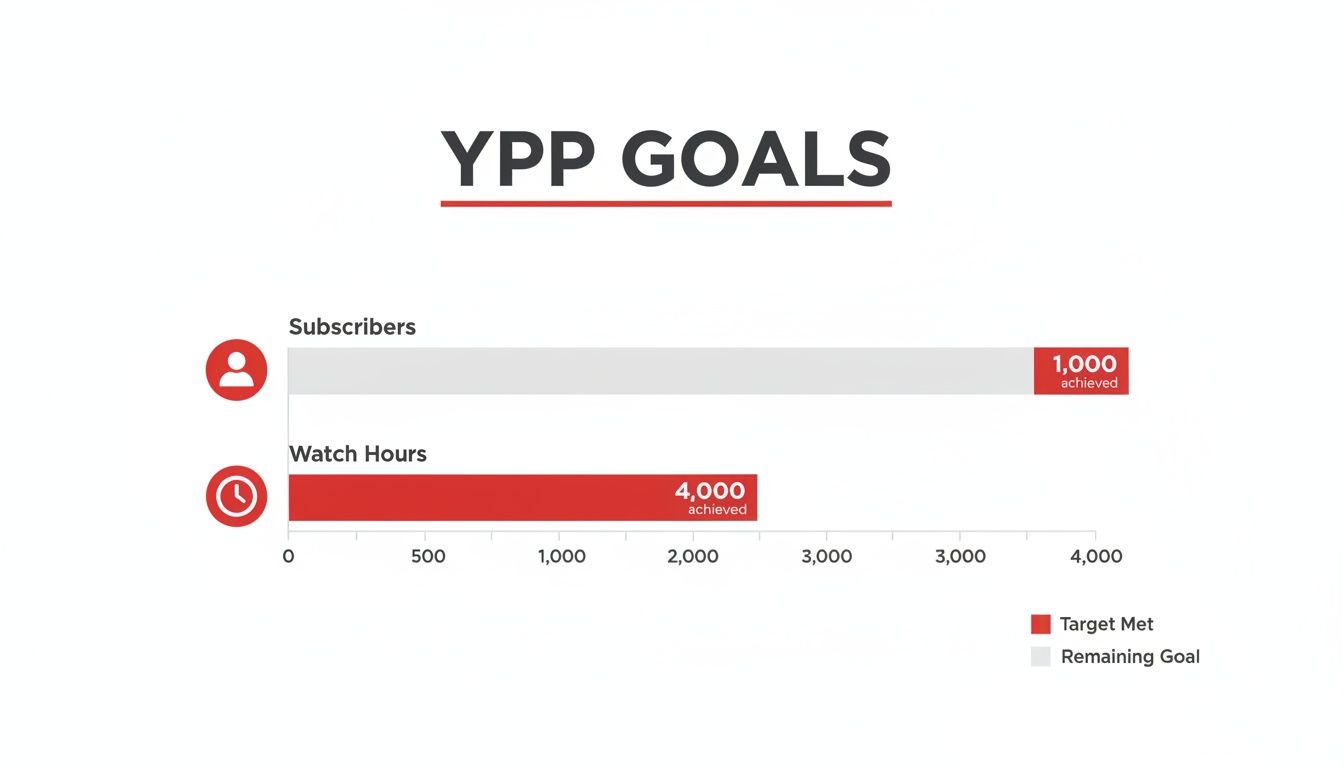
Hitting these milestones gets you in the game, but understanding your audience's value is how you win it.
Your Audience’s Location Matters. A Lot.
Just as critical as what your audience watches is where they're watching from. Advertisers in countries with strong economies and high consumer spending simply pay more for your ad space.
While the global average CPM might be around $8.50, that number can explode to $32.75 for US viewers, $29.15 in Canada, and a whopping $36.21 in Australia. And if you’re in a top-tier niche like finance? You could see CPMs well over $30.
The takeaway here is simple: A single view from a viewer in Australia can be worth more than three or four views from a region with lower ad spend. If you can create content that resonates with audiences in these premium countries, you’re on the fast track to higher earnings.
Get People to Watch Longer
Once you've zeroed in on a profitable niche, your next mission is to keep viewers glued to their screens. Watch time is one of the most important metrics for the YouTube algorithm. The longer people watch, the more YouTube will push your videos out to new audiences.
Longer watch time also means more ad revenue. Simple as that. A person who finishes a 15-minute video might see three or four mid-roll ads. Someone who clicks off a 5-minute video after 30 seconds sees zero. This is where understanding your RPM comes in handy. If you're fuzzy on the details, we have a guide that explains what RPM is in YouTube and how it truly reflects what you earn.
Here are a few practical ways to keep people watching:
- Hook Them Fast: The first 30 seconds are everything. Open with a provocative question, a surprising statement, or a quick glimpse of the final result. Give them a reason to stick around.
- Use Pattern Interrupts: Don't just talk to the camera. Every 15-20 seconds, change something up. Switch camera angles, pop up some on-screen text, add B-roll, or use a sound effect. It resets the viewer's attention.
- Tell a Story: Even a how-to video can have a story. Present a problem, guide the viewer through the steps to solve it, and deliver a satisfying conclusion. This structure is incredibly engaging.
By focusing on these three things—a valuable niche, a premium audience, and longer watch times—you shift from simply hoping for views to strategically engineering profitable ones.
Expanding Your Income Beyond AdSense
Putting all your eggs in the AdSense basket is a rookie mistake. It's a bit like building a house on a single pillar—one algorithm change or a bad month for ad rates, and your whole income can get shaky. The creators who truly thrive are the ones who learn how to get paid for YouTube views in more ways than one.
Real financial stability on YouTube comes from building multiple streams of income that work together. Luckily, YouTube has some fantastic built-in tools to help you do just that, giving your most loyal fans a way to support you directly.
Tapping into Your Community for Direct Support
Once you’re in the YouTube Partner Program, you unlock a whole new world of monetization features. These tools are designed to turn your passive viewers into active supporters who are invested in your success.
- Channel Memberships: This is basically your channel's own little subscription club. Fans pay a monthly fee for exclusive perks you create, like custom emojis, members-only live streams, or getting to see your videos before anyone else.
- Super Chat & Super Stickers: During live streams, these are a game-changer. Viewers can pay to make their message stand out in the chat, creating a fun way to interact with your biggest fans while earning a little extra.
- Super Thanks: Think of this as a virtual tip jar right on your videos. A viewer can buy a cool animation to show their appreciation for a specific video they loved.
These features do more than just add to your bank account; they build a much stronger community around your content. It’s a win-win: your fans feel more connected, and you get a more predictable income stream.
Building a diverse income portfolio is crucial. While over 5 million channels are monetized, the creators who build real wealth are those who look beyond ads. The number of creators earning over $100,000 yearly jumped by 25% in 2025, largely fueled by these alternative streams. To discover more about these trends, you can explore the insights on YouTube's creator economy.
Earning with Products You Already Love
While YouTube's own tools are great, some of the best money-making opportunities are actually off-platform. Affiliate marketing is one of the most natural ways to get paid for YouTube views without ever thinking about ad revenue.
It’s pretty simple. You recommend a product or service you actually use and believe in. When someone buys it through your unique link, you get a cut of the sale. Think of a tech reviewer who drops affiliate links for the specific camera and mic they use in their video description—it just makes sense.
The trick here is authenticity. If you start pushing junk you don't believe in, your audience will see right through it and you'll lose their trust fast. But when you do it right, affiliate income can sometimes even outpace what you make from ads.
Landing Your First Brand Sponsorship
The next level up is brand sponsorships, or what everyone calls brand deals. This is where a company pays you a set fee to feature their product in a video. For many of the biggest creators, sponsorships are their single largest source of income.
You don't need a million subscribers to get started, either. What you really need is a passionate, niche audience that a brand wants to connect with.
Here’s a simple game plan for landing your first deal:
- Define Your Niche: Get super clear on who your audience is and what they're into. A channel dedicated to "sustainable urban gardening" is much more attractive to a brand than a "general lifestyle" vlog.
- Create a Media Kit: This is your channel's resume on a single page. It should include your stats (subs, monthly views), audience demographics (age, location, etc.), and what you charge for different kinds of promotions (like a 60-second mention versus a fully dedicated video).
- Start Pitching: Don't just sit around and wait for brands to find you. Make a list of companies whose products you already use and love. A personalized email explaining exactly why your audience is a perfect match for them can work wonders.
By combining YouTube’s direct support features with off-platform strategies like affiliate marketing and sponsorships, you create a solid financial foundation for your channel. It makes you way less vulnerable to the unpredictable nature of ad revenue alone.
Want to Skip the Monetization Grind? Here's How
Let's be honest: the road to 1,000 subscribers and 4,000 watch hours can be a soul-crushing marathon. So many talented creators burn out during this phase, giving up on their channels long before they ever earn a single dollar. If you're serious about turning YouTube into a business, that initial waiting period can feel like a massive roadblock.
But what if you could just… skip it? There’s a strategy that many entrepreneurs, especially faceless content creators, are using to hit the ground running. It involves acquiring a channel that’s already been approved for the YouTube Partner Program. This lets you bypass the entire qualification grind and get paid for YouTube views from the very first video you upload.
Why Would You Buy a Monetized Channel?
The single biggest reason is immediate earning potential. Instead of dedicating months (or even years) to hitting those tough monetization metrics, you can pour all your energy into what actually matters: creating killer content that people love. It completely flips the traditional YouTube journey on its head.
Think about it. Say you've got a brilliant idea for a faceless automation channel in the high-RPM finance niche. With a pre-monetized channel, you can launch your first video and have ads running on it that very day, capturing revenue from every single qualified view.
This approach totally changes your timeline:
- Traditional Path: Spend 6-12+ months building an audience just to qualify.
- Accelerated Path: Start earning from day one and reinvest that money to grow even faster.
The concept is pretty simple: you're investing in a turnkey asset. This lets you treat your YouTube channel like any other startup, where you make an initial investment to speed up your path to profitability.
Finding a Channel That's Safe and Legitimate
This strategy can be a game-changer, but it comes with a huge warning. The online market is absolutely flooded with channels that were grown with bots, fake views, and other sketchy methods that fly in the face of YouTube's policies. Buying one of those is a surefire way to lose your money and get the channel shut down.
To protect your investment, you have to do your homework. It is absolutely critical to get your channel from a trusted provider that can guarantee the account was grown organically. A reputable source ensures the channel is built on a solid, rule-abiding foundation. This is exactly where services like MonetizedProfiles come in; they specialize in providing organically grown, monetization-ready accounts for serious creators.
What to Look For in a Monetized Account
When you’re checking out a pre-monetized channel, whether it's for a faceless project or your personal brand, there are a few key things to look for. Any reliable seller should be completely transparent about these details.
Here’s your checklist:
- Organic Growth: The channel must have gained its subscribers and watch hours the old-fashioned way. Always ask for a guarantee that no bots or artificial inflation tactics were ever used.
- Clean History: The account needs to be completely free of copyright strikes or Community Guideline violations. Even one active strike can mess with monetization or put the entire channel at risk.
- AdSense Account Status: You need to be clear on how the AdSense account is handled. The standard, secure process is for you to connect your own AdSense account to the channel after the purchase is final.
This strategy isn't for hobbyists, but for creators laser-focused on YouTube automation or building a media company, it can make all the difference. It cuts out the most discouraging part of the process, freeing you up to focus on making great content and scaling your income from the get-go.
Answering Your Top Monetization Questions
As you dive into the world of making money on YouTube, a lot of questions are bound to come up. It's totally normal to wonder about the nitty-gritty details—like specific numbers, how different video formats pay, and the traps that could set you back.
Let's walk through some of the most common questions I hear from creators. My goal is to give you clear, straight answers so you can move forward with confidence.
How Many Views Do You Really Need to Make $1000?
There's no magic number here. How much you earn boils down to one key metric: your RPM (Revenue Per Mille), which is what you make for every 1,000 views.
Let's put that into perspective. If you run a gaming or entertainment channel, your RPM might hover around $2. At that rate, you'd need a massive 500,000 views to earn $1,000. On the flip side, a creator in the finance or business niche could have a healthy $15 RPM. For them, hitting that same $1,000 goal would only take about 67,000 views.
This is a huge lesson for every creator: your niche and content quality are far more important than just raw view count. A smaller, dedicated audience in a high-value niche can easily outperform a massive, general audience.
Do You Get Paid for YouTube Shorts Views?
Yes, but don't expect it to pay the bills. The way you get paid for Shorts is completely different from regular videos. The money comes from a shared ad revenue pool that gets divided among all Shorts creators, which means the payouts are tiny.
The RPM for Shorts is usually just a few cents—we're talking $0.03 to $0.07. This means you might pocket somewhere between $30 and $70 for every million views.
The smart play here is to treat Shorts as a growth engine, not a primary income stream. Use them to hook new viewers and drive them over to your more profitable, long-form videos.
Is Buying a Monetized YouTube Channel a Good Idea?
It absolutely can be. Many entrepreneurs and faceless creators go this route to skip the long, frustrating grind to get into the YouTube Partner Program. When you buy a channel that's already approved, you can upload a video and start earning from day one.
The single most important thing, though, is where you get the channel. You have to find a reputable seller who can guarantee the account was grown organically and is in good standing with YouTube. A legit, pre-monetized channel lets you jump straight to the fun part: creating content.
What Gets a Channel Demonetized?
Losing your monetization is every creator's worst nightmare, and it almost always comes down to breaking the rules. Staying on the right side of YouTube's policies is non-negotiable for long-term success.
Here are the usual suspects that get channels kicked out of the program:
- Copyright Strikes: This is a big one. Using music, clips, or images you don't have the rights to will get you in trouble fast.
- Community Guideline Strikes: Posting content that YouTube considers harmful, hateful, or dangerous is a quick way to lose your channel.
- Advertiser-Unfriendly Content: If your videos constantly touch on sensitive topics, advertisers will pull out, and YouTube might demonetize you.
- Reused Content: You can't just re-upload other people's stuff. If you use third-party content, you need to add significant original commentary or educational value.
Sticking to the guidelines isn't just about avoiding trouble; it's about building a sustainable business on the platform.
Ready to skip the long road to monetization and start earning right away? MonetizedProfiles offers fully approved, organically grown YouTube channels that let you focus on content, not qualifications. Check out our selection of monetization-ready accounts and launch your creator business today.


