


Let's be honest, the idea of making money online without plastering your face all over the internet sounds pretty good, right? That’s the core idea behind faceless affiliate marketing.
Simply put, it’s a way to earn commissions by promoting products or services without ever revealing your personal identity. Instead of building a brand around yourself, you build it around a niche, a theme, or a specific type of valuable content. It's the perfect model for anyone who values their privacy.
Why Faceless Marketing Is Gaining Momentum
The appeal here goes way beyond just being camera-shy. This is a smart business model that completely separates your income from your personal presence. It offers a level of freedom that traditional influencer marketing just can't touch.
Think about it: you’re not the brand; the content is the brand.
This simple shift is the key to why this method is so scalable and resilient. You can stop worrying about perfecting a take on camera and instead pour all your energy into creating genuinely helpful content that solves a problem for your audience.
This could be a TikTok account that only shows screen recordings of useful software, a blog filled with unbiased reviews of home coffee makers, or a YouTube channel using stock footage and AI voiceovers to break down complex financial topics. The possibilities are endless.
The Core Appeal
When you take your identity out of the picture, some amazing advantages pop up:
- Complete Privacy: You can build a serious online business, and your friends, family, or boss never have to know.
- Zero On-Camera Pressure: Forget about maintaining a public persona, dealing with personal criticism, or even worrying about what you look like.
- Scalability Across Niches: Since you aren't the face of the brand, there's nothing stopping you from building multiple faceless businesses in completely different niches at the same time.
- Focus on What Matters: Your energy goes where it counts—research, creating high-quality content, and truly understanding what your audience needs to make a purchase.
This isn't just a fleeting trend; it's a huge piece of a rapidly growing industry. The global affiliate marketing space was valued at roughly $18.5 billion in 2025 and is on track to hit nearly $31.7 billion by 2031. This explosive growth is being driven by creators who get that you can build trust through solid expertise and consistency, not just a flashy personality.
The most successful faceless marketers build trust through the quality and reliability of their content. When your audience knows they can count on you for honest reviews or helpful tutorials, your anonymity becomes irrelevant. They trust the brand you’ve built, not the person behind it.
For a great example, look at the countless creators who have mastered this on video platforms. They build entire channels dedicated to a single theme, and we even wrote a detailed guide on how to start a faceless YouTube channel that breaks down how to create compelling videos without ever stepping on camera.
The same principles work wonders on TikTok, Instagram, and Pinterest, where theme-based accounts often blow past personality-driven ones. At the end of the day, faceless affiliate marketing proves that real value, not just personal visibility, is the key to building a sustainable income online.
Faceless vs Personal Brand Affiliate Marketing
Not sure which path is right for you? Here's a quick comparison of the two main affiliate marketing approaches to help you decide.
| Attribute | Faceless Affiliate Marketing | Personal Brand Affiliate Marketing |
|---|---|---|
| Foundation | Built on a niche, theme, or topic | Built on an individual's personality & expertise |
| Anonymity | High. Your identity remains private. | Low. Your face and name are the brand. |
| Scalability | High. Easier to create multiple brands. | Medium. Tied to one person's time and energy. |
| Audience Connection | Based on content value and trust | Based on personal connection and relatability |
| Content Creation | Focus on research, scripts, and visuals | Focus on on-camera presence and storytelling |
| Exit Strategy | Easier. Brands can be sold as assets. | Difficult. Hard to sell a personal brand. |
Both models can be incredibly profitable, but they require different skills and mindsets. The faceless approach prioritizes system-building and content quality, while a personal brand hinges on your ability to connect with an audience directly. Choose the one that best fits your personality and long-term goals.
Finding Your Goldmine Niche and Products
Let's be real: the heart of a successful faceless affiliate business isn't your cool video editing. It’s the niche you operate in. Get this wrong, and you're shouting into the void. Get it right, and you've found a goldmine.
The trick is to stop thinking about what you find interesting and start focusing on where real people have real problems that products can solve. This is about finding the sweet spot between audience pain points and profitable solutions. The first, and most important, step is to find genuinely profitable affiliate marketing niches that have an active, paying audience.
A winning niche always has a built-in audience that's already looking for help. Your only job is to show up and give it to them.
For instance, "home fitness" is way too broad. You'll get lost in the noise. But what about "quiet, apartment-friendly workout gear"? Now we're talking. That laser-focus targets a very specific problem—how to stay fit without your downstairs neighbor banging on the ceiling—and the product solutions are obvious.
How To Know If Your Niche Is a Winner
Before you go all-in on an idea, you need to check if people actually care. Don't rely on a gut feeling; use data.
A quick-and-dirty way to start is with Google Trends. Is interest in your topic on the rise, holding steady, or falling off a cliff? This gives you a bird's-eye view of the market.
Next, you need to get your hands dirty. Go hang out where your potential audience lives online. I'm talking about Reddit, Quora, and obscure forums. Look for the same questions popping up over and over. If you see thread after thread asking, "What’s the best standing desk converter for a tiny workspace?"—you've struck gold. That’s a clear signal of a problem that affiliate products can fix.
This kind of digital eavesdropping is priceless. For a more detailed breakdown, we have a complete guide on how to find a profitable niche specifically for social media.
Picking Products That Actually Convert
Once you’ve confirmed your niche has potential, it's time to find products to promote. Affiliate networks like ShareASale, ClickBank, or Amazon Associates are great starting points. But please, don't just grab the product with the highest commission. That's a rookie mistake.
Here's what I look for when vetting a product:
- Product Quality: Is it actually good? Read the reviews. If you promote junk, you’ll torch your brand's credibility before it even gets off the ground. Trust is your most valuable asset.
- Cookie Duration: This is huge. It’s how long you get credit for a sale after someone clicks your link. I look for a 30-day cookie or longer. People need time to think, and a longer window gives you the best shot at getting paid.
- Commission Type: Is it a one-off payment or recurring? Software (SaaS) products are amazing for this because they often pay you every single month your referral stays subscribed. This is how you build a stable, predictable income.
There’s a reason this model works so well. It turns out that around 81% of brands use affiliate programs, and they see an average return of $15 for every $1 spent. These numbers show that when you connect the right audience with the right solution, everybody wins.
The best affiliate products aren't just the ones that pay the most. They're the ones that genuinely solve the problem your audience is struggling with. When your recommendations actually help, your faceless brand becomes a trusted authority, and the sales will come naturally.
Building Your Faceless Content Engine
Alright, you've locked in a promising niche. Now comes the fun part: building the machine that will pull in your audience and get those affiliate links clicked. This is where your strategy gets real, powered by consistent, valuable content you create entirely behind the scenes.
Your one-two punch for this is going to be short-form video and long-form blog content.
Forget about needing a fancy camera or a studio setup. The secret to a killer faceless video strategy is all about repurposing existing content. You can whip up incredibly engaging TikToks, Reels, or YouTube Shorts with just a few simple ingredients:
- Stock Footage: Think of these as high-quality video clips that tell a story for you.
- Text Overlays: Big, bold text that smacks the viewer with your key message right away.
- AI Voiceovers: A clean, clear voice that guides people through your video without you ever saying a word.
On the blog side of things, your job is to be a problem-solver. You’ll be creating written guides and SEO-driven product roundups. Put yourself in your audience's shoes—what are they typing into Google? Content like "The 5 Best Air Purifiers for Pet Owners" or "A Beginner's Guide to Using X Software" are goldmines. They're evergreen assets that can pull in traffic for years to come.
Crafting Content That Converts
Here’s the thing about faceless affiliate marketing: you're not just creating content, you're creating content that persuades without being sleazy. You want to become that trusted, anonymous expert people turn to. That means every single piece of content, whether it's a 30-second clip or a 2,000-word article, has to offer real value.
To keep this whole engine running smoothly without getting bogged down in technical details, it’s worth looking into top no-code automation platforms. These tools can take care of scheduling and posting, which frees you up to focus on making great stuff. If you really want to get into the weeds, our guide on automating content creation takes a deeper dive into more advanced strategies.
The infographic here breaks down the process of zeroing in on your focus before you even think about hitting 'record' or 'publish'.
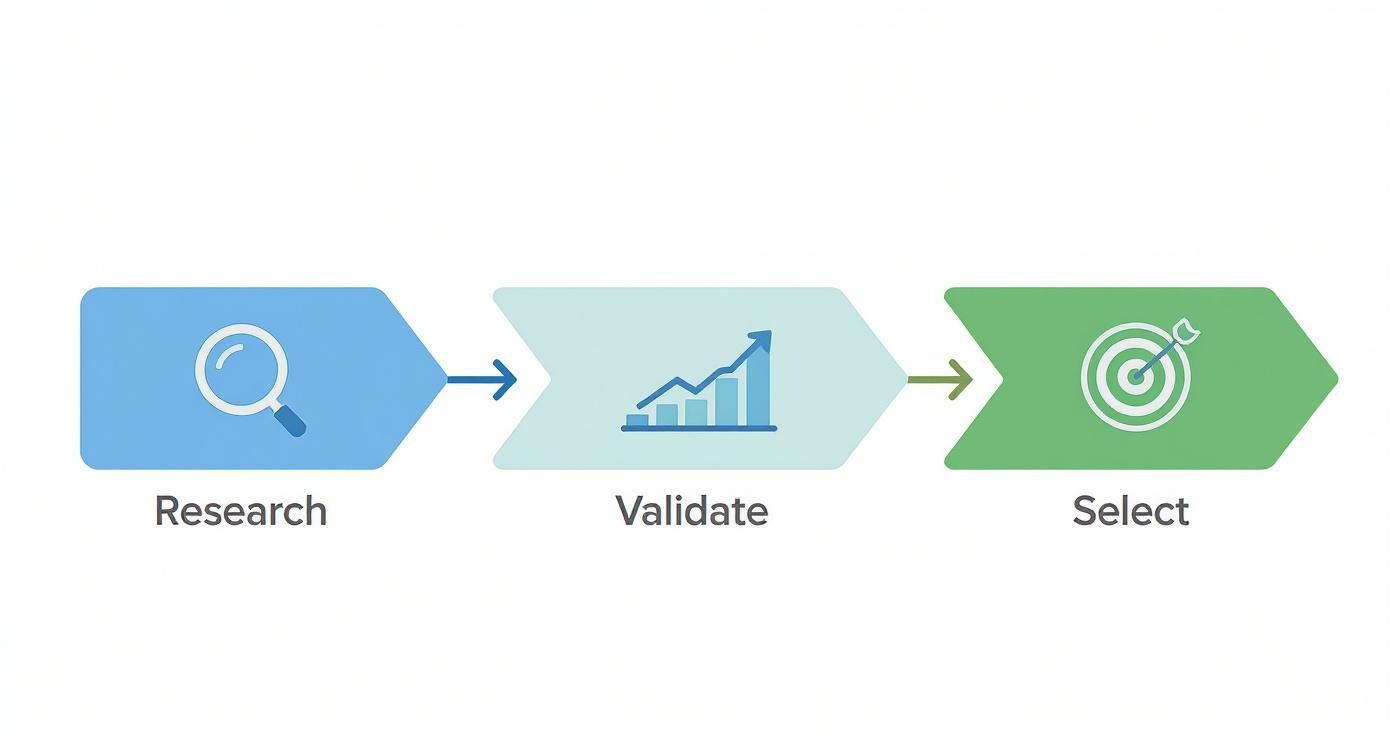
As you can see, solid research isn't just a suggestion—it's the foundation you have to build before you pick your niche and start creating.
Essential Tools for Faceless Creators
You really don't need a boatload of expensive software to get this off the ground. A handful of powerful, easy-to-use tools is all it takes to produce professional-looking faceless content.
The rise of AI and user-friendly design tools has completely changed the game. A single person with the right tools can now produce content that used to require a whole team. Your creativity is the real asset here, not your budget.
Tools like Canva are a godsend for faceless creators. It lets you quickly knock out everything from YouTube thumbnails and TikTok video overlays to blog post graphics and Pinterest pins. The best part? It's all done with an intuitive drag-and-drop interface.
This is what you're looking at inside Canva—it's built for people who aren't professional designers.
The platform is packed with templates, making it incredibly fast and simple to create visuals that look good and stay on-brand.
Adding video into the mix is a massive advantage. Some studies have shown it can pump up affiliate conversion rates by as much as 49%. This is especially true for faceless marketers who need strong visuals to build trust and show off a product’s value without putting their face on camera. You can check out more stats on how video is shaping affiliate strategies on new.firstpromoter.com.
Getting Eyeballs on Your Affiliate Links
Look, you can create the most amazing content in the world, but if no one sees it, your affiliate links are just gathering digital dust. For a faceless brand, getting traffic isn't about becoming a viral sensation. It’s about building a steady, reliable stream of visitors who are actually looking for what you're offering.
Let's get into the practical ways to make that happen. You don't need a massive budget or a public profile—just a smart, consistent game plan.
Jump on the Short-Form Video Wave
Platforms like TikTok, Instagram Reels, and even Pinterest are a goldmine for faceless marketers. Why? Because their algorithms are built to push fresh content to new audiences, giving even brand-new, anonymous accounts a real shot at getting seen.
Getting traction here comes down to giving the algorithm what it wants. It’s a game, and you just need to know the rules.
- Ride the Audio Trends: Don't just pick a song you vibe with. Actively look for sounds and audio clips that are trending right now. This is one of the easiest ways to signal to the algorithm that your content is current and relevant.
-
Be Strategic with Hashtags: Throwing
#affiliatemarketingon your video won't do much. You need a mix. Let's say you're promoting an ergonomic office chair. A good mix would be#wfhsetup(broad),#homeofficehacks(niche-specific), and#ergonomicchair(product-focused). - Show Up Consistently: Posting once in a blue moon isn't going to cut it. These platforms reward consistency. A good starting point is 3-5 short videos per week. This keeps you on the algorithm's good side and helps you build momentum.
The real magic of short-form video is that it doesn't have to be a Hollywood production. A simple, straightforward video that solves one small problem for someone can easily get more views than a slick, over-produced ad. Focus on delivering value, fast.
Play the Long Game with SEO
While social media gives you those quick traffic spikes, a blog built on solid Search Engine Optimization (SEO) is your long-term money-maker. Think of it as your passive traffic machine. SEO is simply the process of getting your website to show up on Google when people search for answers.
Your main focus should be on on-page SEO, which is all about optimizing your individual blog posts. It sounds technical, but it’s really not. It all starts with finding the right keywords. Instead of trying to rank for something super broad like "laptops," you’ll have much more success with a long-tail keyword like "best budget laptop for college students."
Once you’ve got your keyword, you just need to place it in a few key spots:
- Your Article Title: This is the most important one. Make it count.
- The First Paragraph: Signal to Google what the post is about right from the get-go.
- A Few Subheadings (H2s & H3s): This breaks up your text and reinforces the topic for both readers and search engines.
- Image Alt Text: Tell search engines what your images are about. It’s also great for accessibility.
Another SEO secret weapon is internal linking. All this means is linking from one article on your site to another relevant one. For example, in a post about the "best travel backpacks," you could drop a link to your other article on "essential packing cubes." This is a win-win: it keeps people on your site longer and shows Google that you're an authority on the topic.
Become a Trusted Voice in Niche Communities
Finally, don't sleep on the power of good old-fashioned online communities. Subreddits, Facebook groups, and niche forums are packed with people literally asking for product recommendations. This is where you can find highly motivated buyers, but you have to play it cool.
The golden rule here is value first, promotion second. If you just spam your affiliate links everywhere, you’ll get banned. Fast. Instead, become a genuinely helpful member of the group. Answer questions, share what you know, and build a reputation as someone who knows their stuff.
For instance, if you’re in a subreddit for home coffee lovers and someone asks for the best grinder under $100, jump in with a detailed, helpful comment. After you’ve given some real advice, you can casually add something like, "I actually did a full breakdown of my top three picks on my blog if you want to see a side-by-side comparison." This approach comes across as helpful, not spammy, and sends interested, ready-to-buy readers straight to your content.
Optimizing Your Funnel to Scale Your Earnings
Getting clicks on your affiliate link is the first win, but turning those clicks into a predictable, scalable income? That’s where the real magic happens. This is the moment you graduate from just making content to building a real business—a system that makes money for you around the clock.
Look, the classic "link in bio" strategy is a decent starting point. We all start there. But if you stick with it, you're leaving a ton of cash on the table. To really grow, you need to own the journey your audience takes after they click.
It all starts with a simple landing page.
Instead of sending your hard-earned traffic from TikTok or YouTube straight into the chaos of a merchant's homepage, guide them to a clean, focused page that you control. Tools like Carrd or Linktree are perfect for this. On your page, you can beautifully display your top-performing affiliate products, essentially creating a curated storefront just for your followers.
Building Your Most Valuable Asset
Your next power move? Building an email list. I can't stress this enough—it's absolutely non-negotiable for long-term success. Your email list is the only part of your business you truly own, completely safe from the whims of social media algorithms.
The setup is straightforward. You offer a small, valuable freebie in exchange for an email address. We call this a "lead magnet," and it doesn't have to be some epic ebook.
- A simple one-page PDF checklist
- A quick, helpful video tutorial
- A curated list of your favorite tools or resources
The idea is to give your audience a quick, easy win. Once they’re on your list, you can start building a genuine relationship. You can share more tips, tell stories, and introduce your affiliate offers to a warm audience that already trusts you. This direct line of communication is where the real conversions happen.
By capturing an email, you're not just getting a one-time shot at a sale. You're earning the opportunity to build long-term trust and provide value, which can lead to multiple sales from a single follower over time.
Before we dive into the data, let's look at the essential tools you'll need to build and manage this funnel. I've broken them down into a simple tech stack that covers everything from content creation to funnel optimization.
Essential Tools for Your Faceless Tech Stack
| Tool Category | Free/Freemium Option | Paid Option |
|---|---|---|
| Content Creation | CapCut | Canva Pro |
| Landing Page | Linktree | Carrd |
| Email Marketing | MailerLite (up to 1,000 subs) | ConvertKit |
| Analytics & Tracking | Native Platform Analytics (TikTok/YT) | Beacons.ai |
Choosing the right tools from the start saves a lot of headaches later on. You can absolutely start with the free options and upgrade as your income grows.
Using Data to Drive Growth
Finally, to scale effectively, you have to know what's working and what's not. You don't need a degree in data science, but you do need to peek at your analytics. Both TikTok and YouTube have simple, built-in dashboards that show you which videos are pulling in the views and engagement.
Make a habit of checking these stats. Pay close attention to your top-performing content. What was the topic? What was the video's style? What call-to-action did you use? Your audience is literally telling you what they want to see more of.
Your job is to listen and double down on what works. If a short video about "budget home office gadgets" blew up, that’s your cue. Create a whole series around that theme. This data-driven approach takes the guesswork out of your content strategy and puts you on a clear, fast track to scaling your affiliate earnings.
Common Questions About Faceless Marketing
Jumping into faceless affiliate marketing naturally brings up a lot of questions. It's smart to get these sorted out before you pour your heart and soul into building something. Let's tackle some of the most common ones I hear so you can start with confidence.
First off, people always ask if this is even a real, legitimate business model. The answer is a resounding yes. Faceless affiliate marketing is just a different spin on a classic, proven strategy. Instead of putting your face out there, you're building a brand that people trust because of the sheer quality and value of your content—think of big-name product review sites or niche blogs that have been doing this successfully for decades.
How Much Time Until I See Results?
Ah, the million-dollar question. The honest, no-fluff answer is: it really depends. How quickly you see that first commission pop up is tied directly to your niche, how you're creating content, and—most importantly—how consistent you are.
I’ve seen TikTok creators catch a viral trend and make their first sale in a couple of weeks. But that's the exception, not the rule.
For building a steady, reliable income stream, a more realistic timeline is somewhere in the three to six-month range. That gives you enough time to create a solid library of content, get noticed by the algorithms, and build a small community that actually trusts what you have to say. An SEO-focused blog might take a bit longer to get going, but the payoff is often a more stable, hands-off income down the line.
The real key isn't speed; it's momentum. A single viral video might get you a quick win, but consistently posting three valuable videos a week for six months is what builds a real, sustainable business. Don't chase virality—chase consistency.
What Are the Biggest Beginner Mistakes?
So many newcomers stumble into the same avoidable traps. Just knowing what they are is half the battle and can save you months of frustration and wasted effort.
Here are the top three mistakes I see people make all the time:
- Picking a Niche Only for the Payout: It’s tempting to go after products with huge commissions, but those niches are usually shark-infested waters. You'll have much better luck picking a topic you're genuinely interested in. Your authenticity will shine through in your content, and that’s what gets people to buy.
- Promoting Way Too Many Products: If you're pushing a dozen different things, you'll just confuse your audience and kill your credibility. Start by becoming the go-to expert for just a handful of amazing, well-chosen products. Master that first.
- Completely Ignoring Your Audience: Just because your brand is "faceless" doesn't mean it should be "soulless." Pay attention to the comments and DMs. That feedback is pure gold—it tells you exactly what problems people need help with and what content you should create next.
Steer clear of these common pitfalls, and your journey into faceless affiliate marketing will be a whole lot smoother—and more profitable.
Ready to skip the slow, painful startup phase and jump straight to the earning part? At MonetizedProfiles, we offer TikTok and YouTube accounts that are already approved for monetization. You can start earning from day one. Ditch the grind and grab your pre-approved account at https://monetizedprofiles.com.


